Sign in. It’s quick, free and it’s up to you.
An account is an optional way to support the work we do. Find out more.
Sign in. It’s quick, free and it’s up to you.
An account is an optional way to support the work we do. Find out more.
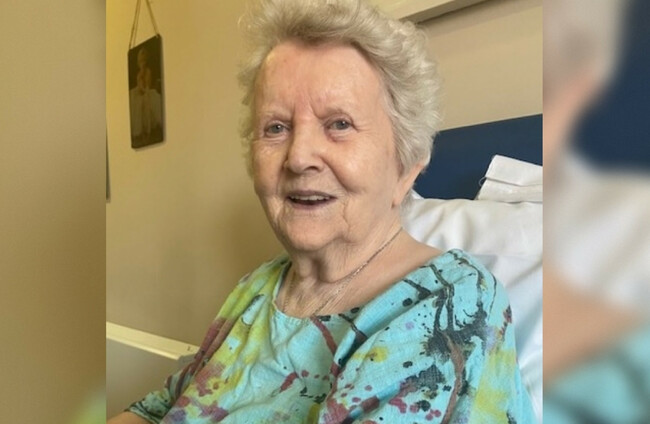
THE FAMILY OF a woman who was severely injured in a “hit-and-run” are urging road users to honour their responsibilities under the law after the driver involved in the collision was finally sentenced for failing to provide assistance to the woman, nine years on from the incident.
The defendent, Sinead Roche, was working as a taxi driver at the time.
On the morning of 4 December 2016 at around 7am, with a passenger in the car, Roche’s vehicle struck 77-year-old Margaret Rooney on Sundrive Road in Crumlin, Dublin, and then proceeded to drive away from the scene.
She later told gardaí in a voluntary statement that she had thought that she’d hit a fox or a dog, but the woman who was in the car with her told the court during the course of the trial that she told Roche that she thought the car had struck a person.
A short distance away, Roche got out to check the damage to her car, and then proceeded to drop the passenger to their destination before returning to the scene.
Judge Dara Hayes on Monday handed down a suspended sentence of two years and three months to Roche, as well as a 12 month driving ban for the charge of failing to offer assistance.
A separate charge of careless driving resulting in serious bodily harm was dropped in 2022 after the defence counsel argued that there was a lack of evidence to support it.
By 2022 Margaret Rooney had been diagnosed with dementia; her family believe that the head injury she sustained in the incident also had a serious impact on her cognitive ability. Her family said that she would have been unable to testify or provide her own account of what happened that morning.
Roche pleaded not guilty to all charges.
Judge Hayes said that Roche had behaved in a “callous” manner and that her explanation that she believed she had hit an animal lacked “credibility”, as when she saw the extent of the damage to her car it should have been clear that an animal could not have caused it.
Margaret Rooney sustained multiple fractures and a serious head injury, and lost a lot of blood.
Her daughter Irene told The Journal after the verdict that the family believe that it was ten minutes before two women found her, and called an ambulance and the gardaí.
Ms. Rooney passed away in August of this year, and was never able to return to her family home or the community she was a part of after the incident.
After a 6-month stay in St James’s Hospital, during which she was treated for her injuries, she was moved to a nursing home.
Irene said that ten minutes on your own after being seriously injured can make an enormous difference to someone’s outcome, and that though drivers may “panic” after striking someone, it is “so important” to remain at the scene and offer assistance.
She also said that if you think there is a possibility you have hit someone, you are duty-bound to get out of the vehicle and check.
“When she went to the hospital she was given a 30% chance of survival, her head injuries were so severe.
“Even as she recovered physically we saw a very serious mental decline in her, and when she went into the home it was for Alzheimer’s,” Irene said.
She added that the slow pace of the case – which has been ongoing for 9 years – has been incredibly difficult for her and her four brothers.
“We had been advised that it would likely be a suspended sentence, but it was a guilty verdict, and we think the driving ban was an appropriate measure from the judge,” she said.
She added that her mother was a “kind” person, who on the morning of the incident was walking to mass to light a candle for her late husband on their wedding anniversary.
“It was the kindness of strangers that helped her to survive that ordeal, and they have been impacted by this, and the passenger who was in the car has as well – she was clearly traumatised by the events when she testified in court,” Irene said.
“My mum was a real homemaker and a deeply caring person. She should have been able to spend more of her life in her family home,” she added.
Irene said that the gardaí who dealt with this case were compassionate and sensitive in their treatment of her and her family.
Judge Hayes said he took into account that the driver has no other convictions, and is an organ transplant recipient.
He said that she lacked “common decency” in her behaviour, and that she “should have remained at the scene”.
Irene said that the family has never received an apology in relation to the incident.
To embed this post, copy the code below on your site













have your say