We need your help now

Support from readers like you keeps The Journal open.

You are visiting us because we have something you value. Independent, unbiased news that tells the truth. Advertising revenue goes some way to support our mission, but this year it has not been enough.

If you've seen value in our reporting, please contribute what you can, so we can continue to produce accurate and meaningful journalism. For everyone who needs it.

The 'fighting Irish'? Gaelic games on film show how the Irish were viewed abroad

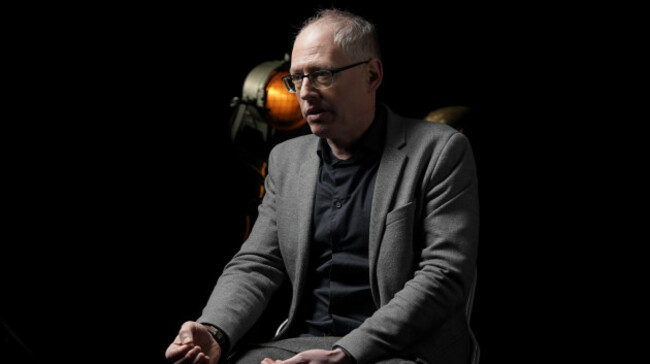
Stereotypes, nationalism and Irish pride all abound, Dr Seán Crosson tells us.

Spórt TG4 / YouTube

THE WAY AN indigenous sport is depicted on screen can tell us a huge amount about how a country views itself – and how other countries view it.

That’s underlined by the series Iománaíocht Hollywood: Cluichí Gaelacha ar Scannán/Hollywood Hurling: Gaelic Games on Film, available to watch on The Seinnteoir TG4 (Player).

This two-part mini-series explores the story of Gaelic games on film, based on the award-winning book ‘Gaelic Games on Film: From silent films to Hollywood hurling, horror and the emergence of Irish cinema’ (Cork University Press, 2019), by University of Galway academic and lecturer Seán Crosson.

The programme and book delve into how Irish people and Gaelic games have been depicted on screen since the beginning of the last century, including in productions from major Hollywood studios and directors like the Oscar-winning Irish-American director John Ford.

They also show how Gaelic games played a role in the emergence of an indigenous Irish film culture in the second half of the 20th century.

Gaelic games on screen/Cluichí Gaelacha ar an scáileán

Seán Crosson Dr Seán Crossan of the University of Galway

Crosson’s book was in part prompted by a PhD student who queried whether there was much Gaelic games on film. Crosson went looking.

“What I found was much more than I had ever expected, and in a much greater variety in terms of the forms that it took and the ways in which it functioned,” he says. Because television only arrived in Ireland in the 1960s, film footage of Gaelic games is an important record of the evolution of the sport.

The earliest film featuring Gaelic games that Crosson discovered in the archives was from 1901. This was itself very early on in the development of film, which only really emerged in the 1890s.

“Sport was a really important popular cultural activity that filmmakers exploited to bring people into the cinemas,” adds Crosson.

Early footage, such as 1914 clips of the All-Ireland football final replay between Wexford and Kerry, shows us how the games evolved.

“You can see in that footage where they were still throwing in the ball from the sideline, soccer style – the skills were still evolving. And you can see the solo run didn’t exist at that point. It only came into the game in the 1920s,” he says. 

“Unlike hurling, which had a much older vintage… Gaelic football was something which was evolving and needed to develop its own distinctiveness, which it did in the late 19th and up to the mid 20th century.”

Other clips found in the National Film Institute of Ireland (now the Irish Film Institute) from the mid 20th century show us a lot about the build up to games. “It’s about capturing the people attending, so there’s shots of the spectators, there’s shots of the teams. A lot of the rituals we now associate with All-Ireland finals and major Gaelic games, you can see them developing in that period,” says Crosson.

The clips also show us the way ceremony at games was used to express Irish identity. “So you’ll find the Irish national anthem, the Irish flag, and features like that which were really important, particularly in that period”.

Many members of the Gaelic Athletic Association (GAA) were key figures within the nationalist movements of the late 19th to the early 20th century. “Michael Collins, for example, was very involved in Gaelic games – he was treasurer of a club over in London for a while,” says Crosson.

In films found at the National Film Institute of Ireland dating from 1948 onwards, “you can see how often in the narration, in the way in which the sports have been rendered, we’re being reminded of the responsibilities of nationalism, the importance of respecting and of recognising the distinctiveness of Ireland, of the Irish language, of Irish culture, of Irish history – connecting the All-Ireland to the 1916 Rising for example, connecting Gaelic games with the attempt to bring a united Ireland”, says Crosson.

Stereotypes/Steiréitíopaí

Dónal McAnallen

The first significant indigenous Irish feature film, Knocknagow (1918), made by the Film Company of Ireland, has a central sequence featuring a game of hurling. 

But for much of the early 20th century, we have to depend on foreign depictions of Gaelic games on film, says Crosson.

There were “notable efforts” made to grow an Irish film industry pre-Irish independence. “But after independence, the new State and the church really were quite suspicious of film, and there was no real attempt to support the development of an indigenous infrastructure,” says Crosson.

This means that British and American newsreels were important for capturing the games and important players at that time, like John Joe Reilly, the Cavan football player.

But some newsreel clips could use hurling in particular “to connect with broader, sometimes problematic stereotypes about the Irish”, says Crosson.

“The American ones in particular are picking up on what they perceive as the ‘violent potential’ of hurling,” says Crosson. This is also the case with some British footage.

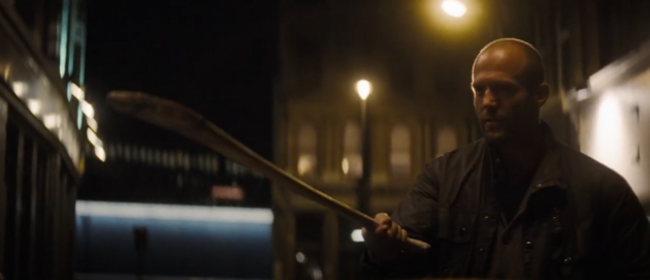
These stereotypes have persisted even to contemporary times. Take the 2011 Jason Statham film Blitz, in which a hurley is wielded as a weapon.

PastedImage-21723 YouTube YouTube

In some international quarters, “Irishness has historically been associated with what we might call a ‘proclivity for violence’ – that somehow the Irish are viewed as being more inclined towards”, says Crosson. 

Within British media, you could find during the early 20th century “the association of Irishness with violence as a way to rationalise the various moments of rebellion and of discontent with the British administration in Ireland.

“So how they explained it – their rationale for why Ireland needed to be part of the British Empire, or why the British ‘civilizing mission’ was required. Not just in Ireland of course, you find similar stereotypes about Indians or people from parts of Africa under the British Empire.

“There was this argument made that they were inherently somehow primitive or violent and needed the ‘civilising mission’ of the British Empire. And echoes of that I think you still find coming through within British popular discourse.”

The Quiet Man

Rotten Tomatoes Classic Trailers / YouTube

But while there were negative stereotypes, there was also a consciousness around this among figures like the legendary John Ford, director of The Quiet Man (1952).

“There’s an awareness that the stereotype is there. But there’s also a playing with the stereotype, or an attempt to transform that stereotype from something that’s threatening to something that’s entertaining, engaging,” says Crosson.

And in that way, bringing Irish America from the margins of American society to the very centre of American society, which Ford was a key contributor to in popular culture – such that you have an Irish-American president by 1960.

Fighting sequences in Ford’s films ”almost always precede a coming together of the community or of the group involved”, says Crosson. “It’s like they have to work through whatever tensions that are there through conflict… and you see that in how Gaelic games features in his work as well.”

He hopes that the documentary and book help people to appreciate how important the preservation and archiving of the moving image is, and how lucky we are to have archives like the Irish Film Archive at the Irish Film Institute. 

He also wants people to think about sports as not just being an escape, or recreation. 

“There’s so much more going on in how we experience sport and how we understand sport,” he says. Episode two of the mini-series, for example, looks at how it “normalised the power and status of the church in Ireland” during a period where there was institutional and clerical abuse.

Sport “was a really important vehicle for maintaining and elevating and naturalising that power and position in Irish society”, says Crosson.

“What I’m trying to alert people to is that sport is being used for precisely the same thing today, and I’m thinking of this not just primarily in the Irish context,” continues Crosson.  

“Look at what’s happening internationally. Why are the Saudis buying up Manchester City [the team is owned by an investment company for the Abu Dhabi royal family], bringing the biggest players in the world to Saudi Arabia?

“Why is Donald Trump attending the Super Bowl final and connecting himself with a range of leading sports in American life? Because [sport is] an incredibly powerful tool effectively for him to promote his agenda, to cultivate support for his ideas and ideology.”

Team effort/Iarracht foirne

Crosson describes the making of the series as being like sport itself, with a huge team of people behind it. They include Mac Dara Ó Curraidhín of LMDÓC who produced, directed and edited the show; narrator Síle Nic Chonaonaigh; Steve McGrath who mixed and provided the music (along with Rossa Ó Snodaigh of Kila) and Shane Callan who provided the graphics and graded.

Contributors to the series included Professor Paul Rouse, Professor Mike Cronin, Professor Gearóid Ó Tuathaigh, Professor Dermot Keogh, Dr Ciara Chambers, filmmakers Fergus Mac Taidhg and Bob Quinn, cinematographer Nick O’Neill, and the late Dublin GAA legend Jimmy Gray, to whom the series is dedicated.

Iománaíocht Hollywood: Cluichí Gaelacha ar Scannán/Hollywood Hurling: Gaelic Games on Film, is available to watch on The Seinnteoir TG4 (Player).

Close