Sign in. It’s quick, free and it’s up to you.
An account is an optional way to support the work we do. Find out more.
Sign in. It’s quick, free and it’s up to you.
An account is an optional way to support the work we do. Find out more.
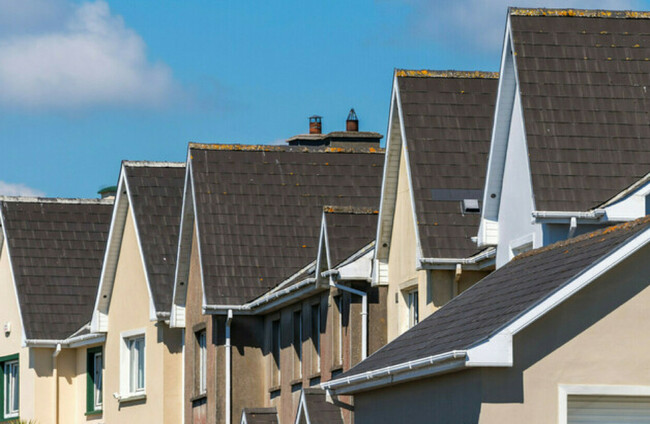
HOUSE PRICES HAVE increased at their lowest annual level since February 2024.
Data published today by the Central Statistics Office (CSO) found that the Residential Property Price Index (RPPI) increased by 6.2% in the year to May, unchanged from the month previous.
The RPPI is designed to measure the change in the average level of prices paid by households for residential properties sold in Ireland.
Meanwhile, the median, or mid-point, price of a home purchased in the year to May was €395,000.
The highest median price for a home was €689,325 in Dún Laoghaire-Rathdown, while the lowest median price was €198,000 in Longford.
And while property prices in Dublin rose by 4.7% in the year to May, prices outside Dublin were up by 7.3%.
The region outside of Dublin that saw the largest growth in house prices was the Midlands (Laois, Longford, Offaly, and Westmeath) at 13.2%, while at the other end of the scale, the South-West (Cork and Kerry) saw a rise of 4.2%.
Social Democrats Housing Spokesperson Rory Hearne meanwhile noted that the CSO show that house prices are now 25% above their highest level at the peak of the property boom in April 2007.
Nationally, prices have also increased by 180% from their low point in 2013 after the property crash.
Hearne said that the government’s “failure to provide affordable homes has fuelled property price inflation”.
He added that an “overreliance on the private market for housing delivery is driving property price inflation” and called for a “shift to State-led delivery of social and affordable homes at scale”.
Meanwhile, the chair of the Irish Mortgage Advisors, Trevor Grant, said the steady growth in house prices will “come as some relief to first-time buyers”.
However, he said it is “worth remembering that while the rate of growth has held steady, prices are still rising”.
He also noted that the Summer tends to be a quieter period for house sales and that any let-up in the pace of house price growth “could well prove short-lived once the autumn selling season picks up in September and October”.
Grant added that “we’re continuing to see a two-tier market emerge”.
He noted that while “Dublin has clearly softened”, the price growth outside Dublin remains “considerably stronger, driven by the shortage of stock in many regional areas”.
And while Grant said there is “better news on the house building front”, he added that “it will take a sustained pipeline of delivery, not just one strong quarter, to make a real impact”.
He also encouraged buyers to “shop around rather than accepting the first offer from their own bank”.
Elsewhere, Brokers Ireland, which represents mortgage brokers, warned that the steady increases “do not amount to anything approaching a material difference for most aspiring home buyers”.
Rachel McGover, deputy chief executive at Brokers Ireland, remarked that “affordability remains stretched to the limit for many home buyers”.
She added that the “positive trend” in home commencements and completions is “not remotely sufficient to meet ongoing and pent-up demand”.
McGovern added that there is a “vastly divergent economy where high salaries abound, particularly in Dublin, pushing up prices for homes while those on average wages in whole swathes of the economy struggle to compete”.
She also said that an “added worry is, what will happen to interest rates, with geopolitical volatility at an all-time high”.
“Just as we thought stability might land, with a one and done ECB rate increase in June, instability has erupted once more, threatening that hope.”

To embed this post, copy the code below on your site



have your say