Sign in. It’s quick, free and it’s up to you.
An account is an optional way to support the work we do. Find out more.
Sign in. It’s quick, free and it’s up to you.
An account is an optional way to support the work we do. Find out more.
AT COP28, COUNTRIES are engaging in really important negotiations about taking action to thwart climate change — but on the side, many also use it as an opportunity to sell themselves as climate-friendly, even if their actions at home don’t line up with their words.
Least developed countries (LDCs) and small island developing states (SIDs) come to conferences like COP28 and try to emphasise to the rest of the world that they are suffering the worst impacts of the climate crisis despite contributing the least to causing it.
Among bigger economies with more culpability for climate change, some enter into negotiations in good faith, but others — particularly China and Russia — are known for throwing spanners in the works.
Outside of the business of negotiations, many countries pay to operate a pavilion at the conference, which is usually half event space, half exhibition. (Ireland chooses not to have a pavilion.)
The Journal has visited and photographed pavilions at COP28 operated by some of the world’s heaviest emitters.
There are a few different ways to rank countries based on emissions. The one used most frequently is emissions produced by that country, which accounts for the emissions directly created by activities within that country. China, with its vast manufacturing industry, comes out far ahead of other countries with this metric.
Another way is to consider it is as emissions based on consumption, which allocates emissions not by where they were produced but by where they were “used”. That means emissions from something like manufacturing are attributed not to the country that makes the products but the country that imports, uses and benefits from them. This method reflects how developed countries have effectively outsourced high swathes of manufacturing to developing countries.
Emissions can also be examined on a per capita basis, which reflects the volume of emissions relative to the population of its country. Some calculation methods focus on certain types of fossil fuels, honing in on emissions solely from carbon dioxide, while others have differing ways of attributing emissions that could be the responsibility of more than one country.
That’s all to say that there’s no one definitive ranking placing countries in an exact list of worst to least offenders, but by taking all of those different approaches into account, we can get a broad sense of which countries are contributing the most to the climate crisis.
Here’s how some of them tried to sell themselves to the rest of the world at their COP28 pavilions.
China
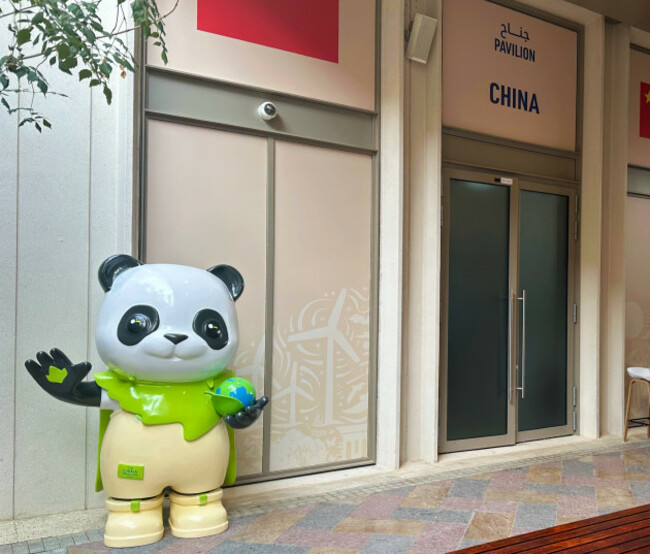
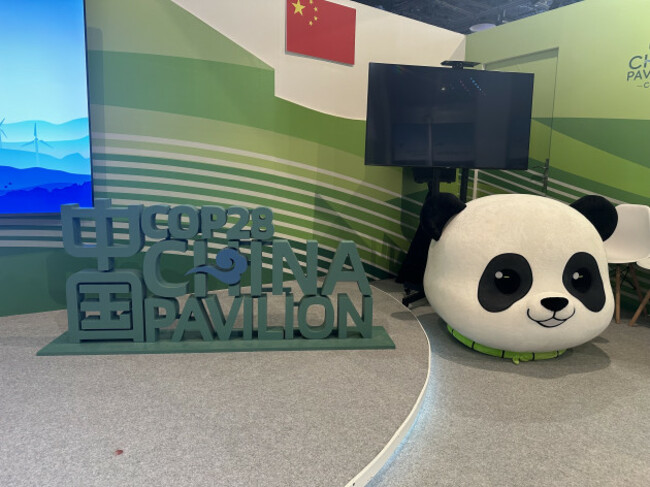
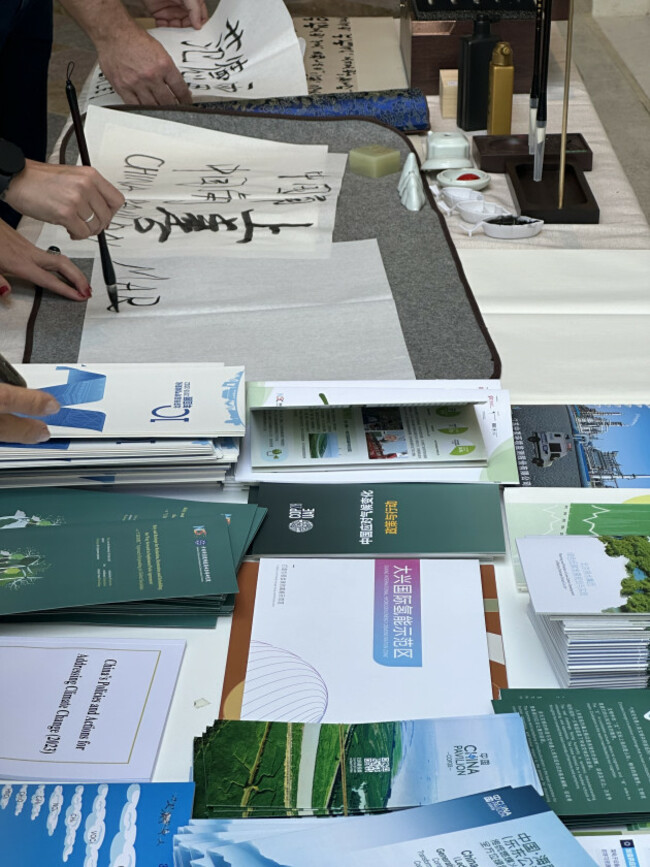
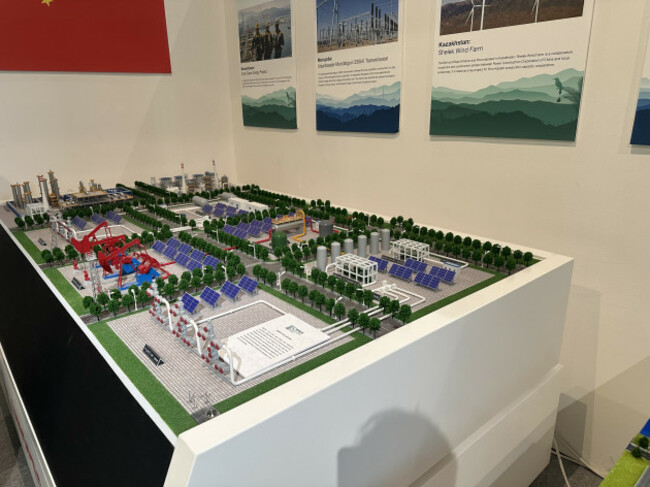
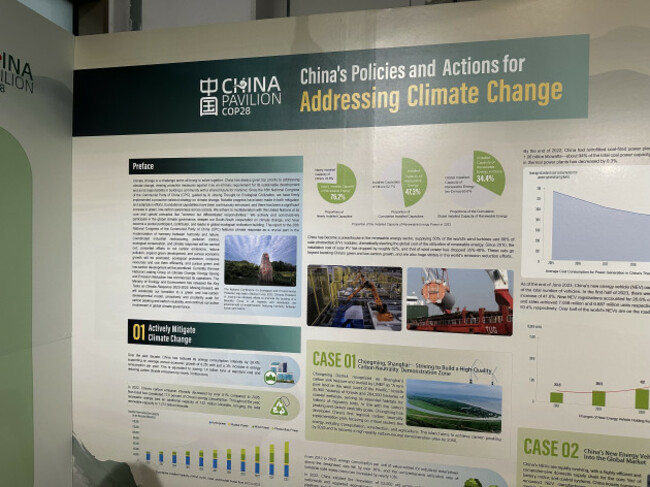
China is known for its practice of ‘panda diplomacy’ — gifting pandas to other countries to sweeten relations — and it brought a hint of that to its COP pavilion with panda models inside and outside the pavilion. Outside, it had a table with various leaflets and publications about climate action in China, as well as a station with ink and fountain pens where people could try writing in a traditional Chinese style. Inside, its exhibition showcased China’s climate policies, its high-speed trains, artwork, and a large model of a carbon capture and storage facility operated by Sinopec, a huge oil and gas company.

United States
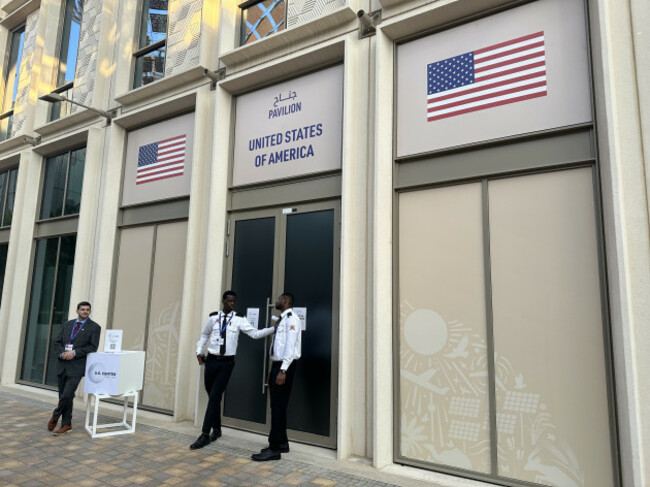
The United States’ pavilion — branded as the “U.S. Center Dubai 2023″ — was given over mostly to an event space. When I visited, the ongoing panel was “Technology Triumphs: How U.S. policy is accelerating business investment”. A quote from President Joe Biden saying this is the “decisive decade” for climate was blown up on one wall. A box at the door invited visitors to leave their business cards.


Russia
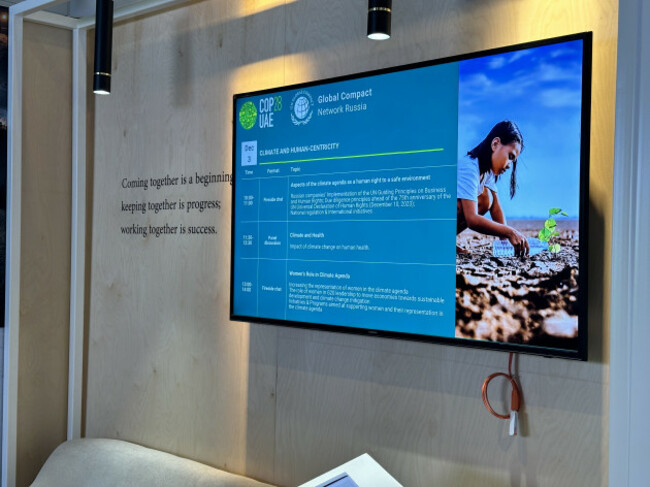
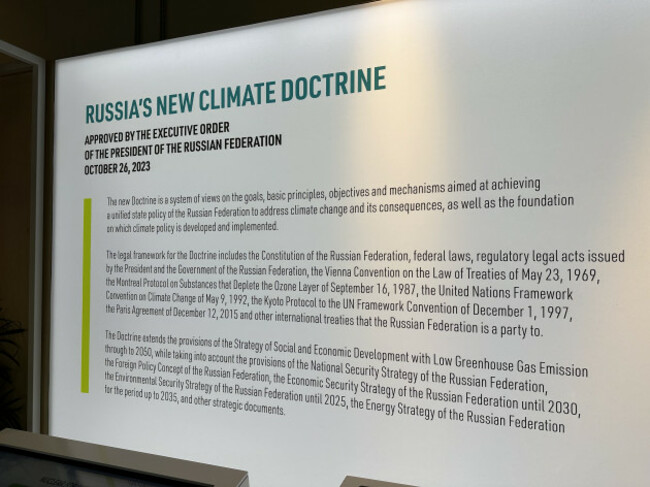
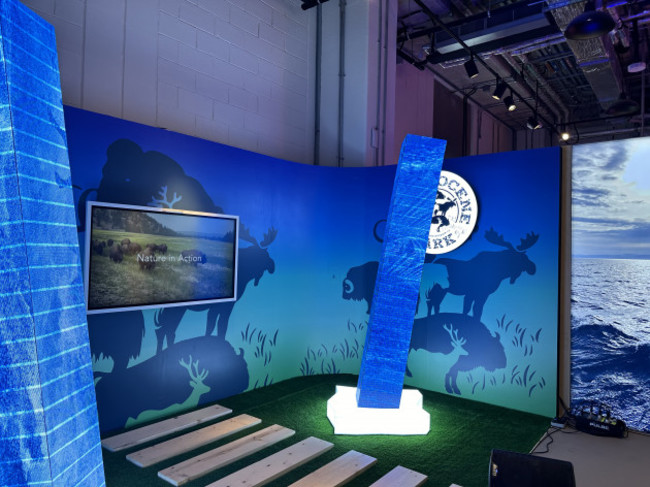
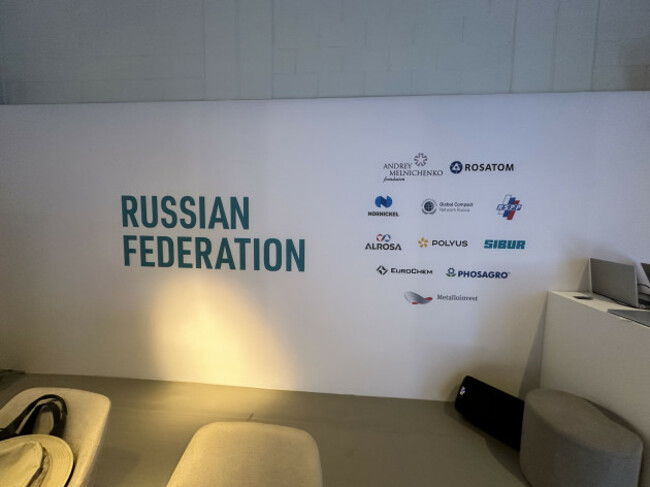
“Coming together is a beginning, keeping together is progress, working together is success,” declared a quote printed on the walls of the Russian pavilion, apparently unaware of its irony. A central space for hosting talks was surrounded by images and text on the walls, like “Russia’s new climate doctrine” and the silhouettes of moose in an ode to Pleistocene Park, a nature reserve in Siberia. Near the door were various leaflets, including one for GazProm, Russia’s state-owned gas company.

Japan
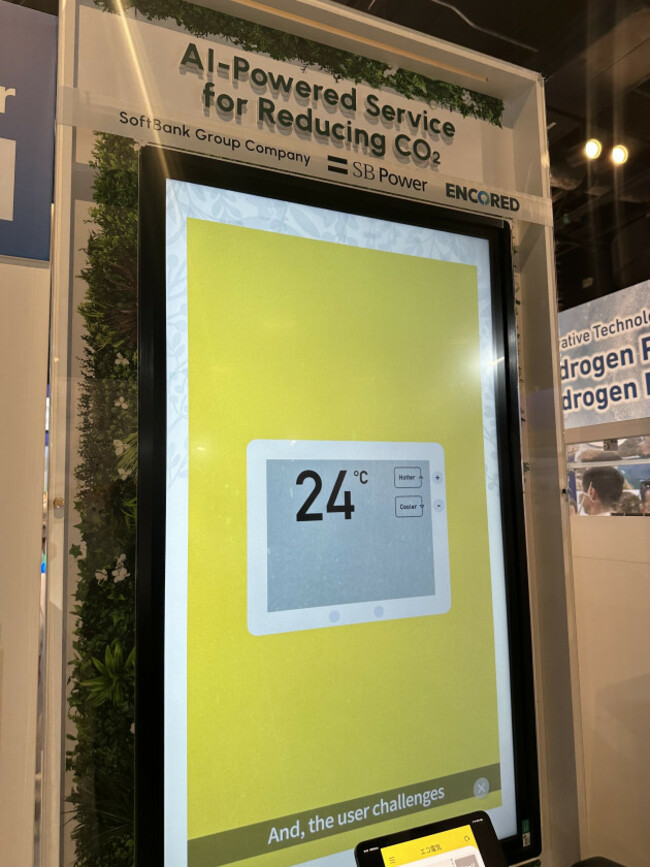
Japan’s pavilion was packed with stalls showcasing various companies and technologies purporting to be the solution to the climate crisis. It featured inverter air conditioners from Daikin, hydrogen power generation from Mitsubishi, and an “AI-powered service for reducing CO2″ from the SoftBank Group and Encored.




India
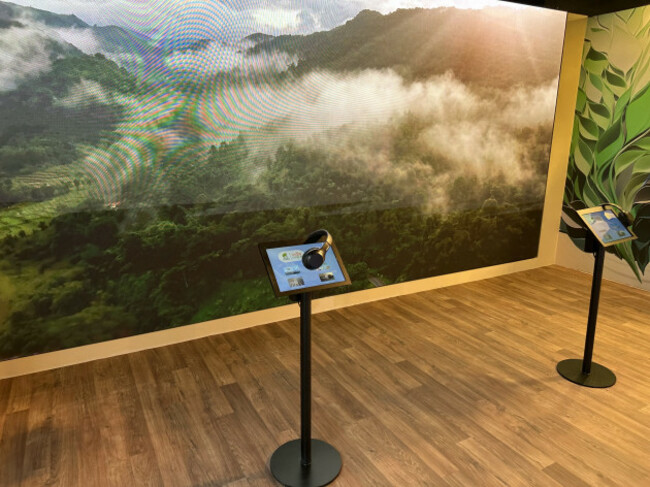
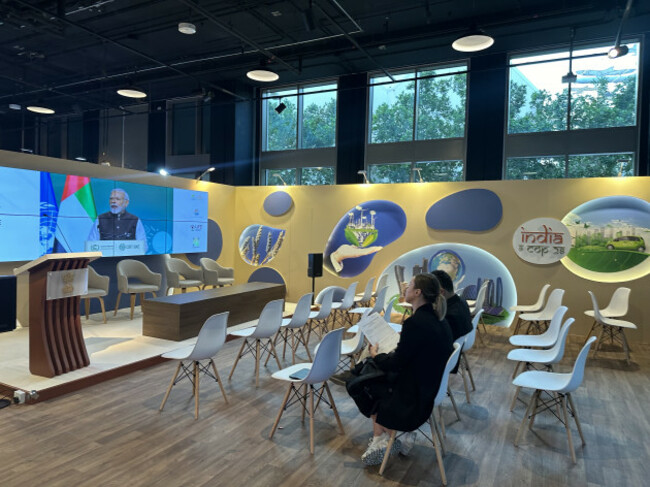
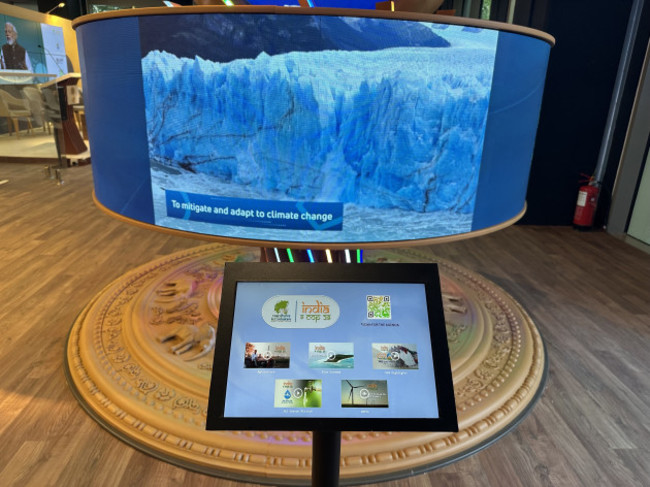
The main feature of India’s pavilion were large screens hooked up to tablets and headphones that allowed visitors to watch videos about different aspects of India’s climate policies, such as agriculture or the blue economy. Footage was also shown of Indian Prime Minister Narendra Modi’s address to COP28, where he spoke at the opening ceremony.
Germany
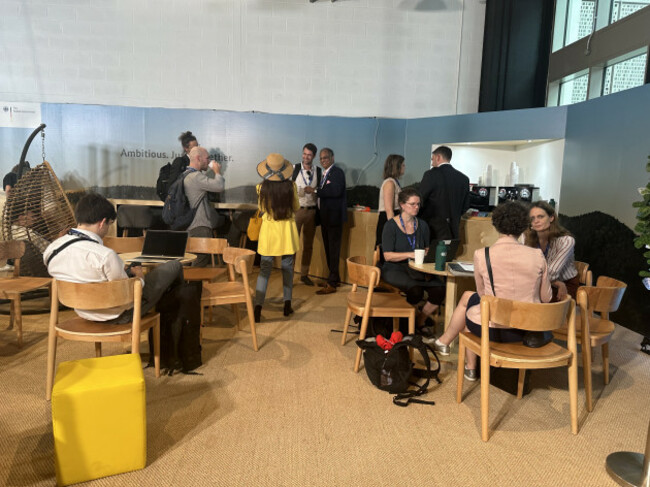
The EU27 collectively contributes significantly to global emissions, and Germany is one of the biggest culprits, both amongst EU members and the broader world. Lots of the countries on this list serve coffee at their pavilions, but Germany had a particularly large proportion of its space dedicated to its coffee counter and the surrounding chairs and tables. The rest of the pavilion was given to hosting talks, with a programme of events hitting on topics like “managing heatwaves”, “local women’s climate response on the frontlines”, and “how a faster rollout of renewable energy across the globe is just good business”.

United Kingdom
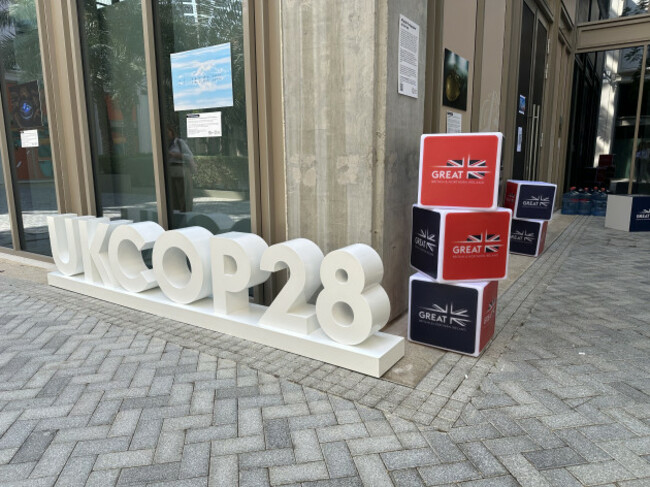
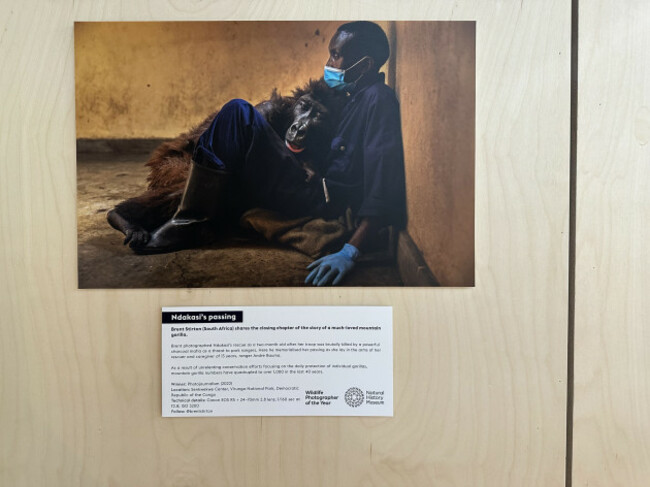
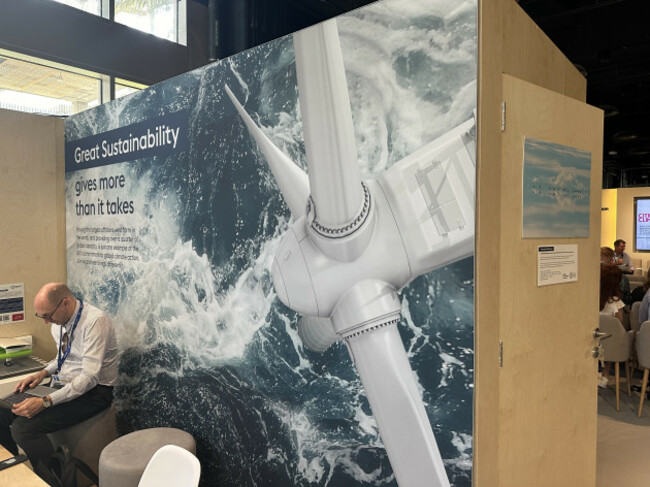
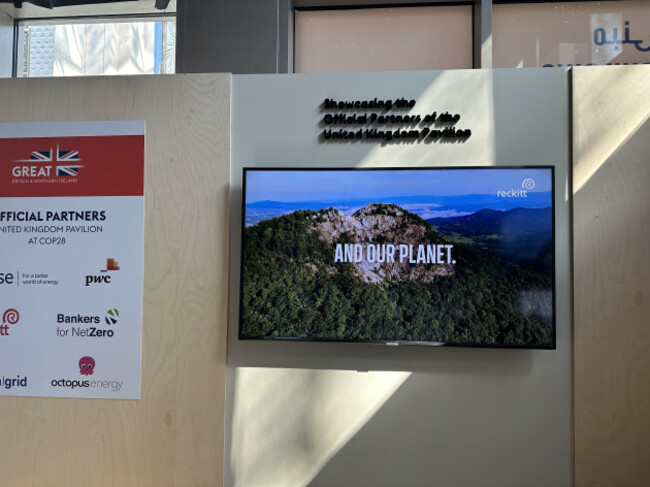
Like many of the other countries, the UK was serving coffee at its pavilion — though it felt the need to stick a sign on its door with blu-tack warning visitors: “Apologies, we will not be serving coffee during pavilion events.” Dotted around the pavilion were photographs taken for the Natural History Museum’s Wildlife Photographer of the Year competition. When I visited, COP26 President Alok Sharma was on a panel discussion about “Cities’ action on climate and health”, hosted by Reckitt (the company behind Dettol and Strepsils). Several signs listed the pavilion’s “official partners”: SSE, pwc, Reckitt, Bankers for NetZero, NationalGrid and Octupus Energy.

Qatar
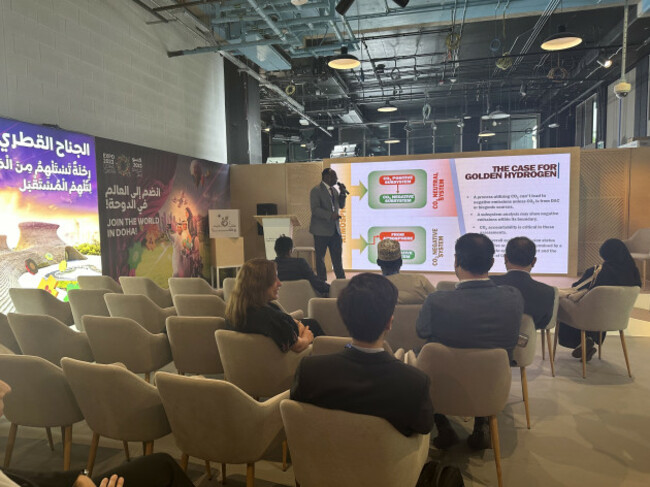
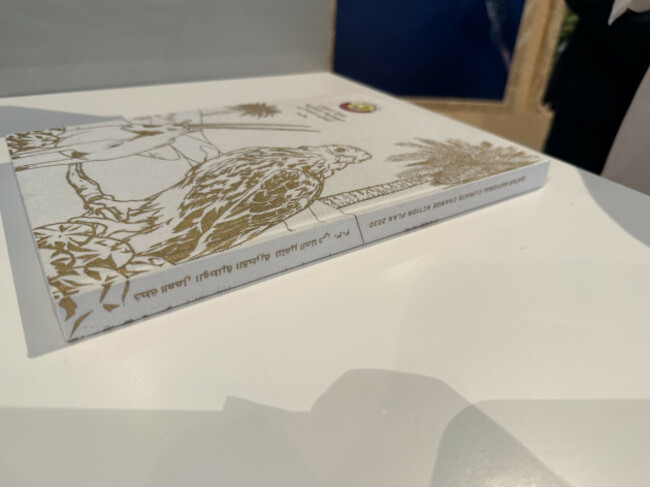
Last year at COP27, in the lead-up to its stint hosting the World Cup, Qatar used its pavilion to showcase models of its stadiums on its quest to promote the tournament as carbon-neutral. This year, it dusted off the glass cases again to display stadium models ahead of the Asian Cup in January. It also had hardback copies of Qatar’s National Climate Action Plan, photographs of marine life, a climate action timeline printed on the walls, and a stand by a company called Skydrops that “turn humidity into water with Atmospheric Water Generators”.


Saudi Arabia
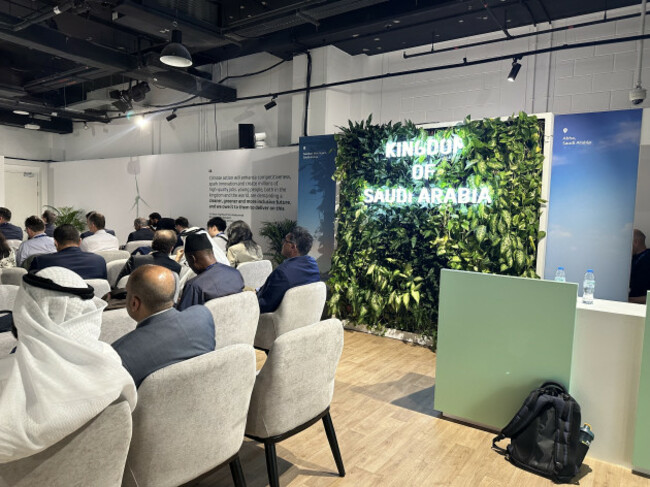
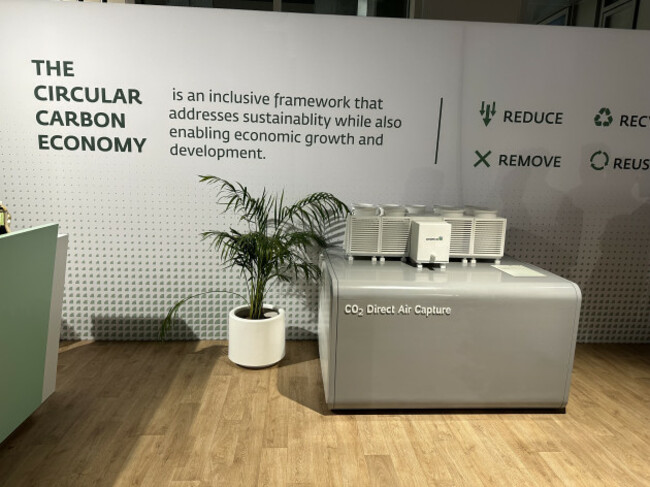
Saudi Arabia’s large pavilion showcased models of technologies in development at Aramco, Saudi Arabia’s national oil company, for measures like carbon capture. ”The circular carbon economy,” text printed on one wall states, “is an inclusive framework that addresses sustainability while also enabling economic growth and development”.

Australia
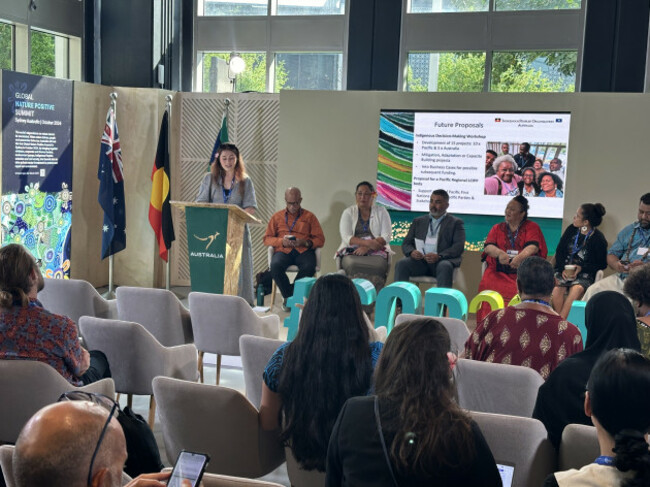
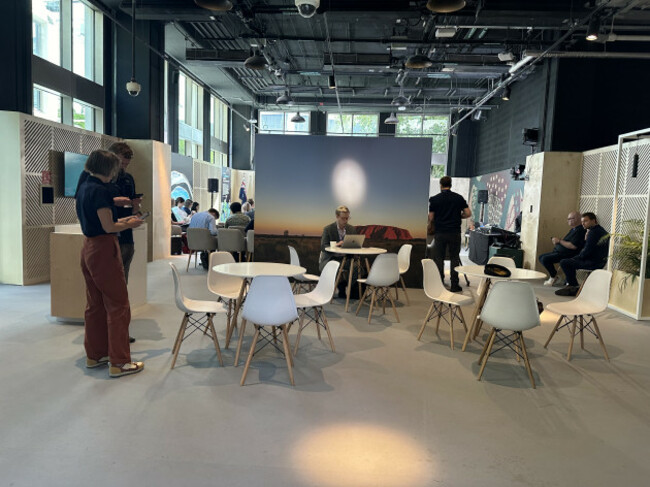
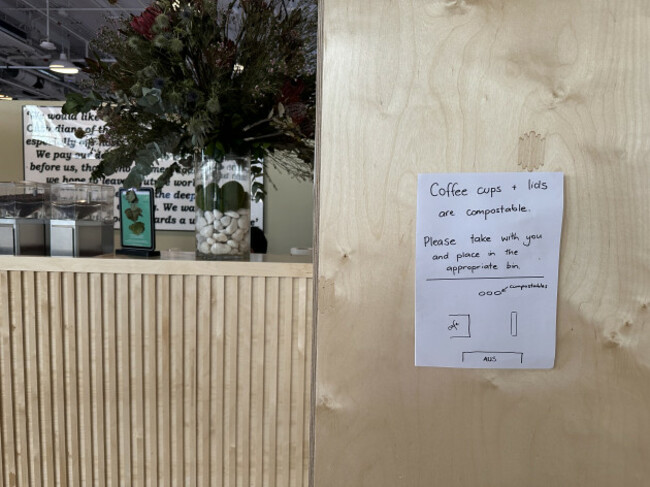
Another giant coffee counter over at the Australia pavilion. Australia had initially expressed interest in hosting the conference next year but has since backed away. Its pavilion has artwork and photography and an event space, which when I visited was hosting a presentation by the Indigenous Peoples’ Organisation Australia.

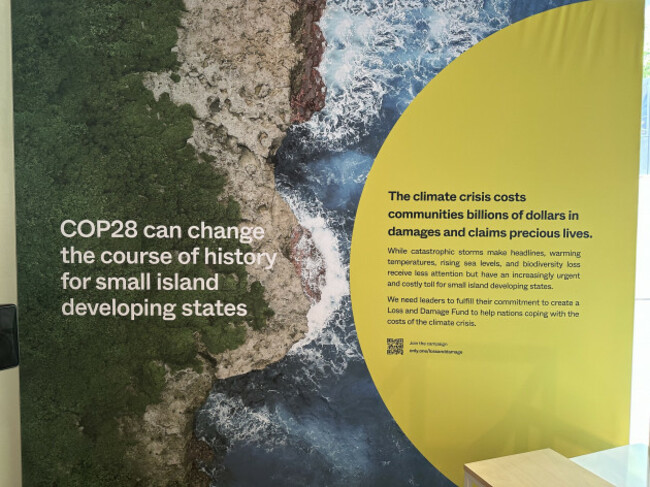
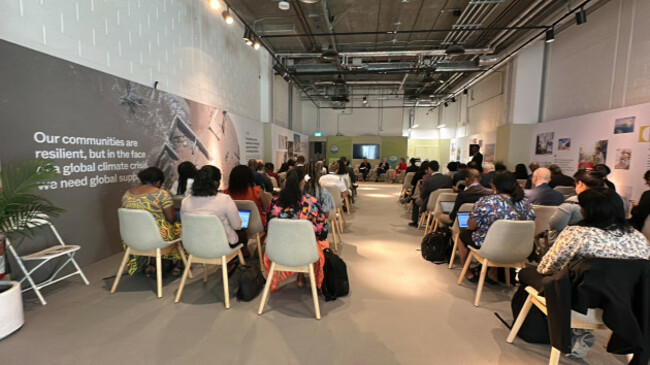
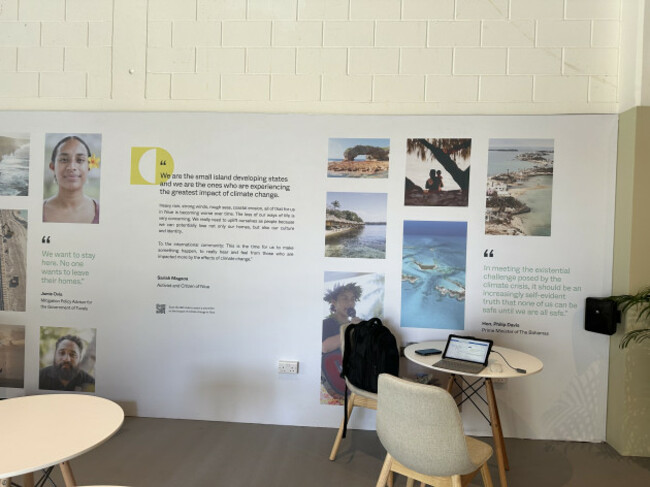
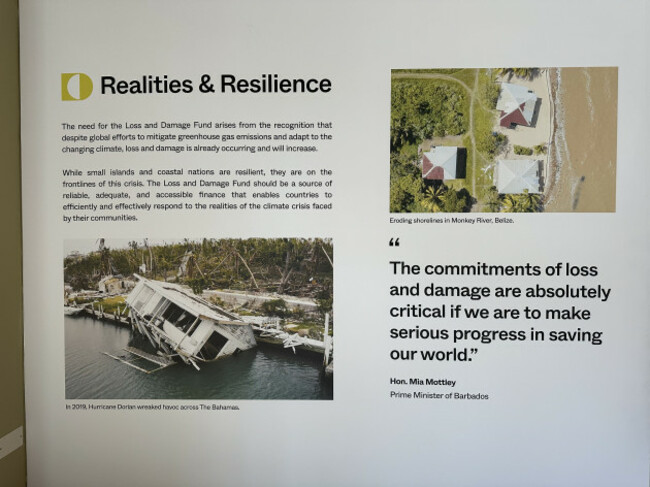
In contrast to the other entries on this list, the Alliance of Small Island States represents countries that have a minuscule impact on emissions but which are already suffering significantly because of the climate crisis. Its pavilion consists mostly of an event space, with images and text on its walls highlighting the damages and threats that climate change has brought to its members shores. A quote from the Prime Minister of the Bahamas, Philip Davis, reads: “None of us can be safe until we are all safe.”

To embed this post, copy the code below on your site















have your say