We need your help now

Support from readers like you keeps The Journal open.

You are visiting us because we have something you value. Independent, unbiased news that tells the truth. Advertising revenue goes some way to support our mission, but this year it has not been enough.

If you've seen value in our reporting, please contribute what you can, so we can continue to produce accurate and meaningful journalism. For everyone who needs it.

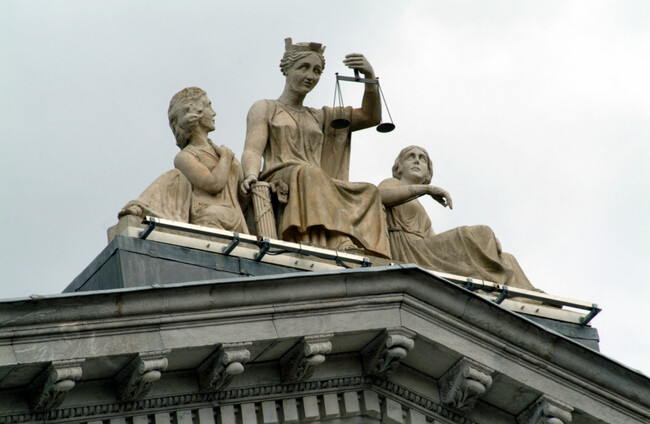
The Courthouse on Washington Street in Cork city centre. Alamy Stock Photo

'Derisory' payments for expert witnesses may be impacting the rights of accused in trials

The inability to acquire the services of a psychiatrist for trial reports is cropping up with “alarming frequency” in criminal trials in Ireland.

THE CONSTITUTIONAL RIGHT to trial in due course of law for some is potentially at risk due to an ongoing problem with reports from expert witnesses.  

The issue is that reports from witnesses such as psychiatrists are frequently delayed or inaccessible in Irish criminal trials due to legal aid requirements and payment limits.

For example, psychiatric issues are commonly examined in trials to see if they impacted the behaviours of those involved, appearing in as much as 20% of murder trials in Ireland.

Despite this, an inability to acquire the services of a psychiatrist for trial reports is cropping up with “alarming frequency”, with experts increasingly being recruited from abroad. That’s according to barrister James B Dwyer SC, who said he has been involved in many cases, both prosecuting and defending, where the issue has arisen.

The barrister said the issue, which can cause significant delays, may be impacting the accused’s right to an expeditious trial, which forms part of the right to a trial in due course of law.

Article 38 of the Irish constitutions guarantees that no person shall be tried on a criminal charge, except in due course of law – meaning that a trial must follow established legal procedures.

The issue of delay has been a long-standing concern in the Irish court system. This week a new report from the Law Society of Ireland found that Irish court proceedings take three times longer than the Council of Europe average.

“Justice delayed is justice denied,” Dwyer said.
He said the accused is often held in custody for long periods of time as the psychiatric reports are sought.
If you’re hanging around in custody for years waiting for your trial, where is the justice in that?

He also said victims of crime are left to wait “sometimes inordinate periods of time” for cases to beard which are being held up by the absence of psychiatric evidence. 

There is no obligation for State-employed psychiatrists to prepare reports or provide evidence in criminal trials, and the rate of pay offered in criminal legal aid to private practitioners to do the work is often rejected by the practitioners.

Legal advice is a constitutional right. The Criminal Legal Aid Board offers legal representation to people who have been accused of crimes but cannot afford to pay a solicitor.

In January, the Central Criminal Court heard that no neuropsychologist was willing to work for the rate of pay proposed by the criminal legal aid services in the case of a man accused of the attempted murder of his former wife’s friend.

The issue is also impacting the Director of Public Prosecutions (DPP), in another case the State faced such difficulty accessing a psychiatrist to assess mother Ruth Purcell Healy, who is charged with the murder of her six-year-old son, that an Australian-based expert offered his services.

After encountering the issue several times, Judge Paul McDermott asked that the Minister for Justice address it in court. He has described the situation as “completely unacceptable” and said he hoped the executive “will act” to provide the services.

Halted

In a Central Criminal Court hearing last month, the presiding judge said that the issue “must stop”,  highlighting the circumstances the delay is subjecting people involved in trials to, as well as their families.

“That’s my concern and I thought it would be the concern of the Department of Justice,” he said.

At the hearing, the DPP said the Department of Public Expenditure had approved “emergency measures” allowing psychiatrists for the State to be paid up to €300 per hour for reports on defendants in criminal cases until the end of June 2026.

Jack McGarry, from the Criminal Legal Aid Unit, said his department would be willing to approve those fees until June too.

The DPP told The Journal the increase was provided “in response to the current supply issues in securing forensic psychiatrists and to ensure such experts can be acquired to reduce the level of interruption regarding the processing of cases, many of which are sensitive in nature”.

The Department of Justice, who is responsible for the administration of criminal legal aid, told The Journal that as of 2025 the current maximum fee payable for the preparation of an examination or report by a consultant psychiatrist or forensic psychiatrist is €184 per hour. Prior to this, the rate was €120 per hour.

The DPP confirmed to The Journal that forensic psychiatrists were paid €184 per hour before the emergency measure was introduced.

This confirms there was previously a lack of pay parity offered by the State in criminal legal aid for expert reports for people accused of crimes, versus the rate offered by the state for experts working for the prosecution.

The Council of the Law Society of Ireland have repeatedly called for increased State investment in criminal legal aid to provide access to justice, following budget cuts to the system during the 2008 recession.

The Department of Justice was allocated €123 million in Budget 2026, up €27 million from the previous years, which it said would allow for the full restoration of Criminal Legal Aid fees in 2026.

Last week’s Law Society report highlighted that Ireland’s per capita spend on the courts has been lower than the European average every year since 2010. 

‘Central evidence’

Dwyer said psychiatric evidence is frequently the “central evidence” in criminal cases, without which the case often can’t proceed. It can determine whether a defendant in a trial is convicted of murder, manslaughter or is fit to stand trial.

“[The reports] are the evidence in the case. I’ve done so many murder cases that everybody agrees on the facts, and the only issue is, did the person have the psychiatric capacities to commit the crime?,” he told The Journal.

He said that certain cases, for example, where people are claiming not guilty by reason of insanity, or diminished responsibility, “cannot proceed” without expert evidence as it is mandatory.

The Central Criminal Court heard last month that another factor compounding the issue is the Criminal Legal Aid Board’s requirement that quotes from a minimum of three professionals are attained before payment for services will be approved.

Dwyer was also critical of this aspect of the criminal legal aid system, outlining his belief that the process results in the cheapest experts being chosen to prepare reports on the accused, rather than the most qualified.

“I don’t think [it's] a good system for getting the best quality of people to assist the jury in their determination. You want good experts rather than cheap experts, and that’s the problem now,” he said.

In the hearing, Judge McDermott heard from a legal team who said they have found a psychiatrist from the UK who is willing to work for €95 per hour, however the Criminal Legal Aid Board will not sanction the cost as the legal team have not provided two other cost quotations.

The legal team said they haven’t been able to provide quotations as they cannot find people in the jurisdiction to do the work.

Commenting on the impasse, Judge McDermott remarked that the cost of adjourning a trial if an expert is not accessible will “far exceed” the cost experts are asking for. He said he thought this would be an issue the Department of Public Expenditure would be concerned about.

‘Derisory’

Speaking to The Journal, Irish psychiatrist Patricia Casey decided to stop working in cases involving criminal aid in 2023 due to the “derisory pay”.

Casey said she usually charges three times what the Criminal Legal Aid Board offered her.

Casey said she believes the system is preventing “good people from engaging in criminal legal aid”.

“[The work is] complicated and very time consuming and I didn’t feel that the psychiatrist deserved to be treated like that. The accused are deserving of the best,” she said.

It is Casey’s belief that for the accused to receive the best service, rates must be increased to around €250 per hour.

Readers like you are keeping these stories free for everyone...
A mix of advertising and supporting contributions helps keep paywalls away from valuable information like this article. Over 5,000 readers like you have already stepped up and support us with a monthly payment or a once-off donation.

Close
Comments
This is YOUR comments community. Stay civil, stay constructive, stay on topic. Please familiarise yourself with our comments policy here before taking part.
Leave a Comment
    Submit a report
    Please help us understand how this comment violates our community guidelines.
    Thank you for the feedback
    Your feedback has been sent to our team for review.

    Leave a commentcancel

     
    JournalTv
    News in 60 seconds