We need your help now

Support from readers like you keeps The Journal open.

You are visiting us because we have something you value. Independent, unbiased news that tells the truth. Advertising revenue goes some way to support our mission, but this year it has not been enough.

If you've seen value in our reporting, please contribute what you can, so we can continue to produce accurate and meaningful journalism. For everyone who needs it.

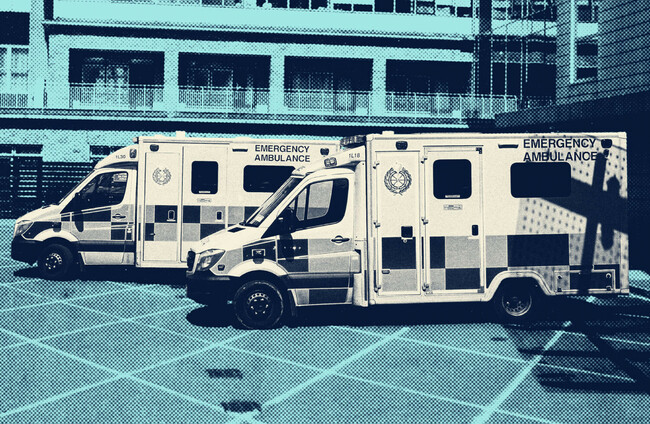
“A frenzy”: 20,000 incidents of violence and aggression in Irish hospitals

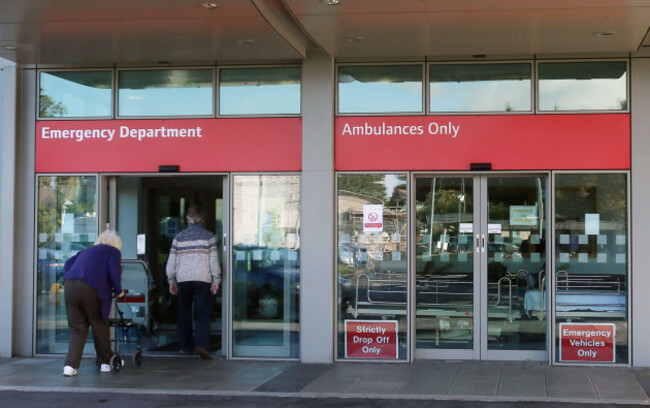
Doctor and Nursing unions say overcrowding and delays are a factor in the rising number of incidents.

MARY KNEW THERE was the potential for trouble – what she did not expect was the magnitude of what followed.

“It was a full-on assault, a frenzy,” she said.

Mary (not her real name) is an experienced Emergency Department nurse at one of the country’s larger hospitals. She has seen a lot over the years, but this was something new – being assaulted by a patient, and in so doing, featuring in the ever-growing number of incidents at our hospitals in recent years.

The Journal Investigates has found that over the past three years a minimum average of 18 incidents of challenging behaviour, aggression or even violence have been recorded each day, based on up-to-date figures from both HSE-run and voluntary hospitals.

According to the Irish Nurses and Midwives Organisation [INMO], the figures received under various Freedom of Information requests are likely an underestimate of the true total. And while not every incident involves a serious degree of violence or aggression, each takes a toll.

Some require Garda involvement, others are reported to the Health and Safety Authority, and some result in compensation payments. The Journal Investigates can reveal that more than €3m has been paid in damages over the past three years by the State Claims Agency within the HSE Regions associated with hospital-related ‘Violence, Harassment and Aggression’ claims and relating to a small number of incidents and inquests.

One hospital has told us that it is now trialling the use of protective equipment for its security staff – including stab-resistant vests.

The numbers are trending upwards. Taking just the HSE-run hospitals around the country, the number of recorded incidents last year in which staff were impacted rose to 2,089, higher than the annual totals in the previous two years. Other hospitals have seen year-on-year increases, while the numbers fluctuate elsewhere.

As for the reasons, the INMO believes that overcrowding in many of the country’s hospitals is, at the very least, a contributory factor. Mary, for one, agrees.

Investigations like this don’t happen without your support… Impactful investigative reporting is powered by people like you.

“The assault was horrific”

Alamy Stock Photo Alamy Stock Photo

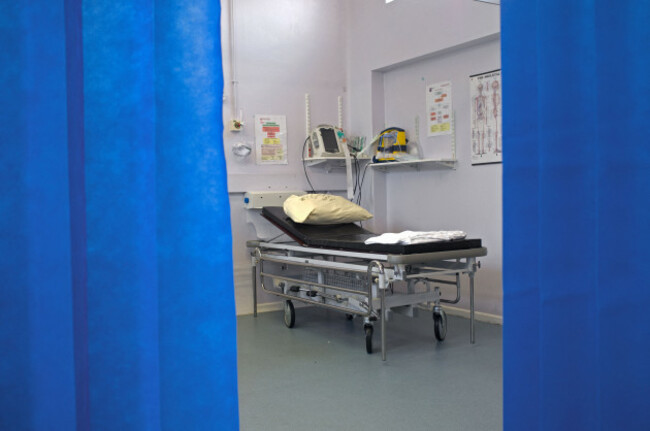
On this particular evening, the ED was extremely busy, and according to Mary, short-staffed.

The patient had come to the hospital earlier in the day and concerns had already been raised about their mental state. This escalated, prompting members of staff to go and assist. Mary then entered the room.

The assault was horrific in that I was bet [beaten] around the place.

“[They] caught me by the hair and had a good grab of my hair and then went to thumping, that’s the only way I can describe it – thumping down [their] fist on top of my head.

“[They] caught my arm, twisted my arm, at one stage [they] had my arm behind my back. We are not allowed to restrain anybody – I had no choice but to take the beating. I kept putting my hands up to block the blows, but I could not have got a hold of [them].”

Kicks followed, though by now security knew what had occurred and responded. The immediate situation was calmed, managers arrived, life elsewhere in the ED continued.

Mary was clearly shaken by what had happened, and not even sure as to the extent of the damage, but a sense of professional duty quickly reasserted itself. That, and the reality of life in a crowded ED.

“This man came up to me, I was literally trying to fix my clothing, and he said to me, ‘I don’t really care what happened there; I have asked for pain relief four times – get me my fucking pain relief.’

“My arm was killing me, I was black and blue in my arm, the redness was starting, you could see it was going to bruise.”

Hours later, Mary went for an x-ray. There were signs of bruising, but no broken bones. Then she finished her shift.

Numbers trending upwards

The figures obtained by The Journal Investigates shows there were at least 19,771 recorded incidents in between 2023 and 2025, inclusive, including both cases where staff were the injured party, and other incidents where a patient, relative, service user or other was impacted.

We also found that among larger hospitals Emergency Departments are the most likely area in which incidents of challenging behaviour – including violence – have taken place.

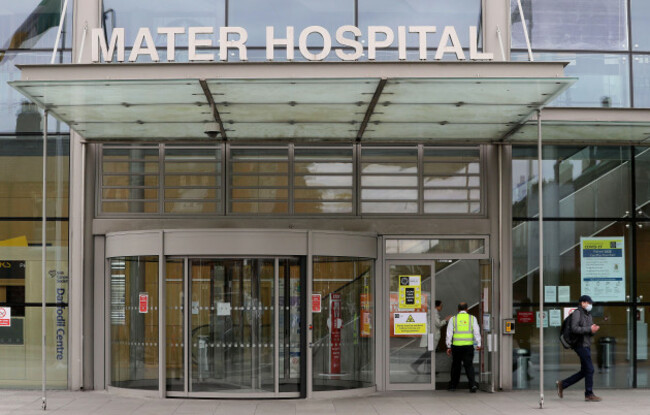
The Mater Hospital in Dublin had the highest number of recorded incidents for the years 2023 to 2025, at 2,442, with its ED seeing more incidents than any other part of the hospital.

Other hospitals with a high number of recorded incidents include the Beaumont Hospital, also in Dublin, with 1,791, where again the ED saw the most incidents, as did Tallaght University Hospital, which had 1,480 incidents overall. St James’s Hospital was not able to provide data by time of publication.

Elsewhere, the Mercy Hospital in Cork recorded 1,018 incidents, a third of which related to its ED, while St Vincent’s in Fairview in Dublin, an in-patient psychiatric facility, recorded 1,293 incidents.

Even a setting like the Dublin Dental University Hospital recorded 12 incidents in the past three years.

Alamy Stock Photo Alamy Stock Photo

A spokesperson for the Mater said there had been a 26% increase in reported incidents of violence and aggression in 2025, with 632 incidents recorded by staff, and added: “Anecdotal feedback and post‑incident consultations indicate that incidents were previously under‑reported.

“The hospital is situated in the north inner city, an area recognised as one of the most deprived in Dublin. The Emergency Department in the Mater Hospital is one of the busiest in the country. For example, more than 105,000 patients were seen in the ED last year.

“Many of our patients have multiple morbidities as well as facing more socio-economic issues than in other parts of the country.”

Measures to address the issue include a training programme for staff at all levels, a safety intervention training course and an ED-specific working group alongside the hospital’s reporting system including a section to identify the root cause of an incident—such as brain injury, delirium or antisocial behaviour.

The hospital’s policy on dealing with challenging behaviour is to be reviewed this year.

“Everything bottlenecks in EDs”

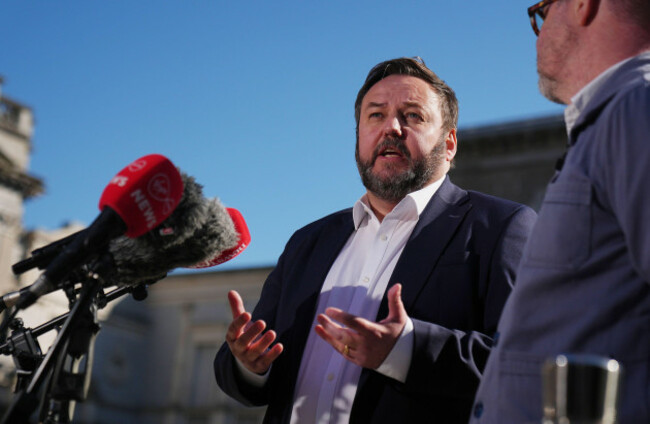
sinn-feins-padraig-mac-lochlainn-speaking-to-media-at-leinster-house-dublin-as-the-dail-returns-after-a-break-picture-date-wednesday-march-19-2025 Sinn Féin TD Pádraig MacLochlainn outside Leinster House last year Alamy Live News. Alamy Live News.

Sinn Féin TD for Donegal, Pádraig MacLochlainn, last year asked a number of Parliamentary Questions relating to security issues at Letterkenny University Hospital “because it is of profound concern”.

Our latest figures show that at Letterkenny University Hospital there were 714 recorded incidents across the three years – one of the highest figures among HSE hospitals and significantly more than, for example, Cork University Hospital, which had 413 incidents in the same period.

There have been a number of incidents at the hospital in recent years and just last January it was reported that a security guard there had been assaulted.

Deputy MacLochlainn said of the situation generally: “Frontline staff are often working under impossible situations, then if exposed to violence it’s more than they can bear really.

“A lot of it is at the weekend, a lot of it is drug and alcohol-related, mental health-related. There is a big issue about how we deal with mental health in EDs.”

Deputy MacLochlainn, who is also the Sinn Féin chief whip, said overcrowding and long wait times were also contributory factors. He recalled how his own mother once waited 34 hours for treatment at Letterkenny University Hospital.

“Distress grows,” he said. “Everything bottlenecks in EDs.

“I am particularly concerned about frontline staff in EDs. They are carrying the can for failures in our healthcare.”

Data received under Freedom of Information relating to HSE hospitals shows 5,799 incidents in which staff were impacted. In 4,622 of those incidents the alleged perpetrator was a service user.

Another 4,349 incidents were recorded at HSE facilities where service users were impacted – annual totals have risen each year and climbed to 1,731 last year. Unlike with incidents that impacted on staff, the vast majority of cases in which service users were affected did not happen in EDs.

Among the HSE hospitals in our figures:

  • University Hospital Waterford had the highest number of incidents in the past three years, with 813 – and with more patients impacted than staff;
  • Wexford General Hospital recorded 755 incidents – including 431 times that patients were impacted;
  • University Hospital Limerick had 666 incidents, including 429 incidents where staff were impacted;
  • Tipperary University Hospital had 568 incidents, split almost completely evenly between staff and patients.

“People frustrated by long waits”

The Journal / YouTube

The Irish Nurses and Midwives Organisation believes any data on recorded incidents is likely under-reported. 

According to INMO General Secretary Phil Ní Sheaghdha, who features in the above video clip, “the biggest issue is frustration from long waits – that is what is reported to us.

“People get frustrated, lash out, physically, verbally, more often verbally. They say ‘Sorry, I know it’s not your fault, but my 85-year-old mother has been on a chair here for the last 24 hours.’

“Of course people are presenting at EDs with addiction and other mind-altering conditions – whether addiction, alcohol, whatever the nature of the condition. To be fair, if you have sufficient staff on duty and sufficient space, that is much easier to manage.”

Ní Sheaghdha believes the HSE’s use of ‘surge capacity’ – where a number of beds are taken from elsewhere in the hospital to meet ED demand – can increase safety risks for staff, arguing that these freshly opened spaces can lead to a “heavy reliance” on agency workers who may not be familiar with the hospitals.

“We do not believe that the precautionary principle is taken into account,” she said.
“When you are on your own in a unit there are protections that we believe are not being adhered to.”

According to Ní Sheaghdha, surge areas can be “ad hoc” and particularly during out-of-hours and nighttime periods they may be isolated and understaffed parts of the hospital.

Separate figures provided by the Department of Health and taken from the National Incident Management System (NIMS) showed there were 406 incidents in the past three years where hospital doctors were impacted.

That number peaked with 143 incidents in 2024, with five moderate incidents across the three years, 17 minor, and the rest deemed negligible.

Professor Matthew Sadlier of the Irish Medical Organisation (IMO) said he believed the figure of 406 was “too low” and that IMO surveys would suggest doctors under-report incidents.

Prof Sadlier, who is the incoming IMO President and current Chair of its Consultant Committee, said mental health issues and related disorders were likely behind some of the figures in relation to aggression and violence, but so too was the “physical infrastructure” of EDs and the kind of presentations in those departments.

“We are seeing an increase in violent presentations,” he said, adding that one reason was drug-related presentations, including those linked to new synthetic drugs, some of which don’t even present in testing.

“We can have someone come in who seems like they are drug-affected, in an intoxicated state and you do a drugs screen and they come back negative, and it’s because it’s not traditional cannabis, it’s synthetic cannabinoids. And there are hundreds of these products flooding the market.” 

He said many EDs are “old school” and “cramped”, with a lack of space and “blind corridors”.

“The physical infrastructure is what can make a minor incident a major incident.”

HSE: “A good safety culture”

Alamy Stock Photo Alamy Stock Photo

The HSE said that due to a 12% increase in staff numbers between 2021 and 2025 and enhanced staff awareness of the reporting procedures, “the HSE has experienced a corresponding increase in incident reporting.”

However, it said the rise in the number of incidents was driven by “low acuity” episodes, with negligible incidents, most likely verbal, rising by 81.39% and minor incidents increasing by 66.67%. Over the same period, moderate incidents increased by 18.18%. There were no major incidents last year.

“This is indicative of a good safety culture,” the HSE said.

“It is the policy of the HSE that all incidents are identified, reported and reviewed so that learning from events can be shared to improve the quality and safety of services.”

There was an admission that the numbers of patients in the hospital system is a major challenge. As of the end of February this year, 17 hospitals around the country were operating above its maximum occupancy level. 

The HSE said surge capacity is currently in use across 23 of the 26 adult hospital sites with Emergency Departments. According to the HSE: “It is always preferable that a patient be cared for in a hospital bed, including surge beds, rather than on a trolley.”

A HSE spokesperson acknowledged that the number of patients who are waiting on trolleys to be admitted to hospitals is “unacceptably high” and said various measures were in place to assist, from getting ready to go home once treatment is completed, to daytime GP extended hours.

“Over the course of 2025 the HSE saw an increase of 4.5%, or an extra 200 people a day attending Emergency Departments,” the HSE spokesperson said. “Despite this increase in attendances, there was a reduction of 10% in the number of admitted patients waiting on trolleys in Emergency Departments.”

Hospital issues “never an excuse” for bad behaviour

Alamy Stock Photo Alamy Stock Photo

A spokesperson for the Irish Hospital Consultants Association said that “any level of violent or aggressive behaviour in our hospitals is deeply concerning” but that frustration over long waiting times and staff shortages “should never be used as an excuse for such unacceptable behaviour”.

“Even when these incidents are categorised as minor, each one can contribute to a culture where healthcare workers feel at risk in their workplace.”

The INMO recently met with the Health and Safety Authority [HSA] and Ní Sheaghdha believes there should be more inspections at hospitals relating to security issues and that there should be a focus on “looking at overcrowding as a potential workplace safety issue”.

The HSA has issued 31 improvement or prohibition notices in recent years in the health and social care sector, a figure described by Ní Sheaghdha as “very low”. Just one of those notices related to violence and aggression.

Under the Safety, Health and Welfare at Work (Reporting of Accidents and Dangerous Occurrences) Regulations 2016, employers and duty holders must report an incident to the HSA where an employee is unable to perform their normal work duties for more than three consecutive days, excluding the day of the accident.

According to a HSA spokesperson: “Overcrowding or resourcing issues may be examined as part of the wider context of an incident if they affect occupational safety or risk management.”

Hospital trialling stab vests

a-general-view-of-st-vincents-university-hospital-in-south-dublin-as-inspectors-made-spot-checks-on-nenagh-hospital-in-co-tipperary-the-mater-and-st-vincents-in-dublin-and-said-many-improvements-we St Vincent's University Hospital Alamy Stock Photo Alamy Stock Photo

At least one hospital is now trialling the use of stab vests.

A spokesperson for St Vincent’s University Hospital in Dublin said: “A comprehensive risk assessment was recently undertaken and, as part of this process, we are currently trialling protective equipment, including the use of stab‑resistant vests for security staff, in certain high‑risk areas, such as the Emergency Department.”

According to a spokesperson for the Beaumont Hospital, personal protective vests have been in use by security staff there since 2008. 

According to the HSE, the provision of personal protective equipment (PPE) is based on risk assessment completed by local management in consultation with staff and is done through local arrangements.

A HSE spokesperson said: “PPE is the last line of defence in the hierarchy of controls and is used in conjunction with other control measures.”

It’s a similar story with the provision of personal alarms, again based on local risk assessments and arranged through consultation with staff. According to the HSE: “It is the responsibility of local management to ensure that all documentation associated with personal alarms is completed and retained.”

Gardai can be called to respond to incidents: for example, Gardai were contacted 157 times over the past three years to the Mercy University Hospital in Cork.

It was at that hospital where 88-year-old retired farmer Matthew Healy died of a cardiac arrest following a sustained and violent attack by another patient in January 2023. The hospital has now developed a pilot programme involving a local Garda presence – something praised by the INMO.

Hospitals can also have arrangements for an enhanced Garda presence, including through the Hospital Watch Scheme which operates in the HSE Dublin and North East and HSE West and North West regions. Community Garda Officers can also be assigned to some sites where needed, such as in HSE Cork South West.

Regarding the possibility of enhanced PPE being seen as necessary by some security personnel, Deputy MacLochlainn said: “If they are saying they need stab vests, give them stab vests.

“It is a terrible indictment of our society.”

“It is so unsafe”

Mary believes systemic issues in the health system are the main factor in creating additional stresses in a work environment that – by its very nature – is already pressurised.

“The long waits [to be seen] – I get it,” she said. “Who wants to wait eight hours to see a doctor? We are saying to patients we know, we get your frustration.”

She also believes that the “skill mix” of those working in the health system needs a blend of youth and experience, adding: “Senior nurses on a floor would spot anything.”

Since the incident, she says her mental health has been impacted. It means that re-entering the fray isn’t easy.

As for the patient who appeared to be in mental distress when they assaulted her, Mary still doesn’t know what happened to them.

“I love my job, I love being a nurse,” Mary said. “It was all I ever wanted to do, was be a nurse, and the fact that I am thinking about leaving the profession is upsetting.

“But this carry on is craziness, it is so unsafe.”

The Journal Investigates

Reporter: Noel Baker • Editors: Susan Daly and Sinead O’Carroll • Social Media: Cliodhna Travers • Main Image Design: Lorcan O’Reilly

Investigations like this don’t happen without your support...
Impactful investigative reporting is powered by people like you. Over 5,000 readers have already supported our mission with a monthly or one-off payment. Join them here:

Close
9 Comments
This is YOUR comments community. Stay civil, stay constructive, stay on topic. Please familiarise yourself with our comments policy here before taking part.
Leave a Comment
    Submit a report
    Please help us understand how this comment violates our community guidelines.
    Thank you for the feedback
    Your feedback has been sent to our team for review.

    Leave a commentcancel

     
    JournalTv
    News in 60 seconds