We need your help now

Support from readers like you keeps The Journal open.

You are visiting us because we have something you value. Independent, unbiased news that tells the truth. Advertising revenue goes some way to support our mission, but this year it has not been enough.

If you've seen value in our reporting, please contribute what you can, so we can continue to produce accurate and meaningful journalism. For everyone who needs it.

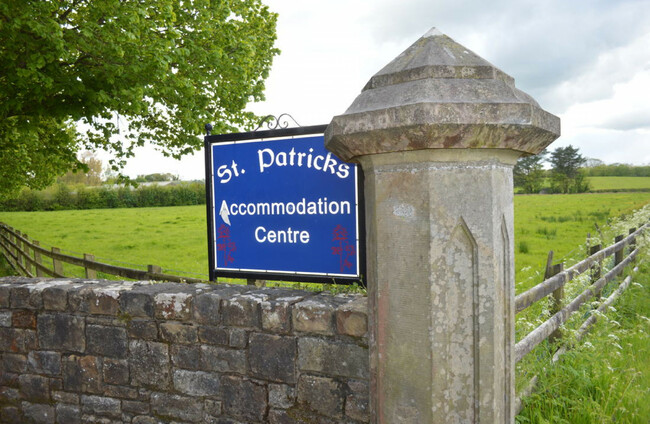
St Patrick's Accommodation Centre in County Monaghan, one of the centres that was inspected.

HIQA finds lack of nappies, mouldy rooms, and parents and kids sharing bedrooms in IPAS centres

Some IPAS residents who have refugee status reported that they feel ‘stuck’ as they are struggling to find other accommodation.

HIQA HAS FLAGGED fault with multiple accommodation providers for international protection applicants after inspecting seven centres nationwide. 

While two centres were found to be fully compliant inspectors found a lack of non-food items such as nappies, baby formula, sanitary products, and access to contraception in two centres.

Mouldy living areas were an issue in another centre, where there was also an issue with children, parents, and siblings of mixed gender having to share “cramped” bedrooms. 

Inspectors found that in each centre a number of people had actually been granted refugee status, but remained there because they could not find alternative accommodation elsewhere due to the current housing crisis. 

Inspectors who visited the Athlone Accommodation Centre, a mobile home site operated by major IPAS accommodation provider Aramark, on 3 March found that while there was generally a good quality of life for residents, there was a serious issue with overcrowding in the mobile units.

Multiple family members were sleeping in the same bedroom in some cases. 

“Our children can’t even move in their beds they are so small,”  one parent told an inspector. 

Other families had deep concern for damp conditions in their living areas and poor ventilation, which they said caused family members to become unwell. 

The site has 156 residents, with 89 children living there. Inspectors found that there was limited space for people to be able to walk around their beds in family unit bedrooms, and that in one case, a resident was having to share a double bed with their child. 

Residents there who had been granted refugee status also reported feeling that they’d “let down” their children by being unable to move out of the centre.

“We are stuck,” one parent told an inspector, while another said “it feels like we are never going to find a home”. 

In the Dominick Street Complex in County Galway, which has 115 residents including 55 children, inspectors found that 36 had refugee status, but found themselves unable to source other accommodation. 

Residents there generally reported that they felt “safe and happy”. 

However, inspectors flagged issues including no system being in place for welfare checks, or for dealing with concerns that had arisen regarding the wellbeing of residents, including children, living in the centre. 

Not all of the staff members were garda vetted in the centre, references were missing for multiple workers, and one staff member didn’t have a required international police check. 

Inspectors noted some areas of risk, including that in some cases adult sibings were sharing bedrooms with younger siblings of the opposite gender, and that there wasn’t an adequate fire evacuation plan for residents with additional needs. 

HIQA asked the accommodation provider, Keldesso Limited, to take urgent action on risk assessment within the centre. 

In the case of the Dublin Central Inn, an accommodation centre ran by Coziq Entreprises Limited, with 109 residents across 60 bedrooms on a busy city street, HIQA inspectors found that residents weren’t provided with baby formula, female sanitary products, contraception, wipes or nappies -which is not in line with national standards. 

While the accommodation was “well maintained” and residents had “choices in their daily lives”, governance and management issues were identified. Though HIQA inspectors identified concerns around domestic violence, substance misuse, and child protection, no risk assessment had been carried out in these cases. 

“this compromised the residents’ protection and safety, and did not assure the provider that the service was safe and effective,” an inspector noted. 

In County Monaghan, inspectors found that of 354 residents living on the 18 acre site at the St Patrick’s accommodation centre. 73 had refugee status or had been given permission to remain in Ireland, but could not find anywhere else to live, accounting for 21% of the residents there overall. 

Inspectors found that some bedrooms were mouldy, and situations where children over the age of ten shared rooms with their parents or siblings of a different gender. This was the case for 17 families in the centre. Inspectors said this compromised their “dignity and privacy”. 

Inspectors heard mixed feedback from residents living at the site. While some said they were happy there and that staff offered residents a “supportive environment” on the whole, others said sharing rooms with their children was “inappropriate”, and said that they struggled to live a meaningful life there. 

In the Temple Accommodation Centre in County Westmeath, which houses 91 residents, including 13 who have refugee status, inspectors found that the living quarters were clean and well maintained, but that the centre was in a remote areas, which led to some residents complaining about the frequency of transport available to nearby towns. 

The residents told inspectors that during a recent power outage caused by a storm, staff ordered pizza for them and set up games for the residents to play, creating a “party atmosphere” which many have positive memories from. Residents reported to inspectors that the staff were “nice and kind”. 

All of the inspections were carried out between January and May of this year. In each case, service providers have agreed to compliance plans to address and correct faults that were identified by inspectors.

Readers like you are keeping these stories free for everyone...
A mix of advertising and supporting contributions helps keep paywalls away from valuable information like this article. Over 5,000 readers like you have already stepped up and support us with a monthly payment or a once-off donation.

Close
JournalTv
News in 60 seconds