Sign in. It’s quick, free and it’s up to you.
An account is an optional way to support the work we do. Find out more.
Sign in. It’s quick, free and it’s up to you.
An account is an optional way to support the work we do. Find out more.
CLINICIANS ARE HOPING that an opioid substitution drug that works as an alternative to methadone, but only involves once-a-month injections, is set to transform how addiction services work in Ireland.
Budival, a long-acting injectable form of buprenorphine, is already being taken by over 1200 patients, while nearly 10,000 received methadone treatment last year.
Leading psychiatrists working within HSE addiction services say that following a successful pilot programme and additional funding in this year’s budget, they are hoping that eventually the number of patients using Budival will far outnumber those on methadone.
The drug and the way it’s administered has obvious benefits for both patients and doctors: patients only need to attend a clinic once a month once they are stable on the medication, and doctors don’t have to worry about how many takeaway methadone packets they are prescribing.
‘I got my independence back’
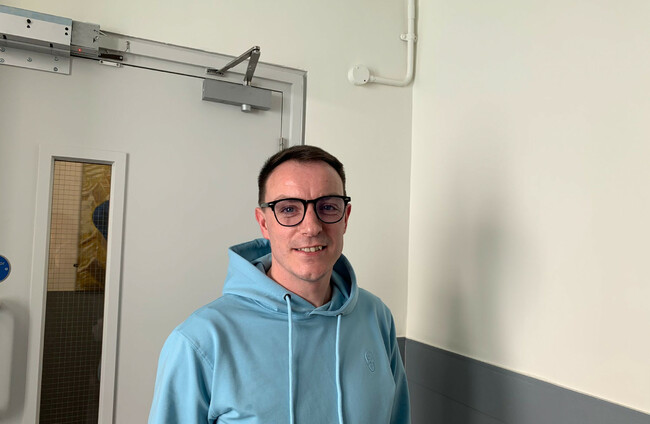
For 34-year-old Scott Hallion from Rathmines, Dublin, the impact of the drug has transformed his life following a relapse last year in the wake of a bereavement.
“I was in active addiction for 10 years, and then in 2021 I went to address my addiction issues in a drug treatment facility in Ashford, County Wicklow, where I did a 16-month programme,” Hallion explained.
The Dublin man said he was exposed to drugs early in life, and had a “certified coke addiction” at the age of 14.
He was 19-years-old and in prison when he smoked heroin for the first time.
“It’s not a nice place, to be honest with you. It’s dark, it’s horrible, it’s lonely. When you mention addiction to people… they all think the same thing. They think of people on the street, people in doorways, but it’s not just that.
“People would say, ‘You are off the wall,’ and you’d go, ‘No, I’m grand!’ You’d shave, brush your hair, have a shower and you look in the mirror and say, ‘I don’t know what everyone is talking about, I’m brand new,” Hallion reflected.
He said that drug use brought him to such a dark place in life, that he thought his “role in life” was to be a drug addict.
“I thought I was supposed to be a bad person, that’s the tricks addiction plays on you,” he said.
Recovery isn’t easy – Hallion jokingly describes it as a “bad divorce” – but relapsing brought him back to a place he didn’t want to be in. That’s when someone asked him if he’d ever heard of Budival.
He met with one of the support workers from the National Drug Treatment Centre, who told him that Budival would be great for him.
“For the first four weeks you get one shot a week, and I did that, everything was great, and I progressed onto the monthly,” Hallion said.
After several months out of work, he was able to go back into full time employment, and now works in a hands-on role in a busy city centre hotel.
He’s also been able to go on holidays, to Salou last year and to Amsterdam recently with girlfriend, without having to bring takeaway methadone, or to work around treatment appointments.
“I live a normal life, I don’t get cravings, I don’t sweat or ache. I don’t have to come to the clinic daily. My independence was handed back to me the day I chose to go on the Budival to be honest with you,” he said.
Hallion said that he’s keen to tell other people in similar positions to what he’s lived through about his journey with the medication:
“It’s vital we carry that message of hope… I say, ‘I’m the exact same as you, I’ve just been clean a bit longer’,”.
Clinicians don’t think that Budival will totally replace methadone.
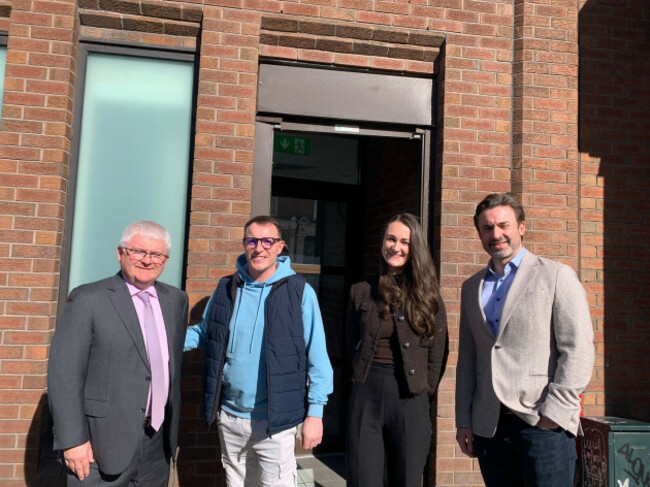
“It’s not going to be suitable for everyone,” Meghan Lynch, the Chief Pharmacist at the National Drug Treatment Centre says.
Budival is used primarily for mild to moderate addiction treatment, so switching onto the drug can actually become a treatment goal for some patients on higher methadone dosages.
“Some patients don’t want to go on it, and sometimes it’s not actually enough to stop their withdrawal, because it’s a partial agonist, meaning it only partially occupies the opioid receptors, whereas with methadone has an increasing opioid effect as the dose is increased,” Lynch explains.
However she envisions a future wherein 70% of people on opioid substitution treatment in Ireland are on the drug, with only 30% on methadone.
Dr Mike Scully, a HSE Consultant Psychiatrist in Substance Misuse, and Clinical Director of the Cuan Dara addiction centre in Palmerstown, Dublin. says that this would transform services for patients and clinicians.
“Methadone is a challenging medication. If it’s diverted, if it gets lost, there is a lot of potential for bad things to happen. With Budival there is no potential for bad things to happen… when the patient leaves, it’s in their arm,” he said.
Centres like Cuan Dara and the National Drug Treatment Centre on Pearse Street have already been prescribing Budival to patients since 2020, as well as a hub in Limerick City.
The pilot programme went on for longer than intended – due in part to the impact of Covid-19 – but now following additional funding of €750,000 from the Department of Health for 2026, access to the drug is being rolled out across the HSE’s network of 82 clinics that are able to dispense these kinds of drugs.
Beyond that, Dr Scully explains that there is potential for GPs to prescribe the drug and perhaps even for pharmacies to administer it.
At present, some patients are travelling to Dublin from Sligo and further afield to avail of the treatment.
So – why isn’t the treatment available nationwide already?
“It’s about awareness and increasing the confidence in this drug, so we need to share our experiences. Even for clinicians, they need to have someone they can call to give them reassurances about using something completely new in a vulnerable population,” Dr Lynch said.
Budival is produced by a drugs company called Camurus AB, and it costs “about two and a half to three times” as much per unit compared to methadone.
However, Dr Scully puts forth that using the drug will take up less clinician time, and that it’s difficult to put a price on the difference it will make to patients’ lives.
“If I was a cancer doctor, I’d look right across to you and say, ‘This drug works, and it’s worth it – period.
“We end up having to go through these hoops to justify a couple of hundred euros a month that can be clinically effective. If it’s clinically effective, it’s cost effective, that’s my view,” he said.
Dr Scully added that there needs to be funding for the treatment to be expanded to community settings in the future, so patients in rural settings and areas without dispensing clinics can be reached.
To embed this post, copy the code below on your site
















have your say