Sign in. It’s quick, free and it’s up to you.
An account is an optional way to support the work we do. Find out more.
Sign in. It’s quick, free and it’s up to you.
An account is an optional way to support the work we do. Find out more.
ARCHEOLOGISTS HAVE CONFIRMED a ringfort overlooking Galway Bay was a settlement for rulers and nobles in Ireland’s Early Medieval period.
The Rathgurreen Ringfort in the Maree area of Co Galway is now thought to have been a “high status” settlement that dates anywhere from the 5th to 12th century.
An eight week excavation has revealed discoveries which suggest that parts of the site are perhaps 1000 years older than originally thought, with evidence of contact with Rome, Scotland, France and Scandinavia.
The site is thought to have been home to a local ruler such as a king or a lord – that theory was first proposed by NUIG Professor Michael Duignan in the late 1940s.
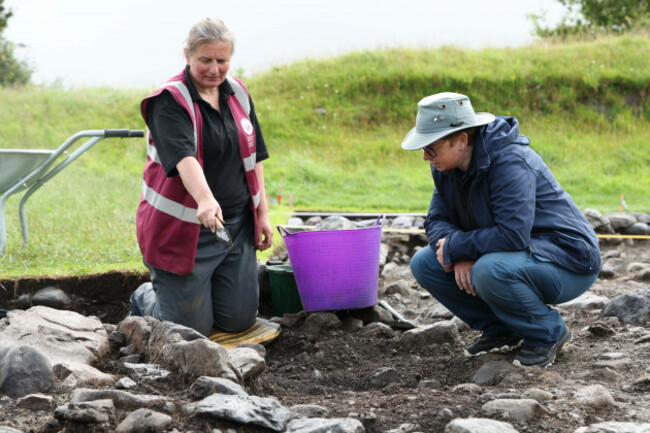
Dr Michelle Comber, an Archaeology lecturer at the University, who co-led the modern-day excavation, said that we can say now with some certainty that Maree “is an ancient territory”.
She said there are up to 40 ringforts in the area but most are only a third of the size of Rathgurreen.
“We have evidence of continuity and change at this site – a settlement that possibly dates back to the Iron Age, that was later developed into a very fine ringfort. A new home with links to ancestors would certainly have been very attractive to Early Medieval nobility,” she said.
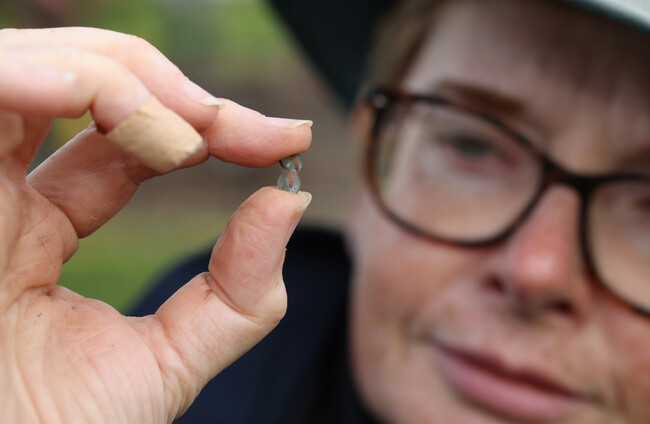
During the dig the team found a number of glass beads, some of coloured blue and another turquoise and red.
“These have parallels in other parts of Ireland and Scotland in the Iron Age – the era that immediately precedes the Early Medieval period,” Dr Comber said.
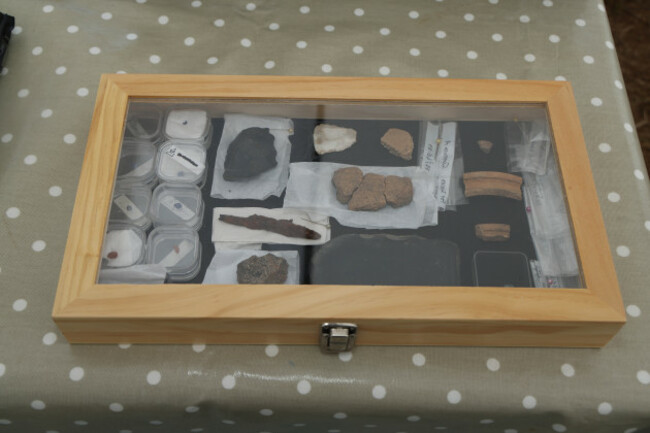
The dig also confirmed the presence of Early Medieval pottery from northern France and amber beads likely connected with Scandinavian trade routes used by the Vikings.
There is also evidence of the manufacture of purple dye, including remnants of dog-whelk shellfish that were processed at the settlement to produce the rare, and therefore, valuable colouring.
“The big takeaway from this site is that a place like Galway had a wider significance in the past, and that significance translates into the present.
“This one site has many tales to tell, and roles to play. People come to the west of Ireland and they think it’s isolated and remote, but Maree’s ancient remains tell us that western Ireland was not cut off from the wider world, geographically or culturally,” Dr Comber reflected.
Community volunteers, University of Galway archeology students and international students from Uppsala University came together this summer to investigate this site, contribute to a new research project, and gain skills vital to pursuing in-demand careers in the archeological profession.
To embed this post, copy the code below on your site















have your say