Sign in. It’s quick, free and it’s up to you.
An account is an optional way to support the work we do. Find out more.
Sign in. It’s quick, free and it’s up to you.
An account is an optional way to support the work we do. Find out more.
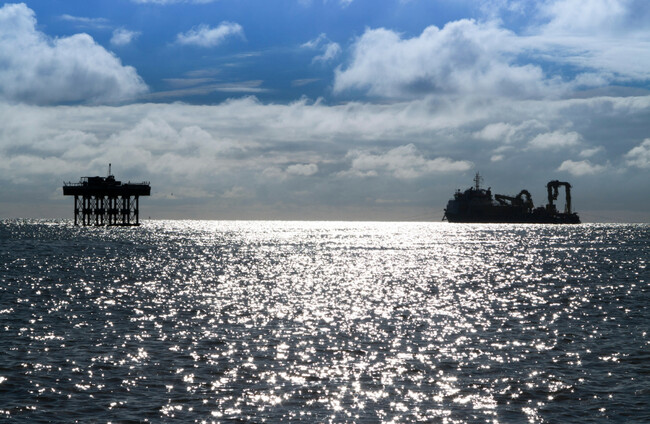
TAOISEACH LEO VARADKAR has said the Government would consider joining an EU- or NATO-led mission to better protect undersea cables off the Irish coast from potential interference.
Varadkar arrived at the European Political Community summit of 46 leaders in Moldova, where he told reporters that the idea was “something we’re interested in”.
In March an EU Commission report recommended that support, including financial aid, be given to member States’ navies to better protect key infrastructure including undersea cables and pipelines.
Varadkar said:
“We are an island nation, our seas are seven times greater than our land area and going through those seas are a lot of really important infrastructure, communications cables that connect Ireland to the world and Europe to North America.”
“And also for example, our gas interconnector with the UK and our electricity interconnectors with both the UK and the new one with France.”
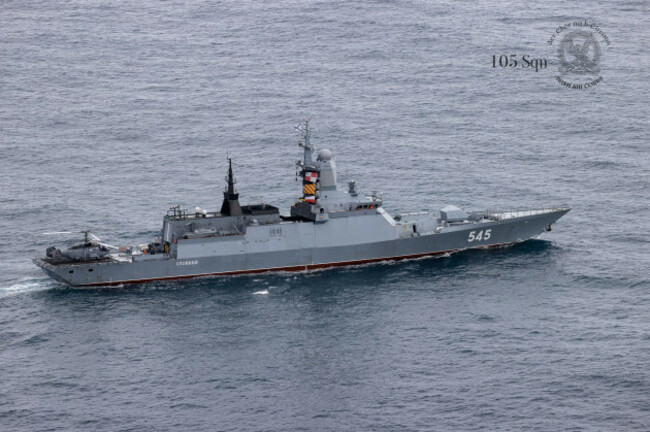
Russian ships have entered Ireland’s Exclusive Economic Zone several times in recent years, leading to concerns that the Defence Forces are helpless to stop any potential tampering or mapping of undersea cables.
“I don’t think we can protect these on our own,” the Taoiseach continued.
“Therefore it makes sense for us to cooperate with our neighbours and allies, both in the European Union and Nato to make sure that those cables are secure no matter what happens.”
He added that the Government would need to know the detail of any EU-led or Nato-led cooperation “before we can make a decision on whether or not to participate”.
When asked what form this cooperation could take, Varadkar said:
“That’s the point, we don’t actually know. There’s many aspects of this, one is making sure that when cables and pipelines are designed, and when they’re replaced, that they’re more secure than they were in the past.”
“Another part of it is monitoring, making sure that we’re able to keep an eye on vessels that pass through our economic zone.”
Ireland is already part of the EU’s programme to integrate defence cooperation among members, known as Permanent Structured Cooperation or PESCO.
“As a small country of 5 million people, no matter how much we spent on our Defence Forces or our Navy, we wouldn’t be able to do this on our own,” Varadkar said.
“It’s a very real issue for us. It’s not a theoretical one. But we have to know what we will be signing off to before we can sign up to anything.”
Two new naval vessels arrived from New Zealand last month for use in the Irish Naval Service but it is understood those vessels are inshore ships that will not be able to go into the deep Atlantic ocean.
In January, The Journal revealed that two ships were set to be tied up as the Navy did not have enough crews to send them to sea.
Varadkar was asked if he was aware of any Russian exercises to map undersea cables near Ireland, to which he replied “we aren’t aware of anything specific”, but said it was a sensitive matter of national security.
He added that the risk of Ireland being the victim of hybrid warfare was currently “higher than it would have been 10 or 20 years ago”.
“Traditionally, when we thought about security concerns, you would think about one country invading another. Russia has invaded Ukraine. But we live in a different world now. Threats are hybrid security threats.”
“We’ve already had a cyber attack on our health service, for example, we need to make sure that nobody is in a position to take down the IT systems around our critical infrastructure, like our electricity grid.”
A day before the European Political Community summit, France’s President Emmanuel Macron told reporters in Bratislava “we must also think of a wider Europe”.
“We must think of our Europe not simply from a security point of view within the framework of NATO and not simply within the framework of the European Union.”
The Moldova summit also came as NATO ministers, including US Secretary of State Antony Blinken, met to discuss the agenda of the alliance’s next summit.
The NATO summit in Vilnius on 11 July will debate how formal a promise to give Ukraine on how and when to join the alliance.
With additional reporting from AFP

To embed this post, copy the code below on your site











have your say