We need your help now

Support from readers like you keeps The Journal open.

You are visiting us because we have something you value. Independent, unbiased news that tells the truth. Advertising revenue goes some way to support our mission, but this year it has not been enough.

If you've seen value in our reporting, please contribute what you can, so we can continue to produce accurate and meaningful journalism. For everyone who needs it.

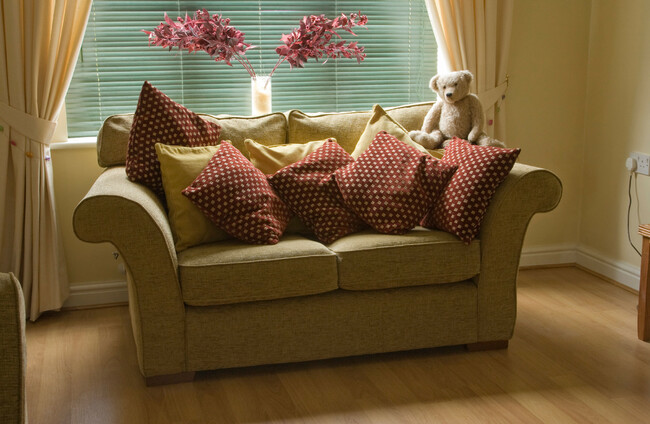
Upholstered furniture in Ireland is treated with chemicals to comply with fire safety regulations. Alamy Stock Photo

Toxic chemical fears may see Ireland's furniture fire safety law scrapped

Ireland’s regulations are an outlier in the EU. Ikea has called for changes to be made quickly.

THE GOVERNMENT IS considering whether to scrap Irish fire-safety standards for household furniture that lead to the use of toxic flame-retardant chemicals.

The Department of Enterprise said the review was prompted by a report by the European Chemicals Agency on the latest science on aromatic brominated flame retardants.

This highlighted potential health hazards including carcinogenicity, neurotoxicity, endocrine disruption and reproductive toxicity. The chemicals are bioaccumulative in humans and wildlife, meaning they build up in tissue faster than they can be excreted, and are persistent in the environment.

Brominated flame retardants have been found in Irish women’s breastmilk.

These chemicals are used to comply with Ireland’s fire safety tests for upholstered furniture such as couches, armchairs and headboards, as well as for fillings for mattresses. Upholstered furniture is tested with an open flame in Ireland, which means heavy use of chemicals is needed to pass.

Swedish furniture giant Ikea told The Journal it welcomed the Irish government’s proposals to reduce “unnecessary over-reliance on chemical flame retardants” and it wants to see the legal framework updated “quickly”.

“Chemical flame retardants are increasingly recognised as problematic to human health, while there is evidence undermining their effectiveness in maintaining fire safety,” Ikea said, adding that “a better regime to balance both chemical safety, environmental impact, and fire safety is possible”.

Ireland an outlier

It’s the second time the government has reviewed the law in six years over health and environmental concerns.

Ireland’s regulations were drafted in the 1980s and 1990s when smoking was much more prevalent and smoke alarms were not in as widespread use as they are now.

Ireland is an outlier in the EU in setting fire safety regulations for household furniture that necessitate the use of chemicals for compliance.

The government review aims to establish whether Ireland should scrap its rules and default to the EU standard, which the Department of Enterprise has said represents a “viable” method for regulating furniture safety here. It would take into account product design, materials and the intended environment in which products are used.

The department told The Journal the current review is at an “advanced stage” and will be published shortly.

Copying the UK

Ireland’s regulations mimic those in the UK, although the UK recently removed baby products such as cot mattresses, car seats and carry-cots from the scope of its regulations on the basis that the fire safety benefits do not outweigh the risks posed to infants by chemical exposure.

The UK is also currently considering a total overhaul of its furniture fire safety rules, it announced this month.

Terry Edge, a former UK civil servant who campaigns against the use of flame retardants in furniture, said consumer awareness of the problem is hampered by the fact that mandatory fire safety labels in the UK and Ireland do not list chemicals used in furniture.

Moving to EU standards would be much better for health, but in both Ireland and the UK there will still be millions of items of furniture containing chemicals for years to come, Edge said.

The Department of Enterprise has said the historical interdependence between the Irish and UK furniture markets means changes in Britain will affect the supply of furniture to Ireland “as Ireland’s regulations will differ from both the UK’s and the rest of the EU’s”.

However, if Ireland adopts the EU’s rules, furniture that is manufactured for the UK market will still be able to be sold in Ireland.

The European Furniture Industries Confederation, an industry lobby, has urged the Irish government to adopt EU standards to reduce the use of “unwanted toxic flame retardants” in furniture.

“As the Irish legislation mirrors the UK legislation, it is important to note that the UK government has itself admitted that the UK legislation is ineffective,” Efic has told the Irish government review.

It noted that the UK government admitted in 2016 that it did not have comparative data indicating that the current UK regulations, which Ireland has copied, lead to safer furniture than in the rest of the EU. Neither did the UK government claim to have evidence that furniture flame retardant chemicals are effective in saving lives or in preventing fires in furniture.

The European furniture industry lobby argues that in a real furniture fire, once the fabric ignites, the flames grow so large that flame retardants added to foam filling are ineffective.

The Department of Enterprise has indicated that the European Commission may decide to take action against Ireland’s fire safety rules as part of a crackdown on national regulation that disrupts the EU single market

Research

Scottish environmental charity Fidra, which campaigns against chemical pollution, has told the Irish government that flame retardants, while not mandatory in Ireland, are the cheapest way to comply with the outdated Irish rules.

“Robust research has shown that fire deaths in multiple countries (including European countries) of which many do not rely on open flame furniture fire safety tests, have fallen at the same rate between 1990 and 2019,” Fidra told the review.

It said chemical flame retardants have been found in high levels in children’s bedrooms, and the chemicals can pass into the human body through skin contact. Indoor air and dust are also exposure routes.

The chemicals also make it impossible to recycle Irish furniture.

The chemicals make smoke more toxic, by producing more carbon monoxide and hydrogen cyanide, and more opaque, reducing visibility during a fire, it added.

The Irish government has been aware for many years of the risks posed by brominated flame retardants used to comply with Irish law. The government previously reviewed the furniture fire regulations in 2020 but did not take action to address the risks posed by the chemicals.

In 2019, an inquiry by a UK parliamentary committee found there was a growing body of research indicating that some flame retardants posed a threat to human health and the environment.

The European brominated chemicals industry lobby, BSEF, represented by Irish PR firm Hume Brophy, has repeatedly lobbied Irish politicians in recent years on “the need to ensure that any changes to Ireland’s furniture fire regulations continue to guarantee high levels of fire safety”.

BSEF has been contacted for comment.

Brominated flame retardants are also widely used in electrical equipment.

Readers like you are keeping these stories free for everyone...
A mix of advertising and supporting contributions helps keep paywalls away from valuable information like this article. Over 5,000 readers like you have already stepped up and support us with a monthly payment or a once-off donation.

Close
19 Comments
This is YOUR comments community. Stay civil, stay constructive, stay on topic. Please familiarise yourself with our comments policy here before taking part.
Leave a Comment
    Submit a report
    Please help us understand how this comment violates our community guidelines.
    Thank you for the feedback
    Your feedback has been sent to our team for review.

    Leave a commentcancel

     
    JournalTv
    News in 60 seconds