We need your help now

Support from readers like you keeps The Journal open.

You are visiting us because we have something you value. Independent, unbiased news that tells the truth. Advertising revenue goes some way to support our mission, but this year it has not been enough.

If you've seen value in our reporting, please contribute what you can, so we can continue to produce accurate and meaningful journalism. For everyone who needs it.

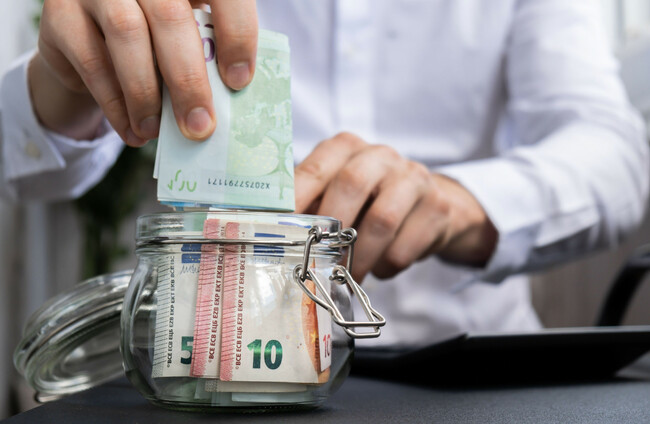
The EU's covid-era recovery plan cost member states nearly €770bn in investments. Alamy Stock Photo

EU may end up cutting services and asking Ireland for more cash to settle a €30bn Covid bill

The debt repayments are set to make up roughly a fifth of the EU’s next budget.

CUTS TO GRANT schemes and increases in the amount of money given to the EU each year by Ireland may be considered in order to pay back an annual €30bn bill which was racked up following Europe’s Covid response plan.

€732bn was made available to member states during the Covid-19 pandemic, aimed at protecting the European economy. The annual cost to repay that debt for the EU could reach up to €30bn every year from 2028.

The figure is a fifth of the EU’s current five-year budgetary plan. A new spending plan is currently being developed and will give politicians a clear picture on how member states can afford to pay the bill back.

Fianna Fáil MEP Billy Kelleher, who is a member of the European Parliament’s taxation committee, believes services like grant schemes may be cut and contributions from member states may be increased to raise the funds needed to repay Europe’s debts. 

The budget plan – what’s called the multiannual financial framework – is due to be announced on 16 July.

Currently, the EU spends €160bn every year on schemes such as grant programmes for local authorities and infrastructure investments.

The budget could be cut back in order to make more funds available to repay the debts.

This could come at the cost of local community groups, who may rely on funding from European programmes to keep service hubs open or pay operating costs for community centres.

Another option for the EU is to instead increase the amount that its members pay in each year. In 2023, Ireland paid €3.69bn in EU contribution fees for the annual budget.

Ireland currently pays more money into the EU’s budget than it receives each year.

Kelleher told The Journal: “We’re going to either have to increase the budget through contributions [from member states] or find additional resources.”

He added the issue will be a “key debate” in the coming years.

It could involve tense discussions if member states, like Ireland, must foot the annual bill in order to keep services for groups that rely on the EU’s funding schemes active.

Asked how the debate might be settled, the Ireland South MEP said he believes the EU may “fall a little bit between the two”.

He added that there might be “just a small” increase in contributions from member states, including Ireland.

Potential increases come at a time when Ireland is experiencing significant uncertainty around the economy, with the looming threat of tariffs by US President Trump.

There is a significant level of unpredictability felt in Brussels over the pending deadline.

Taoiseach Micheál Martin has said that potential tariffs by the US on the Irish economy could impact the domestic budget.

Analysis from the Central Bank suggests US tariffs could lead to slower economic growth and a fall in the creation of new jobs.

Corporation tax receipts – a massive earner for the state - fell in May and companies in Ireland with business in the US, such as Guinness maker Diageo, are projecting the tariffs to cost them millions of euro this year.

Kelleher said: “A lot of member states who are making contributions are, financially, in very stringent times. If you look at France and Germany, for example. I mean, their two economies are really struggling.”

Asked if it would be difficult to justify an increase in Irish contributions in the scenario that US tariffs have a major impact on the economy, the MEP told The Journal that the amount of contributions is based on economic growth.

Current forecasts suggest, even if US tariffs have an impact on Ireland, the economy will continue to grow.

Speaking in Brussels this week, justice commissioner Michael McGrath said there are no forecasts predicting any major impacts to the European economy.

RRF repayments will begin in 2028 and continue into the long-term. A minimum of 37% of the funds were allocated to climate-related investments, while 20% were dedicated to the digital transition plan for member states.

Readers like you are keeping these stories free for everyone...
A mix of advertising and supporting contributions helps keep paywalls away from valuable information like this article. Over 5,000 readers like you have already stepped up and support us with a monthly payment or a once-off donation.

Close
76 Comments
This is YOUR comments community. Stay civil, stay constructive, stay on topic. Please familiarise yourself with our comments policy here before taking part.
Leave a Comment
    Submit a report
    Please help us understand how this comment violates our community guidelines.
    Thank you for the feedback
    Your feedback has been sent to our team for review.

    Leave a commentcancel

     
    JournalTv
    News in 60 seconds