Sign in. It’s quick, free and it’s up to you.
An account is an optional way to support the work we do. Find out more.
Sign in. It’s quick, free and it’s up to you.
An account is an optional way to support the work we do. Find out more.
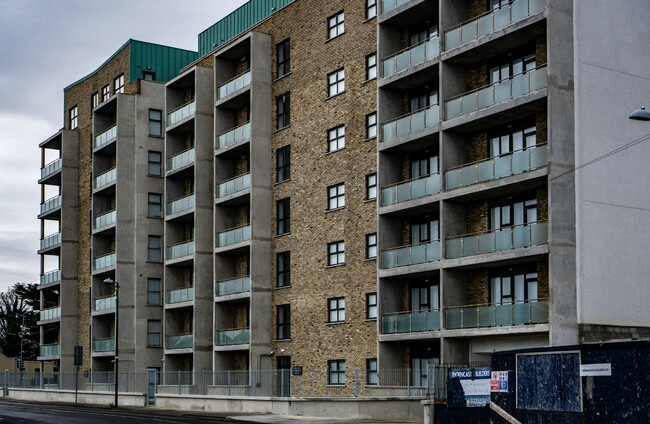
IRELAND’S NEW RENT laws have caught flak from all sides. Politicians, tenants, analysts, landlords…
Well, that last group needs some clarification. Small landlords have strongly protested the new rules.
The likes of the Irish Property Owners Association (IPOA) have claimed that the measures will ‘devalue’ rental homes and drive landlords out of the market.
Meanwhile, the same rules are being cheered by big corporations.
Such as the likes of Ires REIT, Ireland’s largest private landlord, which last week told investors that the measures will help it to boost rent prices.
So what gives? Why is there this divide between small and large landlords?
To answer that, it’s important to reiterate two key features of the new rent rules, which came into force last weekend.
One – Tenancies created after 1 March will have a minimum duration of six years. Previously, the minimum duration could be much shorter. There are also tighter restrictions around terminating a rent agreement.
Two – Rent prices can be ‘re-set’ to ‘market rates’ between tenancies. Currently, rent increases for the vast majority of tenancies can only be increased by a maximum of 2% per year.
Now, landlords can adjust the price at the end of a tenancy.
For example, say a tenant is paying €2,000 per month by the end of their six-year contract, but the more typical amount in the local area is €2,400.
At the end of the contract, the landlord can increase the rent by €400 to €2,400 for a new six-year tenancy agreement – ignoring the 2% cap.
The price can only be increased in this way once, at the end of the six-year period. The 2% cap annual limit applies during the six-year term.
Now, why is this good news for the likes of Ires?
Put simply, it gives them a straightforward way to increase their rent prices.
Ires is the country’s biggest private landlord, owning about 3,600 apartments. Most of these are located in Dublin.
As previously examined, the company has been extremely frustrated by the country’s 2% rent cap.
The major exception was for completely new lets, such as newly built apartments being rented out for the first time.
But most of Ires’s portfolio had to stick to the 2% limit. As rent prices nationally have increased by more than 2% annually in recent years, the company felt this caused its rents to become ‘undervalued’ over time.
For example – two years ago, the average rent across Ires’ apartments was just under €1,800 per month.
Ires said this was ‘undervalued’ by 16%, and felt it should be able to charge an average of about €2,100 per month instead.
The new rent rules give it a way to do exactly that.
Now, Ires will be able to re-set rent prices at the end of a tenancy, and increase the rent by 16%, or what it feels is ‘market rate’.
In fact, the company plans to increase rents by more than that if it can. In a presentation to investors that was revealed by The Journal, it said the government could see a “+25% potential rental income uplift with minimal added costs”.
Stick to the rules
The company isn’t planning on kicking tenants out. It will stick to the rules, but there is a natural turnover of renters during tenancies – Ires estimates about 14% per year across its portfolio – which will let it raise prices.
It’s also worth pointing out for clarity – Ires was still making money even with the 2% rent cap in place.
The firm recorded rental income of €67m in 2025, up from €65.5m in 2024. Once expenses are accounted for, it has earnings of about €30m per year.
However, Ires feels it could be making more money.
It feels that, by not setting rents to market rates, it is leaving further earnings on the table. Large companies aren’t in the habit of doing that.
The 2% cap also decreased the hypothetical paper value of the company’s apartments. This is because assets aren’t as valuable if they are not generating the maximum returns possible.
So, the new rules will let Ires increase rent prices. The company thinks this will raise its earnings and asset values, and generate more money for shareholders.
The increased confidence has seen the business buy dozens more apartments, while its share price is also up by about 15% since the start of the year.
But hang on. The rules are largely the same for big and small landlords. There are some differences in rules for terminating tenancy contracts.
So why are small landlords unhappy?
The key concern flagged by the likes of the IPOA is around the six-year clause. It has said many small landlords are worried about how they will be able to ‘regain possession’ of their properties.
Put simply – a hypothetical ‘bad tenant’ has much more of an impact on a small landlord than a big one.
If Ires has one bad tenant out of 3,600, and for whatever reason struggles to collect rent, it’s a rounding error.
However, if a small landlord with one property is unlucky enough to have a bad tenant, they could now find it harder to get them out. Therefore, 100% of their rental income would be at risk.
At least, that is the key argument from the likes of the IPOA. There is plenty of debate around how true this is.
Nervous
However, it is an area where perception may be just as important as reality. Many small landlords clearly are nervous and moved to sell their properties ahead of the new rules coming into force.
This is likely why there was a significant rise in tenancy terminations during the second half of 2025.
Many of these small landlords decided to sell up, rather than deal with the new rules.
However – the number of registered tenancies actually rose by 2% during the same period.
What does this mean? Well, there are more big landlords, and fewer small ones.
This is unsurprising. The new rent rules work in a way which suits large companies focused on generating returns over a long time period.
The six-year rule gives stability, which is important for big investors. And the ‘reset’ clause gives them a way to significantly raise prices, and ensure their assets don’t stay ‘undervalued’ for long.
This is part of the point of the new rules. The government wants more investors to come into the market to build more homes, increasing the supply of rental properties.
But there are downsides. Bigger corporate landlords will likely look to increase rents religiously. By as much as possible, as often as possible. Ires’s investor presentation is evidence enough of that.

To embed this post, copy the code below on your site














have your say