We need your help now

Support from readers like you keeps The Journal open.

You are visiting us because we have something you value. Independent, unbiased news that tells the truth. Advertising revenue goes some way to support our mission, but this year it has not been enough.

If you've seen value in our reporting, please contribute what you can, so we can continue to produce accurate and meaningful journalism. For everyone who needs it.

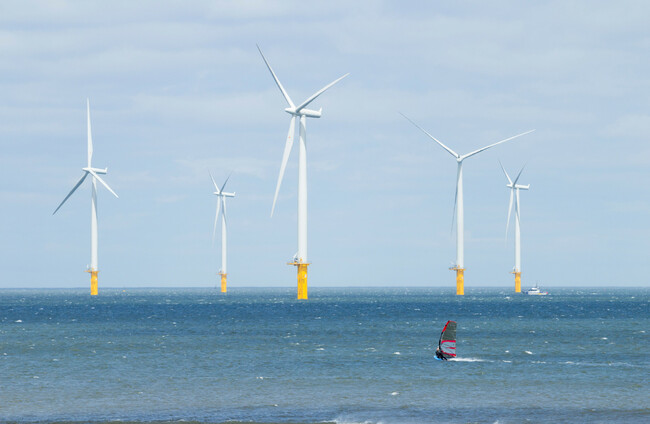
File image of windsurfer near Teesside Offshore Windfarm at Redcar, north east England Alamy Stock Photo

Ireland among North Sea nations to sign wind power pledge to resist Russian energy 'blackmail'

The EU’s Commissioner for Energy and Housing said the agreement was a ‘very clear signal to Russia’.

IRELAND IS AMONG a group of nine European nations which today vowed to build up North Sea offshore wind power with the aim of boosting climate-friendly energy while reducing dependence on Russia and other foreign powers.

Belgium, Denmark, France, Germany, Luxembourg, the Netherlands, Norway and the UK are among the other countries which signed an agreement pledging to turn the North Sea into the “world’s largest clean energy reservoir”.

The EU’s Commissioner for Energy and Housing, Dan Jorgensen, said at the signing ceremony that the agreement was a “very clear signal to Russia”.

“No more will we let you blackmail member states of the European Union and no more will we help indirectly fund the war in Ukraine”.

Minister for Climate, Energy and the Environment Darragh O’Brien today remarked that Ireland’s “offshore energy potential is huge”.

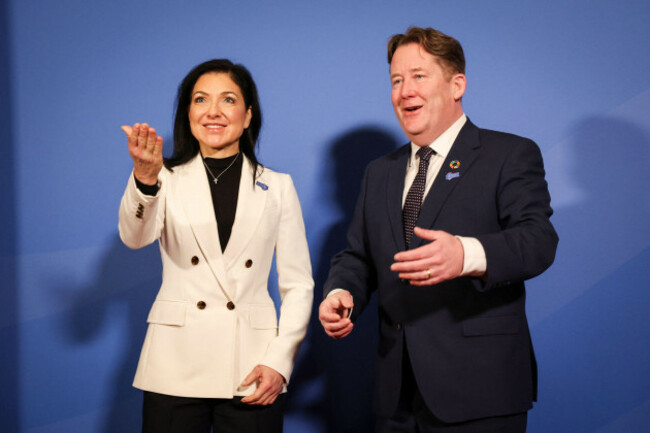
hamburg-germany-26th-jan-2026-katherina-reiche-l-federal-minister-for-economic-affairs-and-energy-welcomes-darragh-obrien-minister-for-climate-energy-and-the-environment-of-ireland-to-the Katherina Reiche, Germany's Energy Minister, with Darragh O'Brien at meeting of North Sea today in Hamburg. Alamy Stock Photo Alamy Stock Photo

He added that increasing cross-border electricity interconnection will “enhance European energy security, increase our economic competitiveness and critically reduce consumer prices”.

He said the “Hamburg Declaration” will put in place “tangible actions to enable greater interconnection in the North Seas, a key enabler of diversifying away from our reliance on fossil fuels”.

A Department spokesperson said that in the second half of this year, Ireland’s EU Presidency will “emphasise the need for accelerated deployment of renewable energy”.

The spokesperson added that increased renewable availability “reduces exposure to volatile fossil fuel markets and strengthens Europe’s strategic autonomy”.

The European Union has been scrambling to wean itself off Russian energy imports since Moscow launched its full-scale invasion of Ukraine in February 2022.

Leaders and ministers were meeting in the German port city of Hamburg for the third North Sea summit, after they pledged in 2023 to develop 300 gigawatts of clean energy capacity in the North Sea by mid-century.

An intermediate target of 120 GW by 2030 was also set at the time, although experts have said this will not be met on current trends.

The Hamburg Declaration signed today envisages that 100 GW of the targeted 300 GW will be quickly delivered through an “unprecedented fleet of joint offshore wind projects”.

That would be enough to power roughly 100 million homes.

According to the UK’s energy ministry, the new projects will include wind farms at sea directly connected to more than one country through interconnectors.

The agreement aims to strengthen Europe’s “resilience” and “security of supply,” said Katherina Reiche, Germany’s minister for economic affairs and energy.

In response to recent comments from US President Donald Trump branding wind farms “losers”, British Energy Secretary Ed Miliband said that “offshore wind is for winners”.

Wind farms are “absolutely critical for our energy security” to provide “homegrown, clean energy that we control”, he said, adding that this energy is not under “the control of the dictators and the petro-states”.

Jorgensen also addressed the issue of whether the EU wanted to reduce dependence on US gas imports in the wake of Trump’s threats to annex Greenland, an autonomous Danish territory.

“We want to trade and deal with the US on as many issues as possible,” Jorgensen said, but he added that “we are not aiming at replacing one dependency with a new dependency”.

“We want to grow our own energy, and our strategy in the future is to become free of gas.”

© AFP 2026 and with additional reporting from Diarmuid Pepper 

Author
View 40 comments
Close
40 Comments
This is YOUR comments community. Stay civil, stay constructive, stay on topic. Please familiarise yourself with our comments policy here before taking part.
Leave a Comment
    Submit a report
    Please help us understand how this comment violates our community guidelines.
    Thank you for the feedback
    Your feedback has been sent to our team for review.

    Leave a commentcancel

     
    JournalTv
    News in 60 seconds