We need your help now

Support from readers like you keeps The Journal open.

You are visiting us because we have something you value. Independent, unbiased news that tells the truth. Advertising revenue goes some way to support our mission, but this year it has not been enough.

If you've seen value in our reporting, please contribute what you can, so we can continue to produce accurate and meaningful journalism. For everyone who needs it.

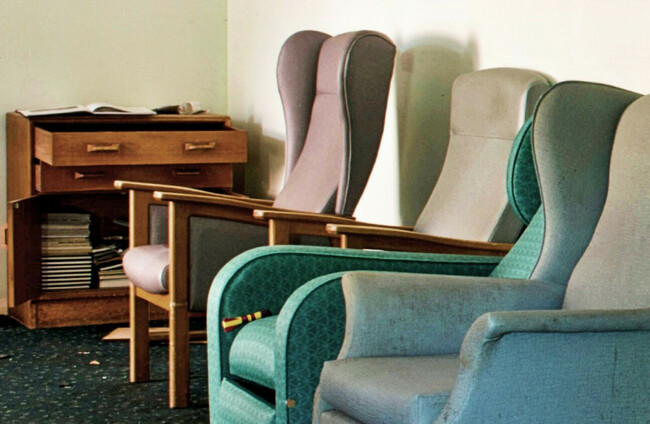
Stock image of chairs in a nursing home. Alamy

HSE has helped just 104 younger people move out of nursing homes for the elderly

There are still over 1,200 people aged under 65 living in Irish nursing homes according to recent HSE figures.

THE HSE’S PROGRAMME to help younger people transition out of nursing homes has helped just 104 people move into alternative settings, with hundreds more left languishing in care homes designed for older people. 

Efforts to reduce the cohort of people aged under 65 living in nursing homes are facing obstacles as the HSE has said that after an initial decrease, the numbers have now “plateaued”. 

There are still 1,227 people aged under 65 living in nursing homes for older people according to HSE figures given in July of this year.

The programme to help younger people move out of nursing homes was set up in response to the 2021 Wasted Lives report by the Ombudsman, which found serious problems in how they were being treated. 

A team that tracked the issue within the HSE in 2023 found the main reason for people under 65 entering nursing homes that year was due to referrals from acute healthcare settings, typically a hospital. This led to 136 people being placed in nursing homes that year. 

The next biggest reason was the lack of an alternative appropriate placement (135 cases). 

Family circumstances, referral from community services, and a lack of a primary carer were other factors that the team found. For 32 cases that year, the reason for the younger being entered into the care of a nursing home was only recorded as “unknown”. 

Acquired brain injury is the primary diagnosis for more than one quarter (26%) of all younger people living in a nursing home, according to data provided by an operational tracker which looks at younger people in nursing homes. 

This is followed by acquired neurological conditions, such as multiple sclerosis, which account for 24% of people in this group. 

Other people have conditions including cerebral palsy and spina bifida, or in some cases an intellectual disability. 

Social Democrats TD Liam Quaide, who requested these figures from the HSE, said that the process of transferring younger people out of inappropriate nursing home settings is “frustratingly slow”. 

“This is a desperately sad and indefensible situation. It is another example of how much distance is opening up between our economic prosperity, on the one hand, and the vindication of disabled people’s basic rights, on the other.

“Perpetuating younger people’s reliance on nursing homes is an affront to their dignity and right to independence,” Quaide said. 

The Social Democrats TD said that nursing homes are also being used for temporary care for people awaiting a placement in the National Rehabilitation Hospital. 

He pointed out that four years have now passed since the publication of the Wasted Lives report. 

That initial report was sparked by the Ombudsman receiving a number of complaints from people under 65 who were living in nursing homes at that time. The office carried out 28 visits to people affected by the issue. 

It found that Ireland has a long way to go in terms of moving from a medical to a social model of disability. 

As of 30 June 2020 there were some 1,320 people under 65 being supported by the Nursing Homes Support Scheme (the Fair Deal scheme) according to HSE figures. 

Slow pace of transition

In response to the report the HSE set up its U65 Programme Office and an Implementation Project Team. 

There is an ‘U65′ lead in each Community Healthcare Organisation who is responsible for people transitioning to other care settings. 

Since this work began there have been a total of 104 transitions. 

The majority of these people have moved to community residential placements including sheltered living, specialised and residential placements, to their own home or family home, or to a new home. 

It is expected that 17 other people will transfer out of nursing homes before the end of 2025. 

The HSE said that people who need to stay in nursing homes can avail of enhanced quality of life supports funded by the U65 programme which include access to personal devices, transport, social care, and vocational and therapeutic services, as well as personal assistant hours. 

However the number of people availing of these supports are very low. In 2024 just 154 of the people who are under 65 living in nursing homes availed of the supports package. 

The HSE said that there was a decrease in this age group residing in nursing homes between 2021 and 2023, when there was a decrease of around 100 people, but since then the average number of under-65s in nursing homes per month has “plateaued” to an average of 1,250 people. 

The HSE’s programme provides funding to help people in this cohort transfer to other settings, and the average cost of these transfers is €207,926. 

The HSE has said that the primary reason why younger people are staying in nursing homes is due to their personal will and preference. 

“Disability services recognise that the issue of will and preference is changeable and that there needs to be planned engagements with individuals to better understand their reasons why they may wish to stay,” a spokesperson said. 

Readers like you are keeping these stories free for everyone...
A mix of advertising and supporting contributions helps keep paywalls away from valuable information like this article. Over 5,000 readers like you have already stepped up and support us with a monthly payment or a once-off donation.

Close
JournalTv
News in 60 seconds