Sign in. It’s quick, free and it’s up to you.
An account is an optional way to support the work we do. Find out more.
Sign in. It’s quick, free and it’s up to you.
An account is an optional way to support the work we do. Find out more.
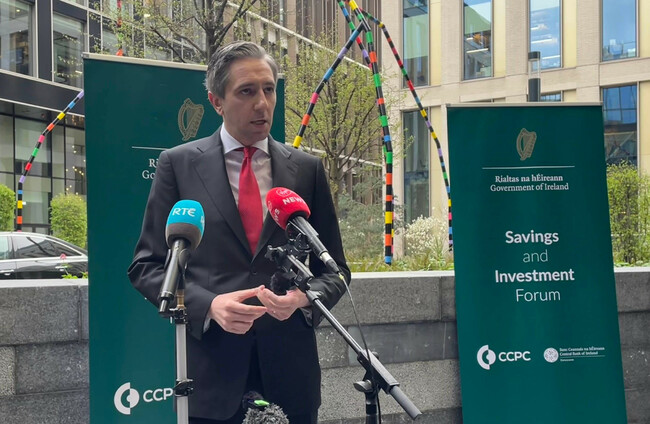
FINANCE MINISTER SIMON Harris has said he wants to see the government’s new State-backed personal investment scheme up and running next year.
He confirmed today that there will be no entry or exit tax charged on investments made via the government account and that instead there would be a “flat rate of annual tax” on an amount “above a certain threshold”.
He did not say what that threshold will be. The details of this are expected to be ironed out as part of Budget 2027.
Speaking to reporters at the Central Bank this morning, the Tánaiste said there is a “lack of an investment culture” in Ireland due to a lack of available products and a tax system that “has not worked” in people’s favour.
He was attending the first Savings and Investment Forum, where he said he would be listening to a group of 300 financial experts on how the new government investment scheme should be devised.
Earlier this week, it was announced that no Capital Gains Tax will be applied on returns earned through the scheme, which is expected to be modelled on the Swedish system known as Investeringssparkonto (ISK), something he had flagged in an interview with The Journal previously.
Under this scheme, zero tax is applied to income or gains arising from investments up to €28,000.
Plans for the scheme are set to be approved in the first half of this year and form part of the proposals for Budget 2027.
Speaking to stakeholders who attended the forum this morning, the finance minister said the aim is to legislate for the framework in 2026 and to allow accounts to be offered from 2027.
“I’d like to see this account available next year, and key components of this must be that it is to be simple. There needs to be one flat rate of tax applied annually, that should be the only tax,” the Tánaiste said.
He added that the account provider, whether it is a bank or an institution, should be responsible for administering the tax.
He said that at the moment, two of the barriers people face when trying to invest are that the tax system is “very complex” and that the amount of tax levied is too high.
Four ‘guiding principles’ for the scheme were confirmed today:
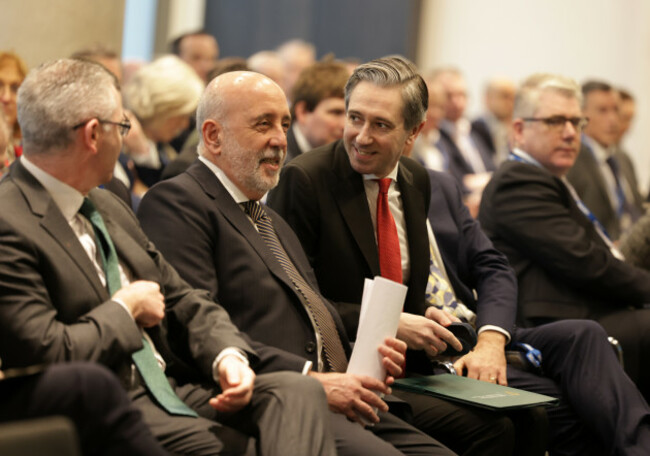
Harris believes this is the “natural next step” of the recently introduced Auto-Enrolment Pensions Scheme.
Previously, the Tánaiste said he wanted to incentivise savings and investments in Ireland, calling it a “laggard” at a European level.
Asked today what amount of investments will be tax-free under the scheme, the Tánaiste could not say, but said he wanted it “to be attractive for people”.
“The aim here is to help people who are genuinely trying to already help themselves,” he said.
The Tánaiste also announced today that his Department will run an Expression of Interest (EOI) for the appointment of financial literacy ambassadors.
One of the key issues inhibiting investment culture in Ireland is the high rate of tax levied on returns.
‘Deemed disposal’ is applied every eight years on investment funds in Ireland. In last year’s Budget, it was reduced from 41% to 38% on gains.
Asked if there are any plans to cut it further for people who are already investing, the Tánaiste said today that it is “too high” and that he was aware that some policy measures that already exist are “hindering investment”.
“I do think the deemed disposal issue is posing a real challenge for Irish investors. And I do think the policy rationale for it now is questionable at best, and I would like to see further progress,” he said.
When asked by The Journal what level he would like to see it reduced to and whether there would be a cut in this year’s Budget, the Tánaiste said he did not want to speculate.
He told the forum today that reducing the tax rate on investments in funds and life assurance policies from 41% to 38% was “a first step”, giving an indication that further changes could be afoot.
He added that a ‘retail investment roadmap’ will be published ahead of this year’s Budget.
With reporting from Eoghan Dalton

To embed this post, copy the code below on your site














have your say