We need your help now

Support from readers like you keeps The Journal open.

You are visiting us because we have something you value. Independent, unbiased news that tells the truth. Advertising revenue goes some way to support our mission, but this year it has not been enough.

If you've seen value in our reporting, please contribute what you can, so we can continue to produce accurate and meaningful journalism. For everyone who needs it.

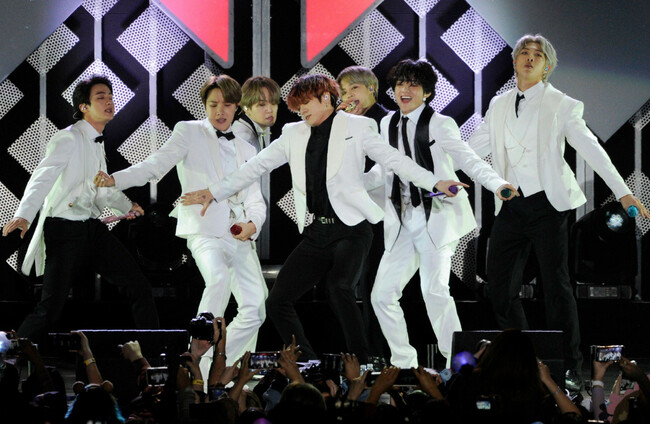
South Korean K-pop group BTS performing in 2019 Alamy Stock Photo

Ireland should imitate South Korea's K-pop success with music industry supports, IMRO says

The Irish music industry employs an estimated 13,400 people directly, but only 43% of those work in the sector full-time.

IRELAND SHOULD TAKE inspiration from South Korea and develop structures to support the music industry similar to those that have led to K-pop’s worldwide popularity, the Irish Music Rights Organisation has recommended. 

IMRO published a report on wide-ranging research into the Irish music industry today that shows the sector contributes €1 billion to the economy every year. 

Despite this, it also found that artists are struggling to work in the industry full-time, face financial precarity if they do, and often supplement their incomes by working in other sectors. 

The Irish music industry employs an estimated 13,400 people directly, but only 43% of those work in the sector full-time. The majority work part-time or supplement their income with other work, the research found. 

“In fact, around 68% of IMRO members rely on additional sectors to sustain their careers, reflecting the widespread dependency on external income sources,” the report said. 

Employment within the music industry also tends to fluctuate with seasonal opportunities, especially during the summer months when most music festivals take place, IMRO said. 

People commonly find other sources of income in teaching, information and communication, and administration. 

IMRO said that other sectors provide financial stability, “often offering higher-than-average wages compared to the music industry”.

Among the recommendations that accompanied the research results was that the government support and promote musicians the way it has done with the Irish film industry, which has produced significant results in the form of international awards and production activity in Ireland.

This could be done, IMRO suggested, by amending the Section 481 tax credit available to people in the film industry to include those who work in the music sector. 

That would “introduce specific tax incentives for using Irish music within audiovisual productions,” IMRO said.

Another suggestion in the same vein is to establish a system like that found in South Korea.

IMRO said that while Ireland is successful in cultivating grassroots and independent talent, it is “seen to lack the level of state intervention and global marketing machinery seen in the likes of South Korea, where K-pop’s global success is underpinned by systematic training programmes, high-budget productions, and strategic marketing”.

Another significant and related challenge faced by musicians is the enormous disparity in the distribution of revenue garnered by streaming services like Spotify. 

IMRO noted that while digital platforms have helped artists when it comes to access and visibility, “they have exacerbated income disparities, leaving many creators under-compensated”. 

“Policies, grants, and innovative revenue models are needed to create a sustainable ecosystem that supports artists at all levels,” IMRO said. 

The report also recommended making the Basic Income for the Arts scheme, which has been piloted in parts of the country, a permanent fixture. 

It also recommended “increasing access to project-based funding, and fostering opportunities for income generation through touring support, international showcasing, and professional development initiatives”.

Another issue facing people in the industry is the development of generative AI models that can create music. Those models threaten musicians in two main ways – competition and plagiarism. 

Fair AI legislation and regulations to protect the music industry are what is needed, IMRO said.

This should be done “by fully implementing the EU AI Act to ensure platforms conform to their transparency obligations and that a regulated market is maintained for the licensing of existing copyright works”, it recommended. 

Labour TD Alan Kelly, who serves as Cathaoirleach of the Joint Oireachtas Committee on Arts, Media, Communications, Culture and Sport, said that while the research shows the benefits the music industry brings to the economy, it “also serves as a timely reminder that passion alone cannot sustain a career in music”. 

“Too many of our artists and songwriters are grappling with financial insecurity, exacerbated by the unfair distribution of streaming revenues and the growing challenges posed by AI.

“Government must take these findings seriously.”

Readers like you are keeping these stories free for everyone...
A mix of advertising and supporting contributions helps keep paywalls away from valuable information like this article. Over 5,000 readers like you have already stepped up and support us with a monthly payment or a once-off donation.

Close
27 Comments
This is YOUR comments community. Stay civil, stay constructive, stay on topic. Please familiarise yourself with our comments policy here before taking part.
Leave a Comment
    Submit a report
    Please help us understand how this comment violates our community guidelines.
    Thank you for the feedback
    Your feedback has been sent to our team for review.

    Leave a commentcancel

     
    JournalTv
    News in 60 seconds