We need your help now

Support from readers like you keeps The Journal open.

You are visiting us because we have something you value. Independent, unbiased news that tells the truth. Advertising revenue goes some way to support our mission, but this year it has not been enough.

If you've seen value in our reporting, please contribute what you can, so we can continue to produce accurate and meaningful journalism. For everyone who needs it.

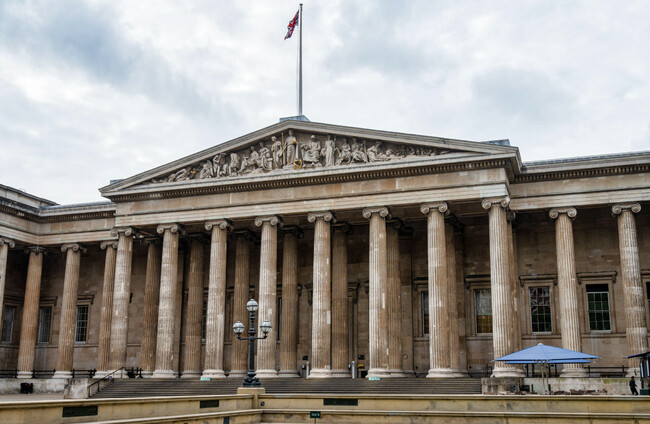
Britain's history of colonisation has resulted in its acquisition of countless important historic artefacts from all over the world. Alamy Stock Photo

A Fianna Fáil TD wants the British Museum to give us back our artefacts

There are 6,445 Irish items held in the British Museum.

IN THE BRITISH Museum, there are 1,297 Irish artefacts and relics, and 6,445 Irish items including prints, letters, and coins.

Many of these artefacts were acquired legitimately – but calls for them to be returned to Ireland persist.

Fianna Fáil TD Cathal Crowe continued those calls today, telling Newstalk Breakfast that at the very least, the artefacts should be on display if they are not repatriated to Ireland, rather than sitting hidden in archives at the British Museum.

“These items have been acquired through many means. Some have been bought. Some have been acquired quite recently by the museum. Some were plundered. Some were got by very legitimate means many years ago,” Crowe said.

“At a minimum, I think these items should be on display.”

He said some items are in archive and others are rotated, and he understands that not all of the museum’s collection can be on display

“But there are really precious Irish items that are not available for anyone to see,” Crowe added. “Some items there, they’re just locked away in archive boxes; no one has ever seen them unless you get special permit or you’re undertaking a body of research. So I don’t think it’s right for all these items to be there.”

Britain’s history of colonisation has resulted in its acquisition of countless important historic artefacts from all over the world, many of which countries have sought to be returned when they became autonomous. 

One major example is the Rosetta Stone. The stone’s discovery in 1799 was the key for scholars to decipher Egyptian hieroglyphics and Demotic. It has been in the British Museum since 1802. 

Egypt has long demanded the return of the stone, and the country’s opening of its Grand Egyptian Museum in November 2025 has exacerbated the plea for the repatriation of the artefact.

Crowe said he appreciates that history and culture from across the world should be visible in museums, but that items held in archives and unseen by the public should be returned.

“Why not bring some of that [items in archive] back to Ireland, where it belongs? But also, I think we need to look at this through an ethic lens. We need to look at how some of these items were acquired.

“Some of them were acquired during plantation. Some of them were acquired, brought back by British troops. Some were brought into Britain very legitimately.

“I think they need to have cast a lens over that, and that would determine, I think, what should be back in Ireland and maybe what should be in Britain, and what should be on display and what should be seen in the Dublin museum versus the London museum.”

Readers like you are keeping these stories free for everyone...
A mix of advertising and supporting contributions helps keep paywalls away from valuable information like this article. Over 5,000 readers like you have already stepped up and support us with a monthly payment or a once-off donation.

View 32 comments
Close
32 Comments
This is YOUR comments community. Stay civil, stay constructive, stay on topic. Please familiarise yourself with our comments policy here before taking part.
Leave a Comment
    Submit a report
    Please help us understand how this comment violates our community guidelines.
    Thank you for the feedback
    Your feedback has been sent to our team for review.

    Leave a commentcancel

     
    JournalTv
    News in 60 seconds