Take part in our latest brand partnership survey

We need your help now

Support from readers like you keeps The Journal open.

You are visiting us because we have something you value. Independent, unbiased news that tells the truth. Advertising revenue goes some way to support our mission, but this year it has not been enough.

If you've seen value in our reporting, please contribute what you can, so we can continue to produce accurate and meaningful journalism. For everyone who needs it.

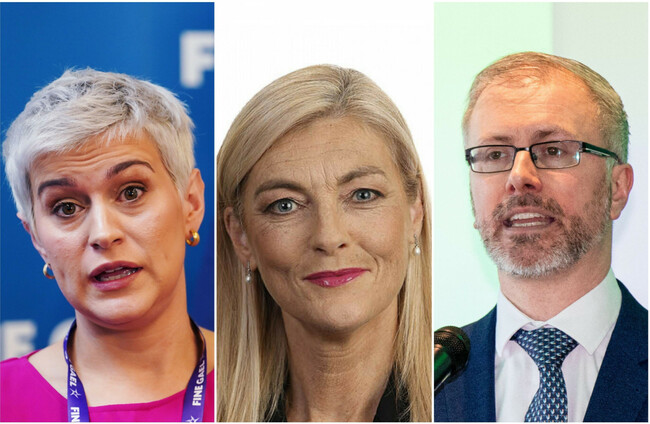
MEP Maria Walsh, MEP Cynthia Ní Mhurcú and TD Roderic O'Gorman plan to attend the parade Alamy

Irish politicians to attend Budapest Pride as Hungary threatens participants with fines

Police plan to use facial recognition software to identify attendees and organisers could be sentenced to a year imprisonment.

SEVERAL IRISH POLITICIANS are travelling to Budapest to take part in the city’s Pride in a show of solidarity with the LGBTQ+ community amid an attempted ban by Hungarian authorities.

Green Party TD Roderic O’Gorman, Fine Gael MEP Maria Walsh and Fianna Fáil MEP Cynthia Ní Mhurcú are due to attend the march tomorrow along with dozens of other politicians from around Europe.

Pride parades have been held in Budapest for 30 years, but this year, prime minister Viktor Orbán and his right-wing government have sought to quash the event.

The government and police are using laws that limit visibility of LGBTQ+ related content and new legislation that restricts freedom of assembly to try to prevent celebrations of Pride by threatening fines or imprisonment for participants and organisers.

The city’s mayor, a left-wing politician, said he would host the parade as a municipal event and argued that would get around the restrictions – but the authorities have insisted that attendees could face legal repercussions.

Orbán told state radio today that there will be “legal consequences” and that the police have the authority to “break up such events”, but that Hungary is a “civilised country” and “we don’t hurt each other”.

Police have been given powers to use facial recognition software to identify people who attend the parade, which could carry a fine of up to €500, while organisers could be sentenced to a year imprisonment. 

Speaking to The Journal, O’Gorman said he felt it was important to take a stand as the government has been “chipping away” at LGBTQ+ rights in recent years and that the banning of the Pride is a “major escalation in those attacks”.

The TD said that Ireland’s Minister for Foreign Affairs Simon Harris should summon the Hungarian ambassador and communicate Ireland’s “deep, deep concern with the measures that have been taking place, and how they are an erosion of basic freedoms today for the LGBT+ community”.

If they get away with this, who knows what freedoms they’ll look to attack tomorrow. 

“I’ll be missing my first Pride in Dublin for about 20 years, but I think it was important to stand with the LGBT+ groups in Budapest,” O’Gorman said.

“I hope the day goes off peacefully, and I hope that there’ll be a big attendance. I expect there will be, because I think it has galvanised a lot of Hungarians in terms of an obvious attempt by the government to distract from the poor state of the Hungarian economy at the moment.”

Counter-demonstrations that oppose LGBTQ+ rights are also planned for tomorrow and have not faced pushback from authorities. 

O’Gorman said that Pride organisers have cautioned participants “not to engage” with far-right groups at the counter-protests.

“We’ve also been told what happens if tear gas is released or if there is violence. The organisers are planning for worst case scenarios, but I think everyone hopes that it will go off peacefully.”

MEP Maria Walsh, along with other MEPs from EU countries attending the march, received a safety briefing in the European Parliament.

“Carrying ID, making sure we don’t connect to WiFi, making sure we travel in groups of people and not as individuals, and as soin as the Pride protest is done, all forms of rainbow colours and any protest gear has to be removed,” Walsh told The Journal.

“That is out respect for making sure community members are safe and sound, which is vastly different to the privilege we experience in Ireland.”

Walsh described a “roll back” on human rights in Hungary over the last few years, both for the LGBTQ+ community and for women and people of colour, as well as a weakening of adherence to rule of law.

“I attended Pride in Hungary a number of years ago, and I remember speaking to media outlets at that point and saying there was maybe two or three LGBTI flags in windows, and then outside of that, you wouldn’t know there was a public assembly of pride,” she said.

“In comparison to what we had in Mayo a couple of weeks ago, what people in Dublin will see this weekend – Pride is is still very much a protest in Hungary.”

She said that Ireland must not be “complacent” about protecting human rights in the face of a rise of far-right ideology.

“It’s not just online anymore. They very much have bled into the offline and the physical space, and it is an incredible worry.”

MEP Cynthia Ní Mhurchú is also part of the contingent of MEPs due to take part in the parade.

In a statement, she said the ban was a “blatant attack on our civil liberties within the European Union”.

“Can you imagine the 18 year old gay or lesbian young person in Hungary watching this unfold on the news? They will be scared, uncertain and afraid to come out,” she said.

“This isn’t Russia, this is the EU, where we believe in diversity and equality.”

Readers like you are keeping these stories free for everyone...
A mix of advertising and supporting contributions helps keep paywalls away from valuable information like this article. Over 5,000 readers like you have already stepped up and support us with a monthly payment or a once-off donation.

Close
JournalTv
News in 60 seconds