We need your help now

Support from readers like you keeps The Journal open.

You are visiting us because we have something you value. Independent, unbiased news that tells the truth. Advertising revenue goes some way to support our mission, but this year it has not been enough.

If you've seen value in our reporting, please contribute what you can, so we can continue to produce accurate and meaningful journalism. For everyone who needs it.

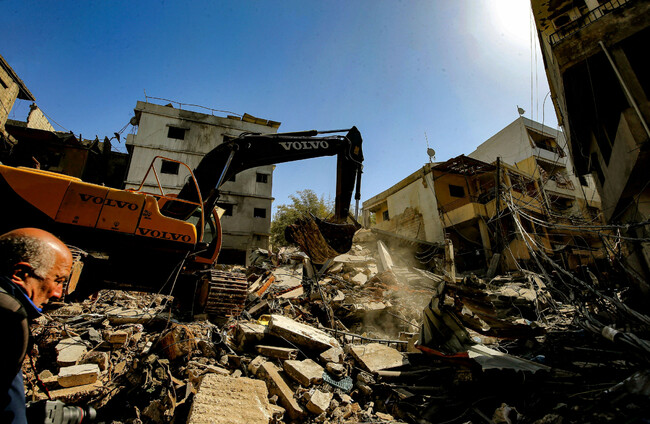
Wreckage at the site of an Israeli strike on a crowded neighborhood in the area of Jnah, just outside Beirut southern suburb, on Monday. Alamy Stock Photo

What has Israel been doing while the world focuses on Trump's actions in Iran?

The country has pushed further in its ground invasion of Lebanon and passed a law allowing the death penalty for Palestinians convicted on terror charges.

SINCE THE US and Israel launched strikes on Iran on 28 February, much of the world’s attention has been focused on Donald Trump. 

The US president, his defence secretary Pete Hegseth and the White House have been issuing near-constant updates and statements about America’s actions and objectives for the illegal war in the Middle East. 

A number of these have been contradictory, with Trump repeatedly claiming that talks  with the Iranians for a ceasefire are taking place while simultaneously saying that the US is going to bomb the country “back to the stone age”. 

This afternoon, Trump warned that “a whole civilisation will die tonight” in Iran if the country does not heed his ultimatum to accept US war demands.

Amid this non-stop messaging and the global focus on the rising price of oil, Israel’s part in the war and its actions in the occupied Palestinian territories have been going largely under the radar. 

Today, the Israeli Defence Forces (IDF) carried out strikes on bridges in Iran, hours before Trump’s deadline for Tehran to reopen the Strait of Hormuz. The Times of Israel attributed around ten strikes on “key” rail sections and bridges to the country’s air force.

Two people were killed in an attack on a rail bridge in the central city of Kashan, a regional official told state media, while a bridge near the city of Qom, south of Tehran, was also struck, the deputy governor of the province said.

Ahead of the strikes, the IDF warned Iranians to avoid travelling by train until this evening. A near-total internet blackout in Iran has been imposed by the authorities since the US-Israeli attacks in February. 

Israel also struck a synagogue in Tehran overnight, with Iranian media reporting that the Rafi-Nia Synagogue in the city centre was “completely destroyed”.

Video footage shared by Iranian state media showed significant damage to the site, which is located beside a high school.

Judaism is one of Iran’s officially recognised minority religions, with a small community still living in the country (estimated at around 8,756 people, according to a 2012 census).

Under international humanitarian law, places of worship are considered protected civilian sites and cannot be targeted unless used for military purposes.

The Israeli military said the strike in Tehran had been targeting a senior Iranian commander and described the damage to the synagogue as “collateral”.

“The IDF regrets the collateral damage to the synagogue and emphasises that the strike was targeted at a senior military target within the regime’s armed forces, not at any place of worship,” a spokesperson said, adding that the outcome of the operation is under review.

Lebanon

Israel has been consistently striking Lebanon since the first week of the war on Iran. It came after Iran-linked Hezbollah launched attacks on Israel to avenge the killing of Iranian supreme leader Ayatollah Ali Khamenei. 

Sources have told The Journal that they have witnessed daily airstrikes and rocket launches as Hezbollah and the IDF trade blows. 

According to Lebanon’s health ministry, 1,497 people have been killed since the start of the war, including 130 children. Three Indonesian UNIFIL peacekeepers have also been killed in the county. 

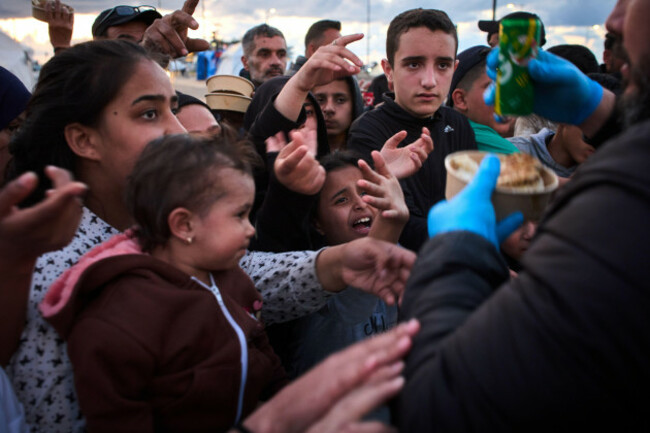
displaced-people-wait-to-receive-donated-food-beside-the-tents-they-use-as-shelters-after-fleeing-israeli-bombardment-in-southern-lebanon-in-beirut-lebanon-monday-april-6-2026-ap-photoemilio-m Displaced people wait to receive donated food beside the tents they use as shelters after fleeing Israeli bombardment in southern Lebanon. Alamy Stock Photo Alamy Stock Photo

Yesterday, an Israeli airstrike hit the southern suburbs of Beirut. The army said it was “striking Hezbollah terror targets in Beirut”, after previously warning it would hit the area.

The strike came a day after the first reported strike on the town of Ain Saadeh, east of Beirut, which killed three people including two women, according to Lebanese authorities. Among the dead were Pierre Mouawad, a local official in the Lebanese Forces – a Christian party strongly opposed to Hezbollah – and his wife.

Israel has also pressed ahead with a ground invasion of south Lebanon. The IDF stated today that its soldiers have “completed their deployment” along an anti-tank missile defence line and are operating in the area “to strengthen the forward defensive posture and remove threats to the residents and communities of northern Israel”.

A Lebanese military source said the Israeli army had advanced to a depth of between five and nine kilometres inside Lebanese territory.

The UN has expressed concern that south Lebanon, a Hezbollah stronghold, could become another occupied territory in the Middle East. 

Israeli defence minister Israel Katz has said on several occasions in recent weeks that Israel intends to establish a “security zone” in southern Lebanon extending to the Litani river, which flows as much as 30 kilometres from the Israel-Lebanon border, in order to prevent rocket, drone or missile fire at northern Israeli communities.

UN experts have also called for an international investigation into the killing of three Lebanese journalists in an Israeli strike late last month, saying Israel had not provided “credible evidence” of their alleged links to armed groups.

West Bank

Last week, Israel’s parliament voted to pass a bill allowing for Palestinians in the West Bank convicted on terror charges to be executed.

The legislation would see the death penalty become the default punishment for Palestinians in the Israeli-occupied West Bank found guilty of intentionally carrying out deadly attacks deemed “acts of terrorism” by an Israeli military court.

Because Palestinians in the territory are automatically tried in Israeli military courts, the measure effectively creates a separate and harsher legal track.

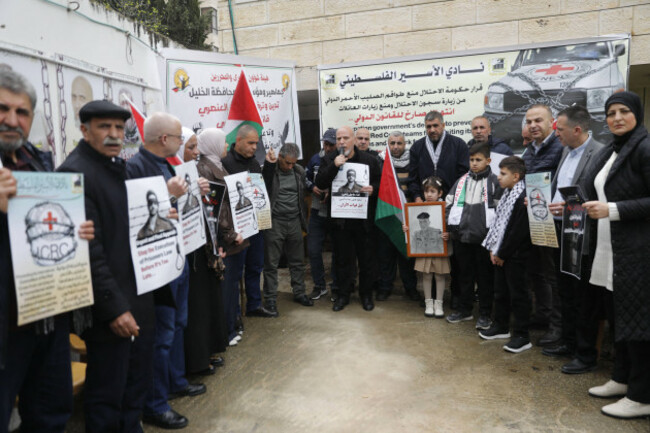
dozens-of-palestinians-held-a-sit-in-in-front-of-the-international-committee-of-the-red-cross-headquarters-in-hebron-dozens-of-palestinians-held-a-sit-in-in-front-of-the-international-committee-of-the Palestinians holding a sit-in in front of the International Committee of the Red Cross headquarters in Hebron, protesting an Israeli law to execute Palestinian prisoners. Alamy Stock Photo Alamy Stock Photo

The bill was spearheaded by far-right national security minister Itamar Ben-Gvir and his Otzma Yehudit (Jewish Power) party, who wore golden noose-shaped pins to signal their support for it. 

The United Nations has harshly criticised the “cruel and discriminatory” new death penalty bill, warning that applying it in occupied Palestinian territory “would constitute a war crime”.

UN rights chief Volker Turk called for the bill to be “promptly repealed”, warning that it was “patently inconsistent with Israel’s international law obligations”.

Gaza

According to the Palestinian health ministry, at least 715 people have been killed by Israeli strikes since the US-backed ceasefire in Gaza came into force on 10 October. 

The World Health Organisation (WHO) today suspended medical evacuations from Gaza to Egypt after a contract worker, Majdi Aslan, was killed in what it called a “security incident”. CEO Tedros Adhanom Ghebreyesus said the evacuations would remain suspended until further notice.

Israel’s mission in Geneva said IDF troops “identified an unmarked vehicle approaching them and posing an immediate threat”, stressing that “troops fired warning shots” in response.

“The vehicle continued to accelerate toward the troops, who then responded with additional fire, and a hit was identified,” the post said, adding that “the incident is under review”.

According to the BBC, Gaza’s health ministry said Aslan was driving a WHO-rented vehicle in southern Gaza when it was targeted by Israeli forces, with a colleague of his telling reporters that the vehicle was clearly marked with the WHO logo on all sides and had been at the front of a convoy transporting patients to the Rafah crossing when it was fired upon by an Israeli tank.

Yesterday, Gaza’s Al-Aqsa hospital said clashes and Israeli airstrikes killed at least 10 people near a school sheltering displaced people in the centre of the Palestinian territory.

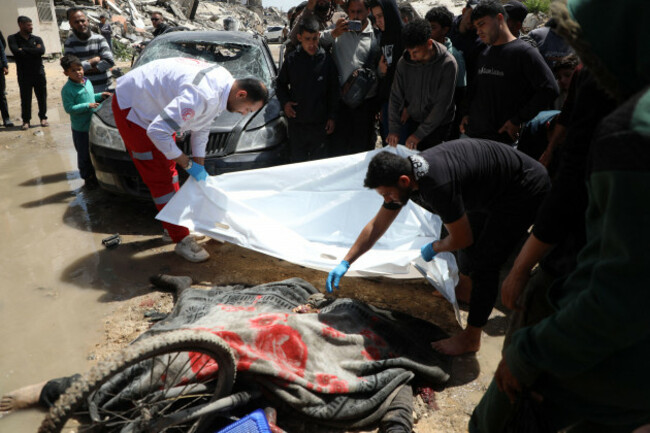
gaza-april-06-2026-palestinians-inspect-the-remains-of-a-vehicle-after-it-was-bombed-by-israeli-aircraft-north-of-gaza-city-medical-sources-said-the-raid-killed-one-palestinian-and-injured-a-chil Palestinians inspect the remains of a vehicle after it was bombed by Israeli aircraft north of Gaza City. Medical sources said the raid killed one Palestinian and injured a child who was taken to the hospital for treatment. Alamy Stock Photo Alamy Stock Photo

A Palestinian witness, speaking on condition of anonymity, said the violence began with clashes between gunmen from an anti-Hamas militia, allegedly backed by Israel, and some residents in the school who were backed by Hamas fighters.

The anti-Hamas gunmen had come to arrest some residents and “clashes broke out when residents and Hamas members tried to confront the (anti-Hamas) militiamen”. 

“Shortly after, Israeli forces bombed the area near the school and also opened heavy fire,” the witness said.

The Israeli military said it was looking into the reports. It remains unclear how many of the victims were killed by airstrikes and how many died in the clashes.

On Sunday, Gaza’s civil defence agency said an Israeli strike in the Palestinian territory killed four people. Gaza’s Al-Shifa hospital confirmed the toll, saying the strike was carried out by an Israeli drone.

Israel’s military said it had “identified a terrorist cell that operated adjacent to the troops, posing an immediate threat to them”, adding that it “precisely” struck and eliminated the threat without specifying how many people were killed. 

Jerusalem

Separately, Israel has drawn criticism for its actions at two holy sites in Jerusalem in the last fortnight. 

On 30 March, Israel said the Latin Patriarch of Jerusalem would regain access to the Holy Sepulchre – Christianity’s holiest site – after the decision to block him from entering on Palm Sunday triggered international condemnation.

Police prevented Cardinal Pierbattista Pizzaballa from entering the church, citing security concerns. Israel has banned gatherings in synagogues, churches and mosques during the ongoing war with Iran.

After widespread backlash, Israeli prime minister Benjamin Netanyahu said today the Latin Patriarch would get “full and immediate access”.

On Easter Sunday, police at checkpoints screened a small number of worshippers allowed near the site on routes approaching the church, where Christians believe Jesus Christ was crucified, buried and rose from the dead.

Since 28 February, debris from Iranian missiles or interceptors has fallen in the Old City, including near the Holy Sepulchre, Al-Aqsa Mosque, and in the Jewish Quarter.

Arab countries and the Palestinian government have also condemned Israel’s Ben-Gvir for visiting the Al-Aqsa Mosque yesterday. The site, which is considered the third-holiest place in Islam, has been closed to Muslim worshippers since 28 February. 

It was captured by Israel from Jordan in the 1967 Middle East war. Despite this, Jordan remains the official and internationally recognised custodian of Jerusalem’s Muslim and Christian sites, while Israel controls of security and access.

The Palestinian government condemned the “storming” of the site by Ben-Gvir “under heavy protection from occupation forces, and the continued forceful closure by military might for the thirty-ninth consecutive day”. Egypt, Turkey and Qatar also denounced the action. 

Ben-Gvir last year drew criticism for praying at the holy site.

With reporting from © AFP 2026 

Readers like you are keeping these stories free for everyone...
A mix of advertising and supporting contributions helps keep paywalls away from valuable information like this article. Over 5,000 readers like you have already stepped up and support us with a monthly payment or a once-off donation.

Close
71 Comments
This is YOUR comments community. Stay civil, stay constructive, stay on topic. Please familiarise yourself with our comments policy here before taking part.
Leave a Comment
    Submit a report
    Please help us understand how this comment violates our community guidelines.
    Thank you for the feedback
    Your feedback has been sent to our team for review.

    Leave a commentcancel

     
    JournalTv
    News in 60 seconds