We need your help now

Support from readers like you keeps The Journal open.

You are visiting us because we have something you value. Independent, unbiased news that tells the truth. Advertising revenue goes some way to support our mission, but this year it has not been enough.

If you've seen value in our reporting, please contribute what you can, so we can continue to produce accurate and meaningful journalism. For everyone who needs it.

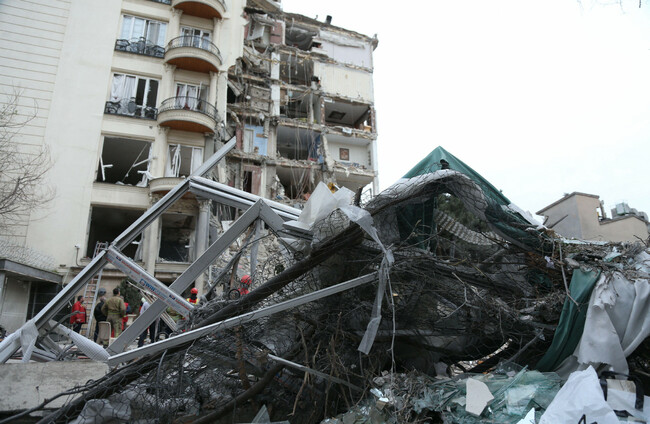
This photo taken on 23 March shows a destroyed building in a residential area after joint US-Israeli strikes on Iran in Tehran. Alamy Stock Photo

Israel strikes Iranian nuclear facilities after warning attacks would 'escalate and expand'

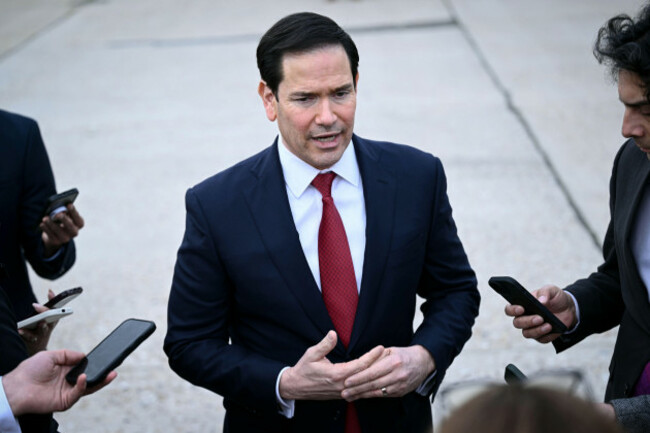
US Secretary of State Marco Rubio said US objectives in Iran can be achieved without ground troops.

ISRAEL HAS CLAIMED responsibility for strikes on Iran’s nuclear facilities, hours after it threatened to “escalate and expand” its campaign against Tehran.

Iranian state media agency IRNA reported that a heavy-water plant and a yellowcake production plant were struck. Yellowcake is a concentrated form of uranium after impurities are removed from the raw ore.

Iran’s Atomic Energy Organisation said the Shahid Khondab Heavy Water Complex in Arak and the Ardakan yellowcake production plant in Yazd province were targeted.

The strikes did not cause any casualties and there was no risk of contamination, it said. Israel also attacked the Arak plant last June.

The IDF later claimed responsibility for the strikes, writing on social media that raw materials mined from the ground undergo mechanical and chemical processing at the Yazd plant in order to later serve as precursor materials for uranium enrichment.

“Enriched uranium constitutes a central and critical component in nuclear weapons development processes – the strike on the site detracts from the Iranian terror regime’s ability to obtain the raw material required for these processes and deepens the damage to the regime’s nuclear weapons program.

Earlier, Israel’s defence minister Israel Katz threatened escalation in a statement noting that he and prime minister Benjamin Netanyahu “warned the Iranian terrorist regime to stop firing missiles at the civilian population in Israel”.

“Despite the warnings, the firing continues – and therefore (Israeli military) attacks in Iran will escalate and expand to additional targets and areas that assist the regime in building and operating weapons against Israeli citizens,” Katz said.

“They will pay heavy, increasing prices for this war crime.”

It comes after US president Donald Trump claimed talks on ending the war were going well and gave Tehran more time to open the Strait of Hormuz. Iran has given no sign of backing down.

With stock markets reeling and economic fallout from the war extending far beyond the Middle East, Trump is under growing pressure to end Iran’s chokehold on the strait, a strategic waterway through which a fifth of the world’s oil is usually shipped.

Don’t need ground troops, says Rubio

The US has offered Iran a 15-point proposal for a ceasefire that includes it relinquishing control of the strait, but at the same time has ordered thousands more troops to the region, possibly in preparation for a military attempt to wrest the waterway from Iran’s grip.

With time running out on a deadline set by Trump for Iran to open the strait, after which he had threatened to destroy Iran’s energy plants, he pushed his self-imposed deadline back to 6 April yesterday, saying that talks on ending the conflict were going “very well”.

US secretary of state Marco Rubio said today that US objectives in Iran can be achieved without ground troops, which are en route.

Speaking to reporters following a G7 meeting in France, Rubio said: “I won’t discuss military tactics.”

But he stressed that most US objectives in Iran are “ahead of schedule”, adding: “We can achieve them without any ground troops.”

Asked again what role aside from ground invasion the troops could play, Rubio said Trump “has to be prepared for multiple contingencies” and that US forces are available “to give the president maximum optionality and maximum, opportunity to adjust to contingencies should they emerge.”

us-secretary-of-state-marco-rubio-speaks-to-the-press-following-a-g7-foreign-ministers-meeting-with-partner-countries-at-the-bourget-airport-in-le-bourget-outside-paris-friday-march-27-2026-bre Marco Rubio speaking to the press following a G7 Foreign Ministers' meeting with Partner Countries at the Bourget airport in Le Bourget, outside Paris. Alamy Stock Photo Alamy Stock Photo

Thousands of US troops are en route to the region, including at least 1,000 paratroopers from the 82nd Airborne Division who are trained to land in hostile territory to secure key territory and airfields.

Iran, however, maintains it is not engaged in any negotiations. It has rejected the US’s 15-point plan and put forth its own five-point proposal, which includes reparations and recognition of its sovereignty over the Strait of Hormuz.

Iran’s stranglehold on shipping through the strait has caused growing concerns of a global energy crisis, and appears part of a strategy to get the US to back down by roiling the world economy.

A Gulf Arab bloc said Iran is now exacting tolls from ships to ensure their safe passage through the waterway.

Diplomats from several countries have been trying to organise a direct meeting between envoys from the US and Iran, possibly in Pakistan.

Egypt’s foreign ministry said the country’s foreign minster Badr Abdelatty held phone calls the day before with his Turkish and Pakistani counterparts as part of their “intensive efforts” to organise the talks.

Abdelatty said he hoped the tri-country effort would result in “gradual de-escalation efforts that would ultimately lead to the end of the war”.

Since the war began, more than 1,900 people have been killed in Iran, according to the health ministry.

Eighteen people have died in Israel, while at least three Israeli soldiers have also been killed in Lebanon.

At least 13 American troops have been killed and 303 injured. Of the total wounded to date, 273 service members have returned to duty, said Captain Tim Hawkins, spokesman for US Central Command.

That leaves 30 troops wounded and out of action, with 10 still considered seriously wounded, Capt Hawkins said.

Four people in the occupied West Bank and 20 in Gulf Arab states have died.

Authorities said more than 1,100 people have died in Lebanon. In Iraq, where Iranian-supported militia groups have entered the conflict, 80 members of the security forces have been killed.

Later today, it emerged that an airstrike on the southern Lebanese village of Saksakiyeh killed four people, according to the Health Ministry.

Officials said the airstrike that destroyed a house in the coastal village also wounded eight people.

With reporting from Press Association

Readers like you are keeping these stories free for everyone...
A mix of advertising and supporting contributions helps keep paywalls away from valuable information like this article. Over 5,000 readers like you have already stepped up and support us with a monthly payment or a once-off donation.

Close
JournalTv
News in 60 seconds