Sign in. It’s quick, free and it’s up to you.
An account is an optional way to support the work we do. Find out more.
Sign in. It’s quick, free and it’s up to you.
An account is an optional way to support the work we do. Find out more.
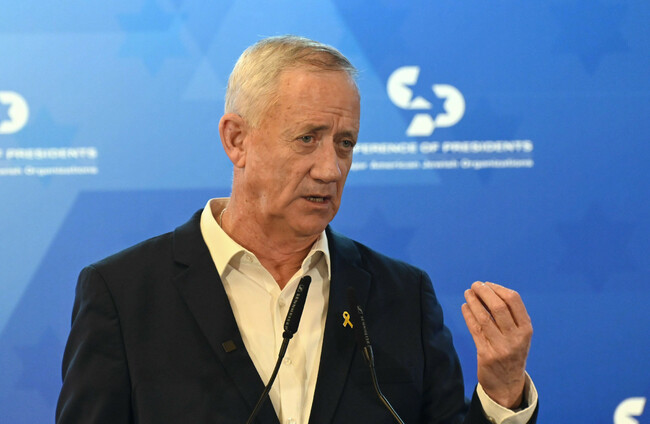
A TOP MEMBER of Israel’s wartime Cabinet is meeting with US officials in Washington while talks are under way in Egypt to broker a ceasefire in Gaza before the Muslim holy month of Ramadan begins next week.
Benny Gantz, a centrist political rival of Prime Minister Benjamin Netanyahu, travelled for talks with several senior US administration officials this week.
An official from Netanyahu’s far-right Likud party said Gantz did not have approval from the prime minister for his meetings in Washington and that Netanyahu gave the Cabinet official a “tough talk” – underscoring the widening crack within Israel’s wartime leadership nearly six months into the conflict.
Israel did not send a delegation to ceasefire talks in Cairo because it is waiting for answers from Hamas on two questions, according to an Israeli official.
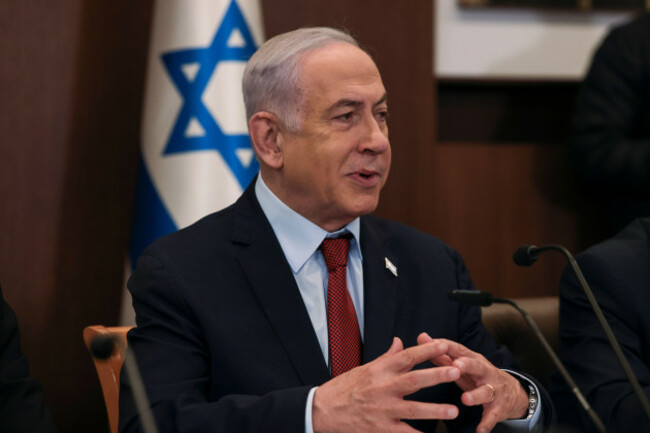
Israeli media reported that the government is waiting to learn which of the hostages seized by Hamas in the 7 October attack are alive and how many Palestinian prisoners Hamas seeks in exchange for each.
The UN says a quarter of Gaza’s 2.3 million people face starvation.
The number of Palestinians killed in the Gaza Strip has soared above 30,000 since the war began nearly five months ago when Hamas-led militants stormed across southern Israel, killing 1,200 people and taking about 250 others hostage.
UN human rights chief Volker Turk also today described the conflict as a “powder keg” with the potential to spark broader conflict in the Middle East.
“The war in Gaza has already generated dangerous spillover in neighbouring countries,” he said in his global update to the United Nations Human Rights Council.
“I am deeply concerned that in this powder keg, any spark could lead to a much broader conflagration. This would have implications for every country in the Middle East and many beyond it.
He said that overlapping emergencies made the spectre of spillover conflict very real, and cited the examples of Yemen and Lebanon as places where the Gaza war is having a wider effect.
“The military escalation in southern Lebanon between Israel, Hezbollah and other armed groups is extremely worrying,” Turk said.
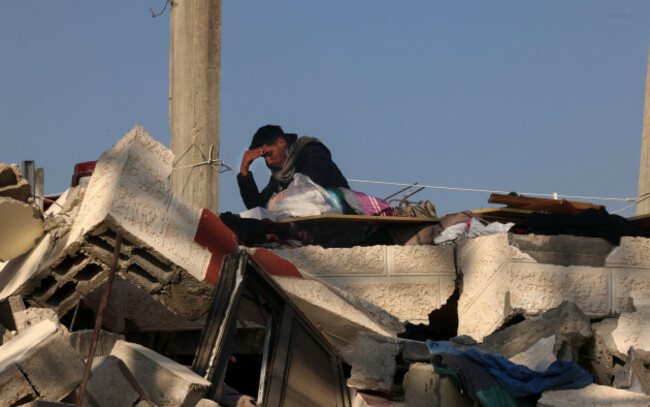
Meanwhile, Hamas is calling on Palestinians in Israel and the West Bank to rise up against Israel during Ramadan.
Hamas spokesman Osama Hamdan, speaking to reporters in Beirut today, said Palestinians should “make every moment of Ramadan a confrontation”.
The US, Qatar and Egypt have been trying for weeks to broker a ceasefire between Israel and Hamas in Gaza and to convince the militant group to release some of the scores of hostages it is still holding.
The mediators hope to broker a truce before Ramadan, which is expected to begin around 10 March.
The month of dawn-to-dusk fasting is a time of heightened prayer, reflection and charity for Muslims around the world, but Israeli-Palestinian tensions often spike over access to a major holy site in Jerusalem.
Hamas has repeatedly called for a broader uprising in the occupied West Bank, where violence has surged since the start of the war, and among Israel’s own Palestinian minority.
Hamdan did not provide any specifics about the ongoing ceasefire negotiations.
Addressing his remarks to Israel and its top ally, the United States, he said: “What they have not gained in the battlefield, they will not gain through political machinations.”

To embed this post, copy the code below on your site















have your say