Sign in. It’s quick, free and it’s up to you.
An account is an optional way to support the work we do. Find out more.
Sign in. It’s quick, free and it’s up to you.
An account is an optional way to support the work we do. Find out more.
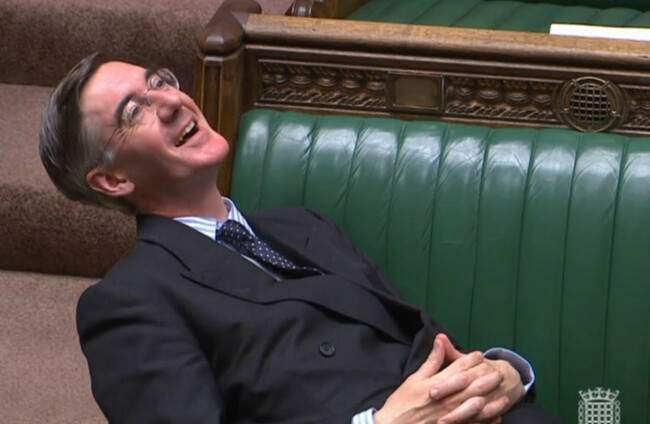
BRITISH PRIME MINISTER Boris Johnson has carried out a limited reshuffle as he seeks to secure his position in No 10 Downing Street.
In the face of the partygate row and mounting Tory discontent over a smear Boris Johnson made against Labour leader Keir Starmer, this is a standard political move to steady the ship.
The changes include new faces in the whips’ office and a fervent Brexiteer in charge of maximizing the benefits of leaving the European Union.
Among the two most notable changes for Ireland, is Jacob Rees-Mogg moving from his position as Commons Leader to Minister for ‘Brexit Opportunities and Government Efficiency’.
David Frost had been the UK Cabinet’s Brexit minister until December – after his resignation, Foreign Secretary Liz Truss took the reins on the ongoing Northern Ireland Protocol talks with the EU’s Maroš Šefčovič.
Rees-Mogg is now a junior minister for Brexit.
As part of the reshuffle, Tory MP James Cleverly has also been appointed Minister of State in the Foreign, Commonwealth and Development Office – Truss’ junior minister for Europe.
As Minister for Brexit Opportunities, Rees-Mogg will hope to deliver some of the benefits of leaving the European Union, although it remains to be seen whether the 52-year-old will be in the job long enough to do that – in 2018 he suggested “the overwhelming opportunity for Brexit is over the next 50 years”.
When Channel 4 asked Rees-Mogg in July 2018 whether he would resign if Brexit didn’t go well, he avoided answering the question directly.
Rees-Mogg has also suggested in 2018 that a possible solution to the the impasse over where in Northern Ireland to put Brexit checks was to bring in similar checks that had been in place during the Troubles. He said:
There would be an ability, as we had during the Troubles, to have people inspected. It’s not a border that everyone has to go through every day. But of course for security reasons during the Troubles we kept a very close eye on the border to try stop gun running and things like that.
In a single and undivided United Kingdom, Her Majesty’s Government has a duty and responsibility for the condition of the whole nation. Until a bridge is built, only water, not a border, should sit between the people of Northern Ireland and Great Britain. pic.twitter.com/Oq1rtyuSQU
— Jacob Rees-Mogg (@Jacob_Rees_Mogg) February 4, 2022
Rees-Mogg will keep his seat at the Cabinet table, although he is only at a Minister of State level.
Rees-Mogg was a senior figure who supported the plan to change Commons sleaze rules in an attempt to save Tory MP and former Northern Ireland Secretary Owen Paterson.
He admitted “I made a mistake” by encouraging Boris Johnson to back the move.
Another notable shake-up is Chris Heaton-Harris becoming Chief Whip, having been Europe Minister.
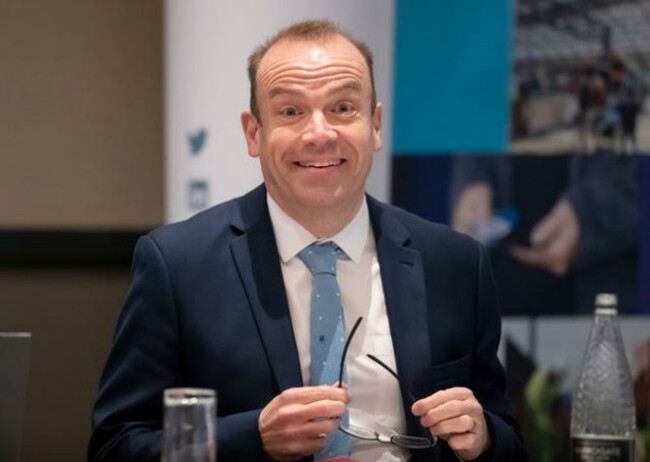
Heaton-Harris was working alongside Foreign Secretary Liz Truss in finding a solution to Brexit related problems. He also chaired the European Research Group from 2010-16.
The Daventry MP was previously chief whip for the Tories in the European Parliament, which will at least give him some idea of the challenges that await him.
He also reportedly played a role in the “shadow whipping operation” aimed at seeing off efforts to oust the Prime Minister
Outside of Westminster he is known for a Twitter account which used to heavily feature Christmas cracker-style jokes – a sense of humour may prove essential as he tries to manage a party which appears set on publicly tearing itself apart.
In less notable news, Mark Spencer moves from chief whip to Commons Leader, taking over from Rees-Mogg.
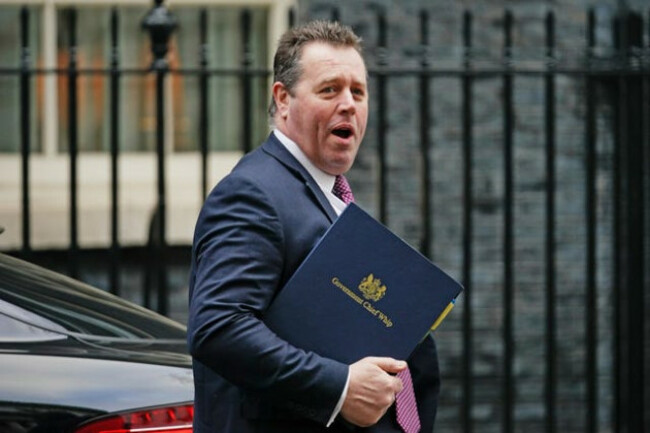
The “big farmer”, as the Prime Minister jokingly refers to him, has paid the price for a series of missteps in managing the parliamentary party.
He played a leading role in trying to get Tory MPs to support a shake-up of Commons sleaze rules in an attempt to spare Owen Paterson from being suspended, incurring their wrath when the controversial plan was subsequently abandoned.
He also failed to prevent a revolt by 100 Tories over Covid rules and faced claims – which he has denied – that he told MP Nusrat Ghani she lost her ministerial role because her Muslim faith made people feel uncomfortable.
His new role will still see him play a major part in liaising between Tory backbenchers and No 10.
With reporting from Gráinne Ní Aodha.

To embed this post, copy the code below on your site











have your say