We need your help now

Support from readers like you keeps The Journal open.

You are visiting us because we have something you value. Independent, unbiased news that tells the truth. Advertising revenue goes some way to support our mission, but this year it has not been enough.

If you've seen value in our reporting, please contribute what you can, so we can continue to produce accurate and meaningful journalism. For everyone who needs it.

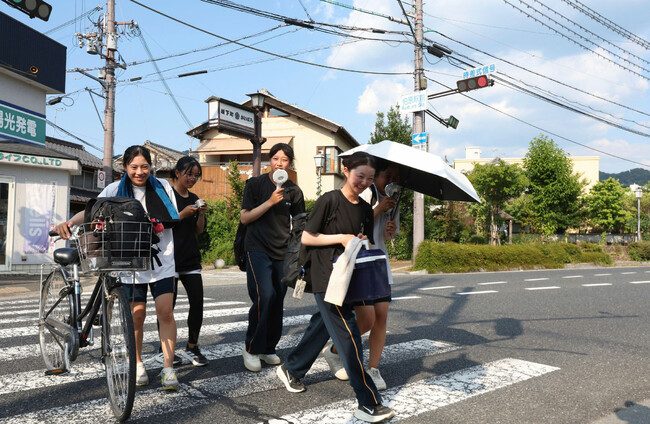
High school students go home during the intense heat in Tanba City, Hyogo Prefecture, western Jappan, on 30 July. Alamy Stock Photo

Seventeen heat records broken in Japan today

On 30 July, Japan experienced its highest recorded temperature, a sizzling 41.2C in the western region of Hyogo.

SEVENTEEN HEAT RECORDS were broken in Japan today, the weather agency said, after the country sweltered through its hottest ever June and July.

Heatwaves are becoming more intense and frequent worldwide because of human-caused climate change, scientists say, and Japan is no exception.

The city of Komatsu, in the central region of Ishikawa, saw a new record of 40.3 degrees Celsius today, the Japan Meteorological Agency (JMA) said.

Toyama city in Toyama prefecture, also in the central region, hit 39.8C, the highest temperature since records began, according to the JMA.

Fifteen other locations across cities and towns soared to new highs between 35.7C  and 39.8C, added the JMA, which monitors temperatures at more than 900 points in Japan.

On 30 July, Japan experienced its highest recorded temperature, a sizzling 41.2C in the western region of Hyogo.

The rainy season ended about three weeks earlier than usual in western regions of Japan, another record.

With low levels of rainfall and heat, several dams in the northern region were almost empty, the land ministry said, with farmers worried that a water shortage and extreme heat could result in a poor harvest.

Experts warn Japan’s beloved cherry trees are blooming earlier due to the warmer climate, or sometimes not fully blossoming because autumns and winters are not cold enough to trigger flowering.

The famous snowcap of Mount Fuji was absent for the longest recorded period last year, not appearing until early November, compared with the average of early October.

Japan this year had its hottest June and July since data collection began in 1898, with the weather agency warning of further “severe heat” in the months ahead.

The speed of temperature increases across the world is not uniform.

Of the continents, Europe has seen the fastest warming per decade since 1990, followed closely by Asia, according to global data from the US National Oceanic and Atmospheric Administration (NOAA).

Author
View 15 comments
Close
15 Comments
This is YOUR comments community. Stay civil, stay constructive, stay on topic. Please familiarise yourself with our comments policy here before taking part.
Leave a Comment
    Submit a report
    Please help us understand how this comment violates our community guidelines.
    Thank you for the feedback
    Your feedback has been sent to our team for review.

    Leave a commentcancel

     
    JournalTv
    News in 60 seconds