We need your help now

Support from readers like you keeps The Journal open.

You are visiting us because we have something you value. Independent, unbiased news that tells the truth. Advertising revenue goes some way to support our mission, but this year it has not been enough.

If you've seen value in our reporting, please contribute what you can, so we can continue to produce accurate and meaningful journalism. For everyone who needs it.

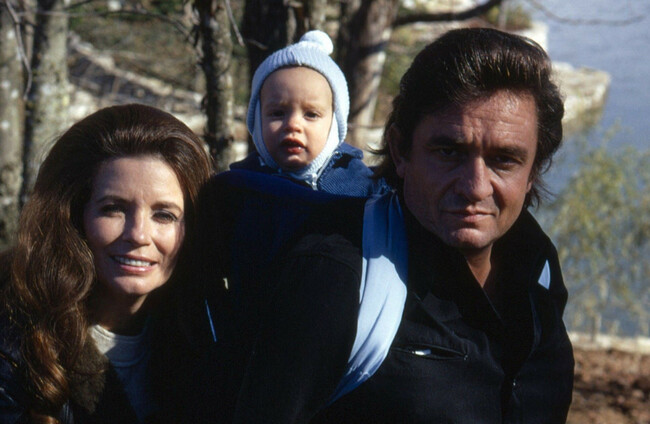
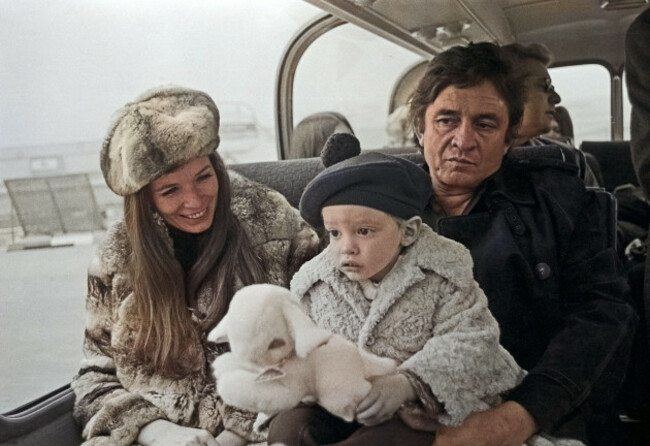
Johnny and June Carter Cash pictured in 1970 with their son John. Alamy Stock Photo

We asked Johnny Cash's son what the Man in Black would make of America today

John Carter Cash opens up about his parents Johnny and June, their ties to Ireland, and the wisdom their songs continue to offer.

WHEN JOHNNY CASH first flew over Ireland in 1959, he was so struck by what he saw below that he wrote a song before the plane had even landed.

The song Forty Shades of Green (yes, the Man in Black was the person to popularise this phrase) was penned as Cash looked down at the Irish landscape from the air, inspired by the country’s vivid patchwork of fields. The lyrics namecheck the River Shannon, Dingle and Tipperary, capturing a sense of wonder and nostalgia that felt worlds away from his black-clad image.

It remains one of the most tender songs he ever wrote, a quiet love letter to Ireland.

“That song says a lot about who my father was,” says his son, John Carter Cash.

“He was attracted to the mysticism of Ireland, the simplicity of it, the people, the music. He felt something here.”

More than half a century later, John Carter Cash is back in Dublin, preparing to bring his parents’ story to an Irish stage – one that, he says, his father always felt drawn to.

“I think my father knew he was part Irish, in his blood,” Cash says. “But more than that, he respected the people.”

Ireland had a mystic quality to him. It was a simple culture, and he was attracted to that – the beauty of it, the music, the musicianship. He loved travelling here.

The Journal / YouTube

That Irish connection is being renewed this spring as The Ballad of Johnny and June arrives in Dublin for its premiere run in Ireland, bringing the story of Johnny Cash and June Carter to the stage through the eyes of their only child.

The musical traces the full sweep of their lives together, from the early spark of their relationship to the years of struggle, endurance and forgiveness that followed.

Ahead of the show’s Irish premiere in the Bord Gáis Theatre, we spoke with John Carter Cash about telling his parents’ story, their enduring legacy, the music that shaped them – and what his father would make of the world today.

A tell-all show

“It’s a performance,” Cash says of the musical, “but it was connective. It really, truly was.”

“The song choice is what makes it,” he adds.

“There is dialogue, and the actor playing myself breaks the fourth wall right at the beginning, but it’s the music that tells the story.”

The show leans heavily on the songs that shaped Johnny Cash’s career, from Big River and I Walk the Line to Ring of Fire and the stark, reflective recordings of his later years.

There are some beautiful songs in there that really talk the message of their love.

But the musical does not present Johnny and June as a simple, fairytale love story, according to John. Instead, it confronts the complexity of their relationship and the toll of a life lived under relentless pressure.

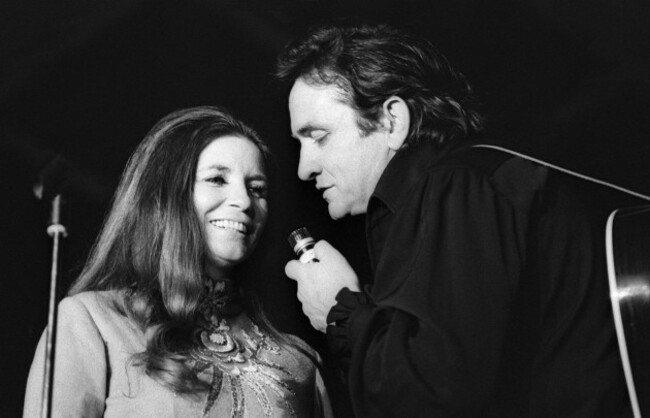
johnny-cash-with-wife-june-carter Johnny and June Carter Cash in 1969. Alamy Stock Photo Alamy Stock Photo

“I think people believe that after 1968 it was happily ever after,” Cash says. “But it wasn’t.”

Johnny Cash’s onstage proposal to June Carter has become one of the most romanticised moments in music history.

Yet the years that followed were marked by continued struggles with addiction, the strain of constant touring, and the emotional fallout of a relationship that began under intense scrutiny.

“They struggled, but they stayed together,” Cash says.

Johnny Cash battled substance abuse for much of his adult life, including relapses long after finding success and periods of sobriety.

A serious injury in the early 1980s led to renewed dependence on painkillers, reopening wounds that both he and June had hoped were behind them.

“My father’s addiction sometimes defined how people saw him,” Cash says. “And it defined a lot of what they went through.”

June Carter Cash, often remembered as the stabilising force in Johnny’s life, bore much of the emotional weight of that struggle.

Acting as caregiver while sustaining her own career took a heavy toll, and in later years she faced her own battles with prescription medication.

“If all you see is the beauty, you don’t understand what people go through to get there,” Cash says.

“Everybody out there is struggling.”

That honesty, and the refusal to sanitise their story, sits at the heart of the production.

“To see them go through it, and to see how they made it through it, that matters,” he says. “They were forgiving.”

Love mattered more to them than anything else.

Some of John’s most powerful memories of his parents are not of packed arenas or historic recordings, but of quieter moments away from the road.

“It was the trips,” he says. “Breaking away from the road and the touring. Going to some cabin in the wilderness. Camping in tents. Floating rivers in Alaska.”

“There’s a lot more to them than only those hours on stage.”

“They were just good people,” he adds. “Good-hearted. Very human.”

johnny-cash-amerikanischer-country-sanger-und-songschreiber-mit-ehefrau-june-carter-cash-und-sohn-john-carter-cash-in-hamburg-deutschland-um-1981-american-country-singer-and-song-writer-johnny-cas Johny June and John Carter Cash pictured in Hamburg in 1981. Alamy Stock Photo Alamy Stock Photo

That humanity is especially evident in Johnny Cash’s later work, when his voice found new audiences decades after his initial fame.

One song in the musical captures that spirit more than any other.

A Singer of Songs,” Cash says. “It shows exactly who he was, his mission, his heart.”

Another moment still leaves audiences silent.

“The song Hurt, definitely – that’s the one where people catch their breath.”

The song is from Johnny Cash’s later collaborations with producer Rick Rubin, part of the lasting power of his music legacy.

From 1993 until Cash’s death in 2003, the pair crafted a series of six acclaimed albums on the American Recordings label. This partnership revitalised Cash’s career, moving from a minimalist, acoustic approach to profound covers (like Nine Inch Nails’ Hurt) and deeply personal original songs, creating a ‘folklore’ legacy that resonates across generations.

“When we look back 500 years from now,” Cash says, “we’ll remember the foundations.

“Think about Beethoven, think about Mozart. Who do we remember when recording music began? The people who created the most astounding songs. My father will be one of those.”

Johnny’s politics

Johnny Cash’s worldview, often described as a ‘politics of empathy’, informed much of his work.

He famously stood for the underdog (the poor, the imprisoned, Native Americans, and those left behind by society) and, according to his son, he judged people on their humanity, not their party affiliation.

That philosophy extended beyond the stage and studio. But what would he think of the pandemonium across the globe, and particularly in the US, today?

The Journal / YouTube

“I think he’d be the same as he was back then,” John Carter Cash says.

“He would support the troops because he loved the people, no matter what walk of life they were in.

He would hope that peace would rule.

“My dad always judged people based on who they were as humans, not a party, not Republican, not Democrat.

“He was a patriot for America, but he was most certainly not political,” John adds.

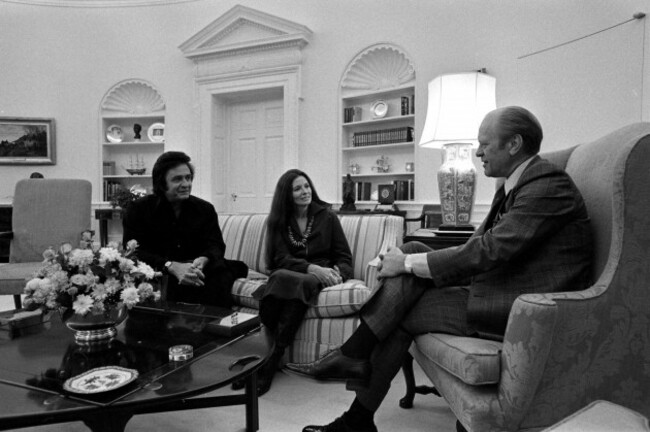
johnny-cash-1932-2003-namerican-musician-with-his-wife-june-carter-cash-visiting-president-gerald-r-ford-at-the-white-house-photograph-21-november-1975 Johnny and June Carter Cash pictured during a visit to President Gerald Ford at the White House in 1975. Alamy Stock Photo Alamy Stock Photo

That ethic of compassion has guided the Cash family in protecting his legacy.

In 2017, when a white supremacist radio program used his cover of Tom Petty’s I Won’t Back Down, the family acted swiftly to have it removed.

“We are against any organisation or individual who believes they are superior to or may wish harm upon another,” Cash said at the time.

“We try to stay true to his moral and philosophical approach in every public face, as if he were still living and breathing.”

The Wanderer

Ireland also played a pivotal role in one of the most unexpected chapters of Johnny Cash’s late-career resurgence: his collaboration with U2.

Cash remembers clearly the night his father performed in Dublin, when Bono and the band came to see him live.

“We were doing a show in Dublin, and Bono and The Edge came,” Cash says. “Larry Mullen was there as well.”

After joining Cash on stage, Bono invited him into the studio the following day.

“They were working on an experimental album,” Cash says. “Which ended up being Zooropa.”

Cash accompanied his father to the session and watched as The Wanderer took shape, a stark, prophetic track that introduced Johnny Cash to a new generation.

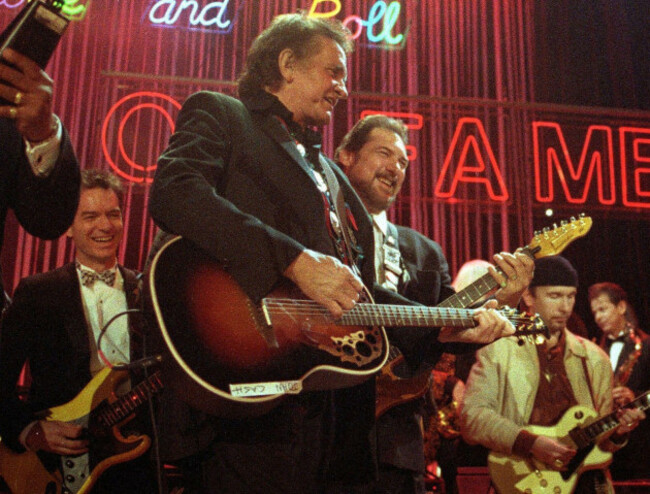
2NGFWMX Johnny Cash pictured with U2's The Edge (rear right). Alamy Stock Photo Alamy Stock Photo

“I was there when Bono finished it,” he says.

“My dad was making suggestions. They’d actually started something together before that, but this is where it came together.”

For Cash, the collaboration felt natural rather than surprising.

“My father respected artists who took risks,” he says. “And he loved Ireland.”

He believes that affinity – for Irish music, for its raw emotional directness – is part of why Cash’s work continues to resonate with listeners here.

“There’s a rawness there,” Cash says of Irish music. “A truth.”

And it’s that truth, more than myth or nostalgia, that The Ballad of Johnny and June aims to leave behind.

“The show is the truth, as much as we can tell it.”

In doing so, Cash hopes audiences walk away not just admiring the legend, but understanding the people behind it.

“They’ll feel like they know them,” he says. “Personally.”

The Ballad of Johnny and June: The Musical will premiere at Bord Gáis Energy Theatre from 31 March until 11 April.

Readers like you are keeping these stories free for everyone...
A mix of advertising and supporting contributions helps keep paywalls away from valuable information like this article. Over 5,000 readers like you have already stepped up and support us with a monthly payment or a once-off donation.

Close
13 Comments
This is YOUR comments community. Stay civil, stay constructive, stay on topic. Please familiarise yourself with our comments policy here before taking part.
Leave a Comment
    Submit a report
    Please help us understand how this comment violates our community guidelines.
    Thank you for the feedback
    Your feedback has been sent to our team for review.

    Leave a commentcancel

     
    JournalTv
    News in 60 seconds