Sign in. It’s quick, free and it’s up to you.
An account is an optional way to support the work we do. Find out more.
Sign in. It’s quick, free and it’s up to you.
An account is an optional way to support the work we do. Find out more.
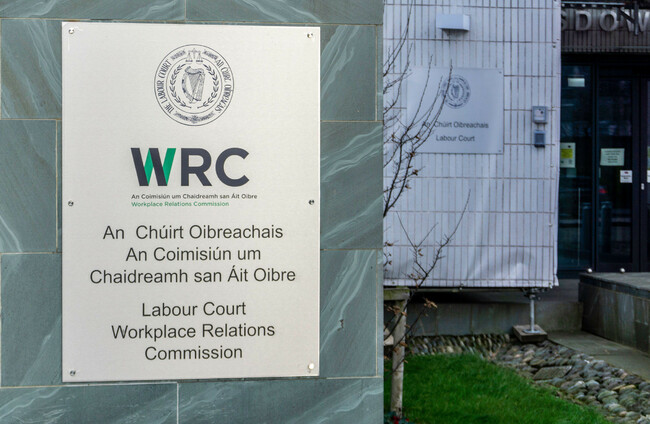
THE WORKPLACE RELATIONS Commission (WRC) has ruled that a journalist who took a case against his employer has been “compensated more than appropriately”, after he claimed that he should be on a higher pay grade.
According to a recommendation issued by the WRC which was published online, the case was brought forward by the multimedia journalist (MMJ) against a broadcaster (believed to be RTÉ) in May last year, as first reported by the Irish Independent yesterday.
An adjudicating officer overseeing the case added that the journalist “has an extraordinary sense of entitlement and a huge sense of self-importance” in respect of the work he does as a journalist.
This was highlighted by his repeated references to the names of people he worked with in the broadcaster, apparently employed in very senior roles, without referring to their job titles.
The journalist currently earns an annual salary of €84,630, the court was told.
He claimed that he was entitled to additional compensation for a project that he worked on in 2010 due to the “significant contribution” that he made to it.
The journalist added that promises that were made to him by the Director of News in 2009, prior to him starting on the project, that he would be appropriately rewarded for the work he would be expected to do.
He also argued that he should be re-classified at a higher pay grade than the one he is currently on, given the newscasting work that he does. The journalist claimed that newscasting does not fall within the responsibilities of his existing grade.
In response, the broadcaster said that the journalist was compensated through the Special Responsibility Allowance and the Additional Responsibility Allowance being made pensionable, in respect of the work he did on the project.
“This is a very valuable benefit in terms of the enhanced impact on future pension entitlements – valued at €100,000,” the WRC noted.
The broadcaster added that the journalist’s assertion of alleged verbal promises made by the Director of News in 2009 was not documented or vouched by the journalist.
It was also stated that the journalist is paid the MMJ salary as that is his job.
On top of his salary of €84,630, he is paid the Additional Responsibility Allowance for duties as Acting Chief Sub Editor since 2007.
The broadcaster stated that the role of MMJ “requires the reading of radio bulletins”, asserting that “this is an accepted part of the role of Multimedia Journalist, is more usual than not and does not entitle the Worker to be appointed to the Newscaster or indeed any other grade”.
WRC adjudicator Breiffni O’Neill said in his decision that he does not accept the journalist’s assertion that he was insufficiently compensated.
“The decision to make his allowances pensionable at an undisputed cost of €100,000 means that he has been more than adequately compensated for his work on the project,” O’Neill said.
“I cannot therefore make a recommendation in his favour in respect of this aspect of the dispute.”
O’Neill added that granting an upgrade to the journalist for the newscasting duties he performs “would have broader implications beyond this individual case”, as there are other multimedia journalists who also perform newscasting duties without receiving compensation at the ‘newscaster’ job grade.
“I am also unable to make a recommendation in his favour regarding this aspect of the dispute,” O’Neill said.

To embed this post, copy the code below on your site













have your say