We need your help now

Support from readers like you keeps The Journal open.

You are visiting us because we have something you value. Independent, unbiased news that tells the truth. Advertising revenue goes some way to support our mission, but this year it has not been enough.

If you've seen value in our reporting, please contribute what you can, so we can continue to produce accurate and meaningful journalism. For everyone who needs it.


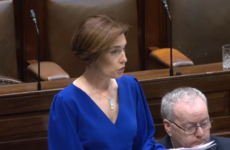
Justice Minister Jim O'Callaghan announced the proposed law change over the Christmas break. Rollingnews.ie

Minister moves to address 'confusion' over laws to seize journalists' phones amid calls for clarity

O’Callaghan said that under the new law, courts will have to be informed by the gardaí if the gardaí believe there may be issues in respect of journalistic privilege.

JUSTICE MINISTER JIM O’Callaghan has said that proposed changes to laws around seizing journalists’ phones will actually benefit reporters, but the National Union for Journalists (NUJ) has said genuine concerns still remain.

There was significant pushback this week to a Bill announced by the Justice Minister over Christmas that deals, among other things, with the rights of gardaí to seize phones and equipment belonging to journalists. 

Under the Garda Síochána (Powers) Bill (2025), legal professional privilege would be protected as absolute, while other forms of privilege, including for journalists, would be managed through a “structured process, including through a determination by the High Court” if required.

The term ‘privilege’ refers to rights around confidential communication.

For journalists, while ‘privilege’ is there to protect sources, it is not an absolute right in the same way that legal professional privilege is absolute.

Earlier this week, NewsBrands Ireland, the representative group for news publishers in Ireland, asked that the Bill be amended to explicitly recognise the right of journalists to refuse to reveal confidential sources.

Meanwhile, Independent Ireland leader Michael Collins said the Bill is a “deliberate and cynical attempt to dilute journalistic privilege” and that it reads “like a blueprint for an authoritarian state”.

Responding to the criticism, Minister O’Callaghan said there has been “a bit of confusion” around the Bill and that it will actually “be of benefit to journalists” by giving recognition to journalistic privilege. 

“And in fact, that’s not just me saying it,” O’Callaghan said.

Referring to a 2023 Supreme Court ruling, which related to journalist Emmett Corcoran’s phone being seized, the minister noted that the judge said that there was an urgent requirement for the Oireachtas to deal with inadequacies within section 10 of the Criminal Justice Miscellaneous Provisions Act 1997.

“That had created a situation where the gardaí could go to court to look for a search warrant, and they didn’t have to inform the court about the fact that there may be issues in respect of journalistic privilege associated with their application.

“Under the legislation that I am introducing, there will now be a requirement for that issue of journalistic privilege, or indeed another type of privilege, to be brought to the attention of the court, and then there’ll be a process through which that issue will be determined as to whether or not the journalistic privilege applies or not,” the Justice Minister said. 

O’Callaghan said that under the new laws that he will be introducing, courts will have to be informed by the gardaí if the gardaí believe there may be issues in respect of journalistic privilege or other privilege.

However, NUJ Irish Secretary Seamus Dooley said there is still a lack of clarity around the proposed law. 

Speaking to The Journal, Dooley said: 

“What is not clear is whether the application will be made on an ex parte basis [meaning without the journalist being notified of the application]. We believe there should be a clear opportunity for the application to be made in the presence of both sides and that media organisations and journalists should be able to argue public interest defence in advance of seizure.”

Dooley also highlighted that there was no consultation with the industry on the proposed law.

“The devil is in the detail,” Dooley said.

“Clarity is needed and there will be an opportunity for legislative scrutiny but for now, there are genuine concerns.”

The Minister for Justice has since written to the NUJ and NewsBrands in relation to the Bill and has sought to reassure them that the Bill is “strengthening protections for journalists” by creating “a transparent, structured system for safeguarding them”. 

According to the minister, where privilege arises under the Bill, access to a device is subject to additional court oversight.

He said that once material is seized, the journalist may assert a claim of privilege, which will be determined by the High Court or by agreement between the parties.

Readers like you are keeping these stories free for everyone...
A mix of advertising and supporting contributions helps keep paywalls away from valuable information like this article. Over 5,000 readers like you have already stepped up and support us with a monthly payment or a once-off donation.

Close
JournalTv
News in 60 seconds