Sign in. It’s quick, free and it’s up to you.
An account is an optional way to support the work we do. Find out more.
Sign in. It’s quick, free and it’s up to you.
An account is an optional way to support the work we do. Find out more.
LAST UPDATE | 16 Oct 2025
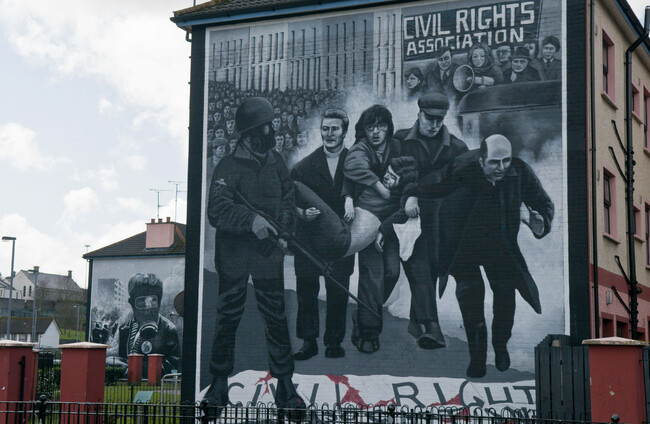
THE VERDICT IN the trial of a former paratrooper accused of the murder of two men during the events of Bloody Sunday in 1972 is expected to be delivered next week.
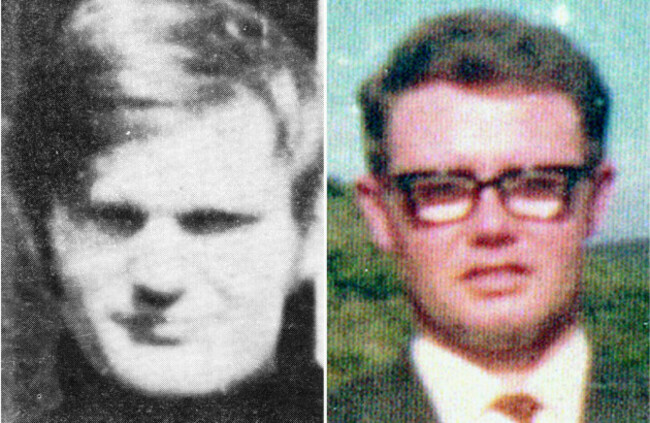
Soldier F is charged with the murders of James Wray and William McKinney on 30 January 1972 – the day when members of the Parachute Regiment shot dead 13 civil rights protesters on the streets of Derry.
He is also accused of five attempted murders during the incident in Derry’s Bogside area, namely of Joseph Friel, Michael Quinn, Joe Mahon, Patrick O’Donnell and a person unknown.
He has pleaded not guilty to the seven counts.
Judge Patrick Lynch today thanked the prosecution and defence for their submissions in a trial that lasted just more than a month at Belfast Crown Court.
He said he planned to deliver his verdict next Thursday.
Key evidence in the trial were previous statements made by two other paratroopers, referred to as G and H, who were present in Glenfada Park North along with F.
The prosecution have argued they provide direct evidence that Soldier F had opened fire in the area.
But the defence described them as unreliable witnesses and the statements as inconsistent with each other, as well as with the accounts of eye witnesses who gave evidence during the trial.
Soldier F did not give evidence on his own behalf either before the trial or during it.
The court previously heard that Soldier F was interviewed voluntarily under caution across two days from 8 and 9 March 2016 by officers from the PSNI over the offences he has been charged with.
At the start of those interviews, his solicitor read a statement indicating he no longer had any reliable recollection of those events, and would not answer any questions. He made no comments to all questions put to him.
The trial also heard medical and forensic evidence that William McKinney died after being hit by a single bullet which entered the right side of his back, and that James Wray was struck by two bullets, most likely from the same gun.
Neither man tested positive for lead or explosives residue on their hands or clothes, which would have indicated they had been using a firearm.
Making his closing arguments, Louis Mably KC for the prosecution said the court was open to draw an “adverse inference” from Soldier F’s failure to give evidence.
He went on that even allowing for the passage of time, it was “implausible he does not have a memory” of whether he had opened fire during the incident.
Mably argued that there was consistency across the witness statements.
He described a scene of an illegal shooting by the British Army in Glenfada Park North as unarmed civilians ran away. He said they had been carried out without justification and with the intention to kill, adding: “That’s the ingredients of murder.”
“The only question in this case is whether F was one of the soldiers who participated in that shooting, either as a principal or a secondary participant,” he said.
In his closing statements, Mark Mulholland KC, for the defence, said the prosecution’s case relied on the statements by Soldier G and Soldier H, who he said in their own submission, were “liars and fabricators”.
He queried inconsistencies both in the statements of the former soldiers from those they had given to the Royal Military Police on the night of the shootings in 1972, to those they gave to the Widgery Inquiry later this year, and evidence from H to the Saville Inquiry.
Neither were available to give evidence to the trial because Soldier G has since died, while Soldier H has indicated he will exercise his right against self-incrimination if summoned.
Mulholland said the case was “fundamentally flawed” and failed on all seven counts.
At the start of today’s proceedings, Judge Lynch dismissed a no-case-to-answer application by defence on the basis of unreliable evidence being relied on by the prosecution.
He said the statements of the two former paratroopers known as Soldiers G and H would be admitted.
Soldier F sat in the courtroom at Belfast Crown Court behind a curtain during each day of the non-jury trial, which began last month.
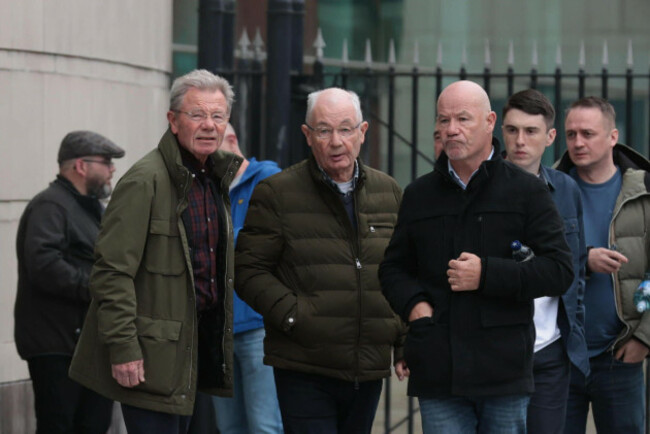
Relatives of James Wray and William McKinney, along with supporters, watched on from the public gallery.
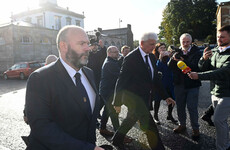
Veterans Commissioner for Northern Ireland David Johnstone and Paul Young from the Northern Ireland Veterans Movement were also among those who observed proceedings.
With reporting from Press Association

To embed this post, copy the code below on your site








have your say