We need your help now

Support from readers like you keeps The Journal open.

You are visiting us because we have something you value. Independent, unbiased news that tells the truth. Advertising revenue goes some way to support our mission, but this year it has not been enough.

If you've seen value in our reporting, please contribute what you can, so we can continue to produce accurate and meaningful journalism. For everyone who needs it.

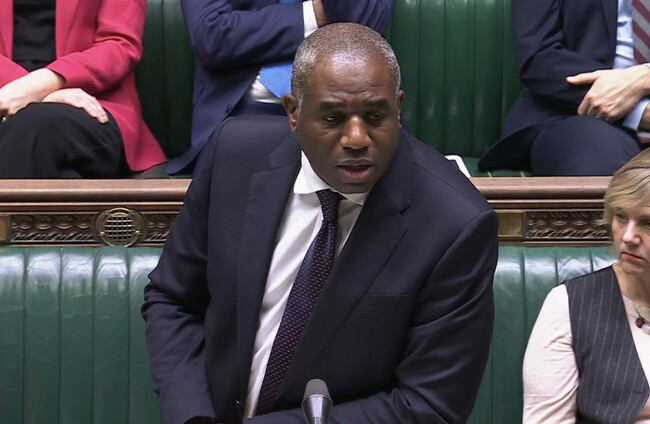
UK Deputy Prime Minister and Justice Secretary David Lammy making a statement on criminal court reform in the House of Commons. Alamy Stock Photo

Jury trials to be scrapped in England and Wales for crimes with sentences of under three years

The crown court backlog currently is at a record level of more than 78,000 cases.

JURY TRIALS ARE to be scrapped in England and Wales in cases that could have a likely sentence of three years or less. 

The move was announced by British Justice Secretary David Lammy this afternoon as part of a bid to tackle a record backlog in crown courts. 

It comes after retired English judge Brian Leveson made recommendations in July to reform the courts system.

The Journal / YouTube

New “swift courts” will be created with a judge alone deciding verdicts, with Lammy saying the new system would get cases dealt with a fifth faster than jury trials.

The crown court backlog currently is at a record level of more than 78,000 cases and some trials are being listed as far in the future as 2030.

Ministers have warned the backlog could rise to 100,000 by 2028 if nothing is done, with a growing number of victims giving up on seeking justice because of the lengthy delays.

Currently jury trials make up 3% of cases. They will now be reserved for “indictable-only” offences such as murder and rape, and lesser “either way” offences with a likely sentence of more than three years in prison.

“Investment is not enough,” Lammy said.

System ‘will take years to fix’

Announcing his criminal court reform in the House of Commons, he said: “I will create new swift courts within the crown court with a judge alone deciding verdicts in trial of either way cases with a likely sentence of three years or less as Sir Brian (Leveson) recommends.

“Sir Brian estimates that they will deliver justice at least 20% faster than jury trials, and whilst jury deliberations remain confidential, judges provide reasoning for their verdicts in open courts, so this will hardwire transparency in our new approach.”

Lammy said the courts system “will take years to fix” and described the reforms as “bold but they’re necessary”.

“I’m clear that jury trials will continue to be the cornerstone of the system for the most serious offences, those likely to receive a sentence over three years, and all indictable-only offences. Among others, this would include rape, murder, manslaughter, grievous bodily harm, robbery and arson with intent to kill,” he said. 

Currently, defendants of either way offences can have their cases heard in the magistrates’ court or crown court, where they can elect a jury trial.

But under the new plans, defendants will no longer be able to choose this option.

Lammy, who is also Deputy Prime Minister, said a defendant’s right to a jury trial will be restricted to prevent them from “gaming the system”.

Appeals to be limited

He said Brian Leveson proposed restricting defendants’ right to elect for jury trials, “a practice not found widely in other common law jurisdictions. And, let’s be honest, it’s a peculiar way to run a public service.

“Our world-leading judges should hear the most serious cases and I agree that they and the magistrate should decide where a case is heard. This will prevent defendants from gaming the system, choosing whichever court they think gives the best chance of success, and drawing out the process, hoping victims give up.

“I will limit appeals from the magistrates’ court so that they are only allowed on points of law to prevent justice being delayed further.

“Alongside these changes, we will increase magistrates’ court sentencing powers to 18 months, so they can take a greater proportion of lower level offending and relieve pressure on the Crown Court.

“I would also take power to extend that to two years, should it become necessary to leave further pressure. And when it comes to exceptionally technical and lengthy fraud and financial trials, judges will be able to sit without a jury where appropriate.”

Lammy said that the Labour government “is pulling every possible lever to move in a positive direction” and said his ambition for the backlog to start coming down “by the end of this Parliament” remains.

He added that Leveson has been asked to do a second report on “efficiency and how we can make much better use of technology to deliver the modern and effective courts the public rightly expect”.

The UK Bar Council had urged Lammy not to replace juries with single judges, warning that doing so could damage public trust.

With reporting from Press Association

Readers like you are keeping these stories free for everyone...
A mix of advertising and supporting contributions helps keep paywalls away from valuable information like this article. Over 5,000 readers like you have already stepped up and support us with a monthly payment or a once-off donation.

Close
32 Comments
This is YOUR comments community. Stay civil, stay constructive, stay on topic. Please familiarise yourself with our comments policy here before taking part.
Leave a Comment
    Submit a report
    Please help us understand how this comment violates our community guidelines.
    Thank you for the feedback
    Your feedback has been sent to our team for review.

    Leave a commentcancel

     
    JournalTv
    News in 60 seconds