We need your help now

Support from readers like you keeps The Journal open.

You are visiting us because we have something you value. Independent, unbiased news that tells the truth. Advertising revenue goes some way to support our mission, but this year it has not been enough.

If you've seen value in our reporting, please contribute what you can, so we can continue to produce accurate and meaningful journalism. For everyone who needs it.

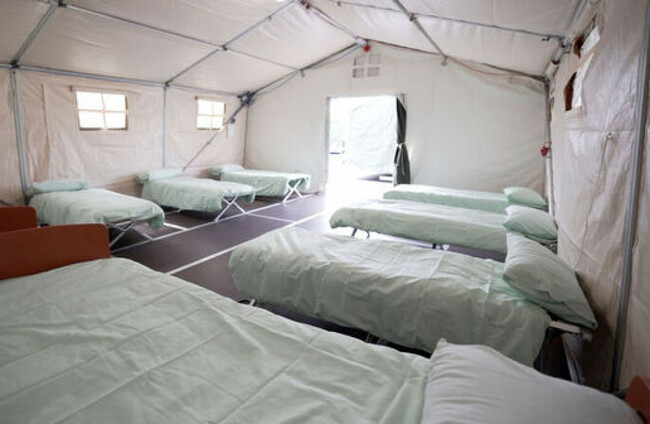
Tented accommodations at the Gormanstown Army Camp in Co Meath in 2022. Rollingnews.ie

Asylum seekers could pay up to €1,000 per month to live in tented accommodation under new rules

O’Callaghan said Ireland’s population grew by 1.6% last year, which is seven times the EU average.

ASYLUM SEEKERS COULD have to pay up to €1,000 a month to live in tented accommodation under new rules introduced by the government.

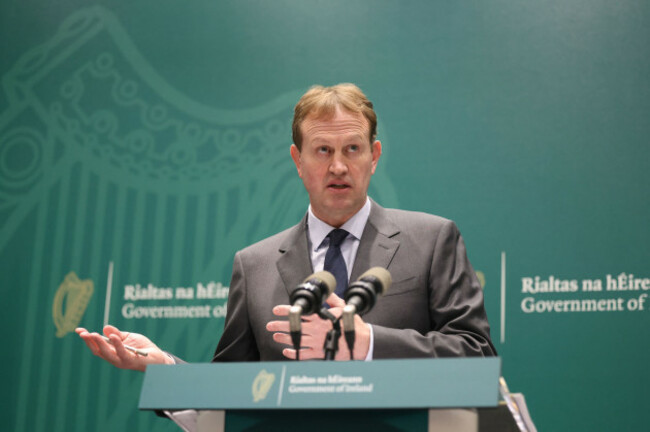
Speaking to reporters after Cabinet approved sweeping new rules governing asylum seekers, citizenship eligibility and family reunification, Justice Minister Jim O’Callaghan said those living in international protection accommodation will have to pay a contribution towards their accommodation of up to 39.6% of their income.

The potential payments could range from €15 a week for those earning between €97.01 and €150 a week, to €238 a week for anyone earning more than €600 euro a week.

Asked if the charge would also apply to those living in tented accommodation, the minister said those in employment would have to make a contribution regardless of “the quality of accommodation provided”. 

When asked if the government should provide higher standard accommodation if residents are required to pay a substantial proportion of their salaries to live in it,  O’Callaghan said:

If you’re earning money through work, you don’t have to live in IPAS accommodation.

The minister said that 80% of people who sought asylum were refused, and that on appeal between 60%-70% were refused.

“So when you look at the statistics overall, the overwhelming majority of people who apply for asylum and international protection are not granted,” he said.

“And I think that’s a legitimate reason for me then to say that the numbers are too high because too many people are using it as a means to come in when in fact they should be applying for work visas.”

The new rules will also make it harder for people in the international protection system to become residents or citizens and require working asylum seekers to pay towards their accommodation.

Minister OCallaghan-4-ED Big-2_90738588 Justice Minister Jim O'Callaghan says these new measures aim to quell population growth. RollingNews.ie RollingNews.ie

People in international protection will now need to have been resident in Ireland for five years to qualify for citizenship, bringing it in line with the rule for non-asylum seeker immigrants. The requirement for asylum seekers had been three years. 

There will be a tightening of citizenship criteria to ensure there is clear guidance on the application of good character requirements and the introduction of a requirement for the applicants to be self-sufficient. 

The government will also now have the power to revoke a person’s asylum status in the event they are found to be a “danger to the security of the state” or convicted of a serious crime. 

“While these situations are rare, it is important that these powers are provided for in law,” O’Callaghan said today

All of these stricter rule changes had been announced by O’Callaghan previously, and were met with criticism from opposition parties and humanitarian NGOs, but they now have the backing of the Cabinet and will move to the legislative process. 

The new rules also mean that asylum seekers who wish to be reunited with family members in Ireland must show they can support them financially. 

Applications under the family reunification process for minor children will be subject to financial thresholds, ranging from gross salaries of over €44,000 to 124,000. 

Another measure confirmed today, and coming into force with immediate effect, is an update to the rules for family reunification for Irish citizens and immigrants whose relatives live outside of Europe. 

Similarly to the requirements on people in the international protection system, if people want to bring their family members to Ireland, they must demonstrate “a clear financial capacity” to support them. 

The new rules also restrict the kinds of relatives who are eligible for reunification, placing “strict limits” on family members who are not spouses, partners or children under 18. 

Population growth 

He said Ireland’s rate of population growth is too high and the government’s new restrictions aims to reduce that growth. 

He said the “rate of increase does require a policy response”.

Speaking to reporters this morning, Tánaiste Simon Harris said the government “has absolutely no intention of becoming a landlord”, when asked about asylum seekers being forced to pay for their accommodation. 

“I reckon, the overwhelming majority of people in this country believe that if you’re earning money, you should be asked to pay towards your keep.”

There has been criticism of the quality of accommodation for asylum seekers for years.

The Ombudsman for Children Niall Muldoon today outlined his concerns about the “rushed nature” of the government’s International Protection Bill, and the impact it would have on the rights of unaccompanied children who arrive in Ireland.

The chief executive of the Immigrant Council of Ireland, Teresa Buczkowska, told RTÉ’S Drivetime yesterday that people are living in “overcrowded situations” with children “who are unable to learn how to walk because there is not enough space for them”.

She asked that if the government is going to charge money for accommodation, would they comply with the obligations required of landlords to provide appropriate accommodation?

Harris said the Government would be asking people with an income “to pay a small contribution, about €15 a week for someone on about €150”.

He said: “It’s not going to change that relationship in terms of becoming a landlord.”

The Tánaiste claimed the policy of allowing working international protection applicants to receive free accommodation “simply defies common sense, it defies social cohesion, it defies fairness”.

He said if it “doesn’t end” it allows a “vacuum to develop” which could be filled with far-right “populists”.

With reporting from Press Association  

Need more clarity and context on how migration is being discussed in Ireland? Check out our FactCheck Knowledge Bank for essential reads and guides to finding good information online.

Readers like you are keeping these stories free for everyone...
A mix of advertising and supporting contributions helps keep paywalls away from valuable information like this article. Over 5,000 readers like you have already stepped up and support us with a monthly payment or a once-off donation.

Close
JournalTv
News in 60 seconds