We need your help now

Support from readers like you keeps The Journal open.

You are visiting us because we have something you value. Independent, unbiased news that tells the truth. Advertising revenue goes some way to support our mission, but this year it has not been enough.

If you've seen value in our reporting, please contribute what you can, so we can continue to produce accurate and meaningful journalism. For everyone who needs it.

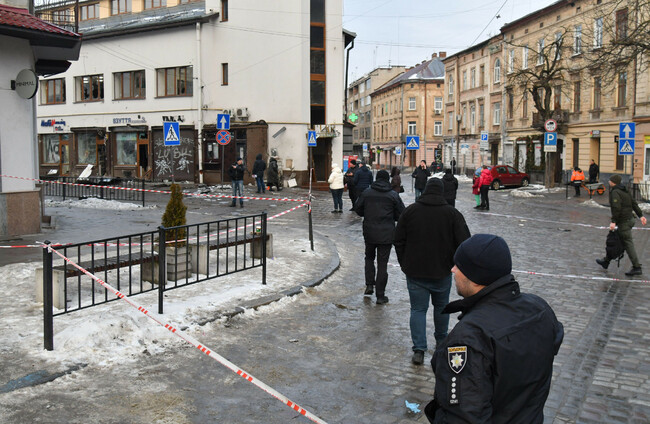
Police investigate a double explosion at a shop in Lviv in February. Alamy Stock Photo

Kyiv fights on multiple fronts, the war against Russia and the criminal underworld

This week The Journal visited Kyiv and its suburbs to see the impact of the Russian invasion.

ORGANISED CRIME NETWORKS are exploiting the uncertainty and, at times, chaos in Ukraine society as the war continues to rage. 

This week, The Journal witnessed the impact the four-year-long Russian invasion is having on Kyiv and its suburbs.

On the surface, it is a functioning European capital with a vibrant bar and restaurant culture and a busy workforce in shops, state departments, offices and factories. But overnight, residents are woken by the howl of the air raid siren warning of imminent drone and missile launches by Russia.

A phone app tells residents when it is safe to nod off to sleep again. Generally a stand down is given as air defences intercept or the ordnance strikes a different target. This is not just occasional or even routine, it is every single night. 

Ukrainians in the cafés and the shops tell us they are tired, worn down by the seemingly indefinite war raging to the east. Despite its resilience, the city isn’t hiding its own wounds – memorials to dead soldiers are dotted across busy areas and statues continue to be shrouded in protective structures should an air raid strike nearby. 

The strain is showing now and the plaudits of grit and fortitude from abroad only last so long. 

Where there is dysfunction, the mafia underworld will thrive. It has become a comfortable home for corruption, fraud, people trafficking and drugs. 

Profound societal issues. Population health decline after winters without heat and electricity. A mental health crisis. Drug use.  

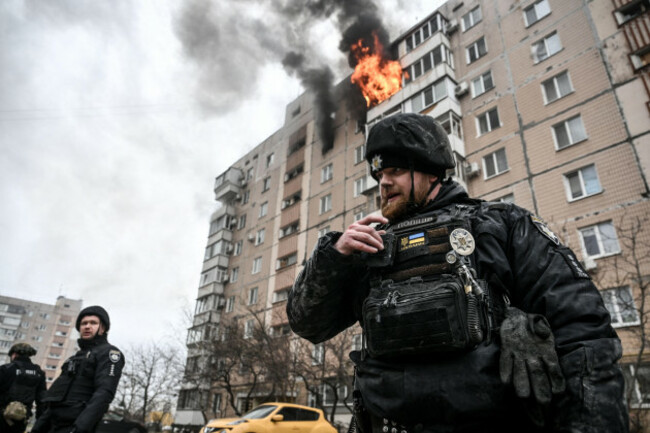
police-officers-stand-outside-an-apartment-block-where-a-fire-broke-out-caused-by-a-russian-guided-aerial-bomb-strike-zaporizhzhia-ukraine-december-17-2025-photo-by-dmytro-smolienkoukrinform Police officers stand outside an apartment block, where a fire broke out caused by a Russian guided aerial bomb strike, Zaporizhzhia, Ukraine, in December. Alamy Stock Photo Alamy Stock Photo

Crime ecosystem

A 2025 report by the Global Index of Organised Crime looked at Ukraine’s criminal ecosystem.

The study, funded by the US and the European Union, laid bare the extent of people smuggling, illegal arms trading, counterfeit goods and extortion linked to the energy sector happening across the region. Illegal logging, mining and oil smuggling have also become common.

However, the heroin trade has taken a hit and those using the Black Sea, once a major route for cocaine smuggling, have suffered setbacks because of the war. Before the invasion, shipments would have arrived through the ports on the south coast of Ukraine. 

The report found that there are fraudulent procurement schemes which essentially seek to profit from the largescale purchase and funding for military equipment. 

The study also confirms that there has been a problem of fraud call centres popping up – with some cases of workers for these scam operations being imported from elsewhere by the mafia. These are cold-calling scam operations similar to those ringing from 0044 numbers in Ireland. 

They generally focus on conning Russians but now have started targeting people more widely across Europe.

The mafia organisations include an influential Ukrainian/Russian grouping known as Khimprom, as well as foreign criminal organisations from Georgia, Azerbaijan and Turkey who are exploiting the war torn country. 

Khimprom is generally focused on the drugs trade and the largescale international supply chains for drugs.

It is impossible to get anyone in Ukraine to speak on the record, but we spoke to a number of people with knowledge of the law enforcement situation on the ground. 

They say that the mafia problem compounds more widespread corrupt practices in the State. 

The criminal groups, however, are operating on an industrial scale with massive profits to be made in creaking governance as the State focuses on fighting the war.

It is not helped by a law enforcement system that has multiple agencies, slow to trust each other as they compete for their own slice of the pie.

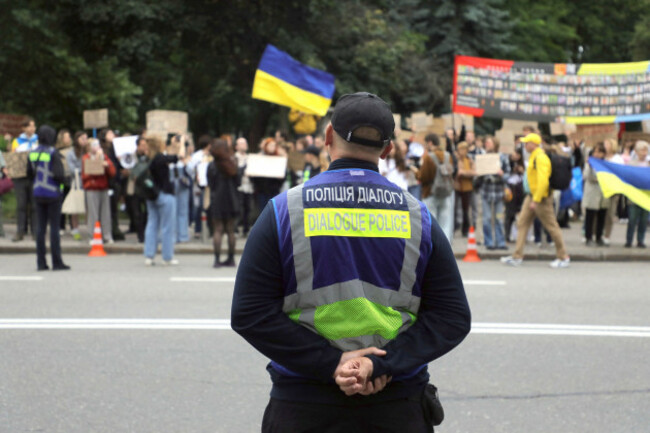
a-dialogue-police-officer-watches-activists-protest-against-law-n4555-ix-which-limits-the-powers-of-the-national-anti-corruption-bureau-nabu-and-the-specialised-anti-corruption-prosecutors-office A police officer watches a protest in Kyiv against a law limiting the powers of the National Anti-Corruption Bureau (NABU) and the Specialised Anti-Corruption Prosecutor?s Office (SAPO). Alamy Stock Photo Alamy Stock Photo

Government

There have been corruption scandals recently in policing and government with Zelenskyy’s own chief of staff Andriy Yermak forced to resign. 

Investigators said they had raided Yermak’s home but did not reveal why.

He has been accused of involvement in a $100-million kickback scheme in the strategic energy sector, uncovered by investigators in recent months.

In July 2025 the Zelenskyy government suffered mass protests over concerns that it was to limit the independence of the anti-corruption investigators.  

The changes gave the country’s prosecutor general – who is appointed by the president – control of the National Anti-Corruption Bureau and the specialised Anti-Corruption Prosecutor’s Office, effectively erasing the independence of the two bodies.

Critics said that this would mean that Ukraine’s parliament will have the ability to control which cases are pursued. The government backtracked and changed the legislation. 

As Foreign Minister Helen McEntee toured Kyiv and met with government officials such as Foreign Minister Andrii Sybiha and Volodymyr Zelenskyy, it was clear that Ukraine’s accession to the EU was centre stage. 

But behind the scenes there is slow progress on critical reforms around Rule of Law, appointments to the judiciary, oversight and other legal checks and balances. 

Sources said it is stalling the progress of Ukraine’s hopes of joining the Union. They were formally declared candidates in June 2022 with accession negotiations started in June 2024. 

McEntee, speaking in Kyiv to The Journal, said that there has been a lot of work done by the Ukrainian government to meet its obligations but more needs to be done.

“And I think it’s the Rule of Law, whether it’s judicial appointments, whether it’s corruption – these [are the] areas,” she said. 

McEntee did note that there has been legislation drafted and passed to begin the process of convincing the EU that the Ukrainian government is serious about reforms. 

The Journal understands that beyond the structures associated with the workings of the State, there has also been an effort to find a legislative basis to strike back against the mafia. 

One of those measures has been around beefing up the laws for prosecuting gangsters.

For example, it is understood that new legislation has been drafted to enable a well-developed witness protection system to turn mafia members to begin giving evidence against their former colleagues. 

There is also more training of law enforcement and all of this is under the guidance of the European Union Advisory Mission for Civilian Security Sector Reform in Ukraine (EUAM).

Among those working on the mission are former members of An Garda Síochána, along with several other former law enforcement specialists from across Europe. 

Sources have said it is moving slowly and the efforts to bring about the change are stymied by the structure of the Ukrainian state.

Whatever happens for Ukraine and its hopes to get closer to the EU, the challenge of dealing with the societal impacts will take longer when the war concludes and the air raid alerts stop. 

Readers like you are keeping these stories free for everyone...
A mix of advertising and supporting contributions helps keep paywalls away from valuable information like this article. Over 5,000 readers like you have already stepped up and support us with a monthly payment or a once-off donation.

Close
JournalTv
News in 60 seconds