Sign in. It’s quick, free and it’s up to you.
An account is an optional way to support the work we do. Find out more.
Sign in. It’s quick, free and it’s up to you.
An account is an optional way to support the work we do. Find out more.
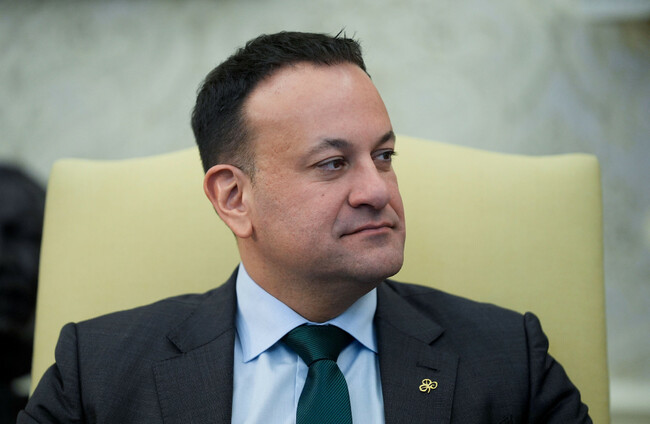
LEO VARADKAR CAMPAIGNED in many elections. On the day of the Fine Gael campaign launch in the 2020 election, he made comments that he now looks back on as having come across as “crass – callous even”.
Its one of many recollections detailing moments in his political career in a newly published memoir titled: “Speaking My Mind.”
The former Taoiseach left politics last year and swears he has no intentions to ever run for political office again, insisting he is instead enjoying the “political and intellectual freedom that comes with being a private citizen” and being able to speak his mind without fearing what the ramifications might be for colleagues, his political party, or potential voters.
The 400-page book spans from his childhood and early days in Fine Gael through his rising up the party’s ranks and taking on Ireland’s highest political office.
Here are eight things that he reveals in those pages.
“By the time I got into the car to head back to Dublin, I knew I’d made a mistake.”
That was how Varadkar felt after answering questions from media at the Fine Gael election campaign launch in January 2020. Shortly prior, a homeless man had been seriously injured by a Waterways Ireland vehicle that was clearing tents along the Grand Canal in Dublin.
“When the journalists requested my view at the launch, I mishandled the situation badly. I only needed to acknowledge the terrible tragedy, wish the man well, and say there would be a full investigation before commenting further,” Varadkar recalls.
“What I actually said was that the Lord Mayor of Dublin Paul McAuliffe – also an election candidate for Fianna Fáil – should make a statement.” Fianna Fáil was, of course, Fine Gael’s election opponent.
“There was logic to my comments, because the city council, rather than the government, is responsible for homeless services in Dublin,” he says.
“But my words came across as crass – callous even – and suggested I was deflecting and trying to spread blame. I guess I was. Others were using the tragedy to make political points, but I should have risen above it.”
A chapter of the book is entitled ‘Leo the Leak’, a reference to the moniker that was quickly adopted by his critics when he was revealed to have sent a document detailing an agreement with the Irish Medical Organisation to Maitiú Ó Tuathail, a doctor who was the president of the rival organisation the National Association for General Practitioners and a friend of Varadkar’s partner Matt.
Varadkar admits in the memoir to “bending the rules slightly, as I sometimes did to get things done in the public interest”, but says that at the time it “never occurred to me there was anything unethical in sending the document”.
“It was marked ‘Confidential’ using the standard Microsoft Word watermark but wasn’t ‘red stamped’ as a government secret – as a budget document or secret memo would be. It hadn’t gone to cabinet so wasn’t bound by cabinet confidentiality. I hadn’t signed a confidentiality clause, and nor had I been notified of any concerns about commercial sensitivity,” he writes.
“In any of those cases, I would not have sent it to Maitiú, and I certainly wouldn’t have written on it or sent it in the official post from the Department of the Taoiseach. It was a minor decision on a busy day when I made many others that were more important.”
When The Village magazine ran an article detailing the communication between Varadkar and Ó Tuathail, Varadkar says the publication made a “blatant overreach” in its framing of the story but that he “knew it didn’t look good or could be made to look bad”.
Varadkar details the reaction some of his associates and Fine Gael colleagues had to the story and its fallout. Rossa Fanning, a lawyer from whom Varadkar sought legal advice (who would later become the attorney general), told him not to sue for defamation, that it would “drag on for years” and that it would be “like wrestling a pig. You might win, but you’ll end up covered in muck and the pig will enjoy it”.
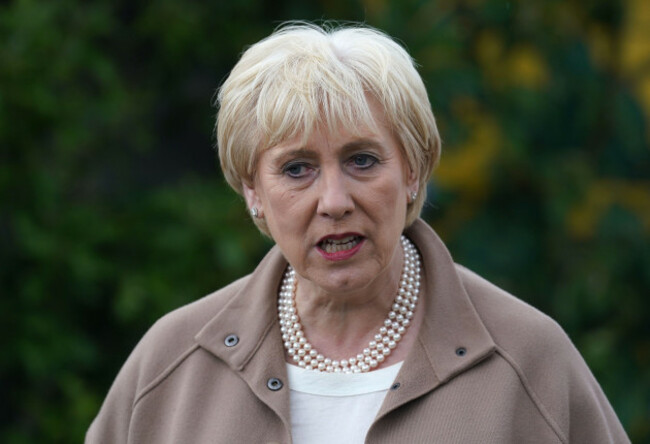
On Heather Humphreys – then a minister, now Fine Gael’s pick to represent the party in the presidential election – Varadkar writes:
“Heather Humphreys thought the whole thing was comical. ‘Sure, what are they saying, a minister can’t show a document to someone they know or trust to get an outside opinion on it? We’ll all be criminals next.’ She was making a valid point and being kind.”
Other Fine Gael members, he says, “were irked” that he had done it in the first place and then hadn’t covered his tracks. One unnamed colleague said that “if you’re going to leak something, you don’t do it yourself, like”.
The memoir charts how Varadkar – who nowadays would describe himself as fiscally conservative and socially liberal – evolved his position on the left-right political spectrum over the years.
In a section that deals with Fine Gael’s vote on the 2013 legislation to ease restrictions on abortion and then-Fine Gael colleague Lucinda Creighton’s decision to break party ranks, Varadkar reflects on being accused of having moved too far to the left.
He definitely doesn’t see himself as a left-wing politician, but he says that stances he held that were more staunchly conservative earlier in his career gradually softened.
“The truth is that in my early years in politics I not only presented as but genuinely was a social conservative. My thinking was straight down the line with traditional Fine Gael policy. Gradually, I became more socially liberal,” he writes.
“People who disliked me and how I worked accused me of being cynical or an opportunist. But anyone who really knew me understood that my views were evolving, and that this transformation was real and deeply personal.
“Remaining closeted had made me more puritanical and more judgemental than I would otherwise have been. I think the same is true for many closeted gay and bisexual people. If I can suppress part of myself and succeed anyway, we think, then why can’t everyone else? If I can deny myself what I really want, why the hell can’t you? I was also just gaining experience and realising more and more that life isn’t black-and-white.”
Varadkar’s first ministerial position was the newly formed portfolio of Transport, Tourism and Sport in the Fine Gael-Labour government formed after the 2011 election. As part of the tourism brief, he was responsible for the project to extend the Luas to network to connect the Green and Red lines in the city centre.
He writes in the memoir that his office “received many letters from well-heeled individuals along the Green Line, concerned that the extension would make it easier for ‘criminals’ from rougher areas to travel to the leafy suburbs, mug the upper-middle classes, and escape swiftly on public transport”.
“I instructed my staff to use the politest possible political language to tell them to fuck off.”
He also said that his main regret in relation to the project was that the government didn’t continue to extend the network even after the line connection was completed. “No major public transport project in Dublin has been completed since. Just adding five or ten kilometres every year would have given us an extensive public sector network.”
Leo almost resigned over the reveal that he attended the outdoor gathering hosted by Katherine Zappone during the Covid-19 pandemic, a scandal that came in the wake of controversy that had already been building over Zappone receiving a paid part-time special envoy role.
“It was a terrible look: the ‘elite’ having a garden party in the swanky Merrion Hotel when hotels around the country were operating for accommodation and small groups only. It was too similar to Golfgate for there to be no consequences,” Varadkar writes.
“I seriously contemplated resigning as leader and Tánaiste. I even sat down to write my statement. What an awful way to go.”
He began to make preparations for how he would announce his resignation.
But in a phone call with Micheál Martin, who was Taoiseach at the time, Martin played down suggestions that it would turn into “Golfgate Two”.
“It’s totally different,” Martin said, according to Varadkar. “It was outside, people were vaccinated, and we’re at an different point in the pandemic.”
Other colleagues agreed, with one unnamed former minister telling him to stick it out and that “in six weeks it’ll be old news”.
While he was out at a gay club night with his partner Matt and some friends during his stint as Tánaiste, Varadkar was filmed kissing an acquaintance. A press officer alerted him the next morning that the video was being shared on social media.
Varadkar recounts in the memoir that Matt “didn’t seem too worried” and that he commented: “It’s your private life. Nobody’s business.”
Reflecting on the incident, Varadkar writes: “Gay club nights are different to straight club nights in many ways. It’s not just the type of music, the spirits instead of beer, and the absence of women. They’re more fluid, edgier, and are considered a safe space to experiment in, especially for guys who mightn’t be out to everyone they know.”
The sharing of the video on social media felt like a breach of that safe environment.
“I was particularly worried for Conor [a pseudonym for the other man in the video," Varadkar says. "He lived in rural Ireland and wasn't out to all his family. He played on a GAA team and wasn't out to all of them either. I rang him to warn him."
"In many ways, I was lucky. The LGBT community - even those who despised my politics or their perception of them - rallied behind me as never before. They objected to a safe space being violated, the breach of privacy, and any attempt at shaming.
"Generally, the Irish media decided not to cover the event. Only one politician, Senator Rónán Mullen, thought it appropriate to raise in the Oireachtas. He expressed his disapproval.
"Most ignored it, and it was clear that most people didn't want to discuss it either. In America, Britain and many other places, politicians' families, homes and private lives are fair game.
"I'm lucky to live in Ireland, where attitudes are more European - in a good way - and the media and politicians tend to respect each other's privacy."
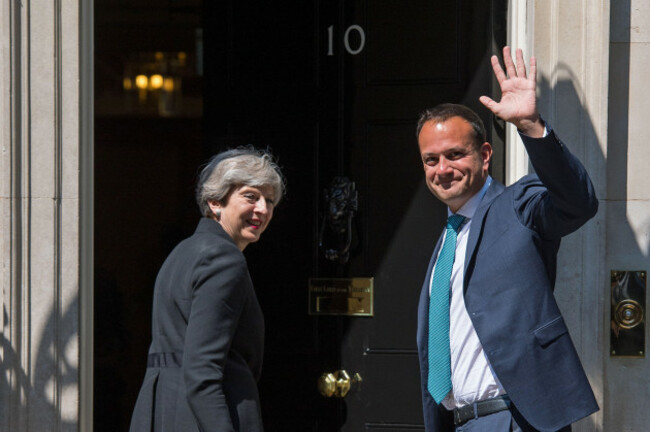
He talks about his involvement in the Brexit withdrawal agreement that averted a hard border between Northern Ireland and the Republic, which became known in its early drafts in the UK as 'Theresa May's deal' after the then-prime minister. This, Varadkar writes, irked him: "Theresa May's deal? It was as much mine or Europe's as hers!"
"Not wanting to look petulant, I never complained publicly. But Matt [his partner] got an earful over dinner.”
When Varadkar decided to resign as Taoiseach and exit politics, the first politician he told was Simon Coveney, then-deputy leader of Fine Gael. Coveney was “taken aback” and “did his best to dissuade me or at least ensure I was certain”.
After that, Varadkar told Michéal Martin and Eamon Ryan as the other two leaders of the coalition.
Martin asked: “Are you okay, Leo?” Varadkar writes that Martin “peered at me anxiously, as though suddenly worried I was on the verge of a nervous breakdown”, and was concerned that his departure “could affect the stability of the government”.
Ryan’s response “was different”; he said that “change is good” and that “the government will continue, and we’ll keep working together as three parties”. Varadar says he remembers thinking that Eamon wouldn’t be “far behind me”, that he was “clearly thinking along the same lines”.
Next were his Fine Gael colleagues. Helen McEntee “looked genuinely upset”. Paschal Donohoe “seemed let down”. Heather Humphreys said: “I’m sorry, but I respect your decision and it’s yours to make.”
Simon Harris “looked like a ghost, presumably a combination of shock and the realisation he could be Taoiseach within a few weeks”.

To embed this post, copy the code below on your site








have your say