We need your help now

Support from readers like you keeps The Journal open.

You are visiting us because we have something you value. Independent, unbiased news that tells the truth. Advertising revenue goes some way to support our mission, but this year it has not been enough.

If you've seen value in our reporting, please contribute what you can, so we can continue to produce accurate and meaningful journalism. For everyone who needs it.

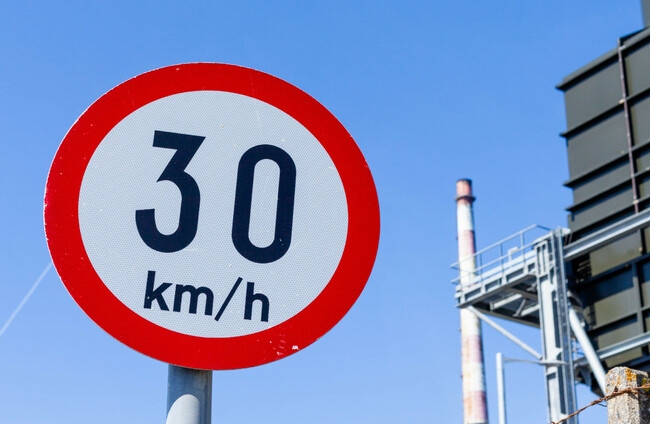
The aim is to have 30km/h speed limits in built-up and urban areas operational by 31 March 2027. Alamy Stock Photo

Local authorities to implement 30km/h speed limits in urban areas ‘where appropriate’ from 2027

Speed limits on roads in built-up and urban areas can only be changed where a majority of the elected members in a local authority vote to do so.

LOCAL AUTHORITIES HAVE been instructed to implement 30km/h speed limits in built-up and urban areas “where appropriate” by 2027.

Transport Minister Darragh O’Brien today directed local authorities to review existing speed limits in these areas.

The Department said this review will result in local authorities implementing “where appropriate” lower speed limits, including the introduction of 30 km/h speed limits in roads in towns and cities.

The aim is to have 30km/h speed limits in built-up and urban areas operational by 31 March 2027.

In February, the default speed limits on rural local roads decreased from 80km/h to 60km/h.

This reduction in the speed limit was done as part of the Road Safety Strategy which aims to halve deaths and serious injuries on Irish roads by 2030.

The next step is limiting the speed limit in urban and built-up areas to 30km/h.

But while the Department of Transport was able to lower the speed limit on rural roads by default, changes to speed limits in urban and built-up areas are implemented by local authorities through the adoption of special speed limit bye-laws.

Making such bye-laws is a reserved function of local authorities.

This means that each local authority will hold a statutory public consultation process and members of the public and stakeholders can make representations on any proposed speed limit changes.

Speed limits on roads in built-up and urban areas can only be changed where a majority of the elected members in a local authority vote to do so.

The Department said this approach “recognises the positive and important role local authorities, and the elected members, fulfil in setting speed limits in urban areas”.

A spokesperson added that this process will allow local authority engineers “who are familiar with the roads and traffic conditions” to review the existing speed limits and “recommend changes where appropriate”.

Any changes must be made in line with the criteria set out in the updated ‘Speed Limit Guidelines’ which recommends a 30km/h speed limit in urban areas.

However, the guidelines note that this is not a “one size fits all approach”.

Speaking today, O’Brien remarked that having “lower speed limits in built-up and urban areas will greatly improve road safety, especially for those who walk, scoot or cycle”. 

He also noted that the €20 million was provided in last week’s budget to support local authorities in making these changes to speed limits in urban areas, including buying and installing new signage.

Meanwhile, Minister of State with responsibility for Road Safety Seán Canney noted that the risk of being killed or seriously injured is “much greater” when a car and vulnerable road user collide at 50 km/h, compared to the same type of collision at 30 km/h.

“This is why protecting vulnerable road users is a key focus in setting speed limits,” added Canney.

He noted that there are already 30km/h speed limits on many roads in built-up and urban areas, including in Dublin City, Cork City, Limerick City, Galway City, and Dundalk.

He added that over the past decade, many local authorities have also introduced 30km/h speed limits in many housing estates.

He said the next phase of speed limit changes will build upon the “positive work local authorities have already carried out by setting speed limits that are appropriate and credible”.

Readers like you are keeping these stories free for everyone...
A mix of advertising and supporting contributions helps keep paywalls away from valuable information like this article. Over 5,000 readers like you have already stepped up and support us with a monthly payment or a once-off donation.

Close
73 Comments
This is YOUR comments community. Stay civil, stay constructive, stay on topic. Please familiarise yourself with our comments policy here before taking part.
Leave a Comment
    Submit a report
    Please help us understand how this comment violates our community guidelines.
    Thank you for the feedback
    Your feedback has been sent to our team for review.

    Leave a commentcancel

     
    JournalTv
    News in 60 seconds