Share your views on our Irish-language content

We need your help now

Support from readers like you keeps The Journal open.

You are visiting us because we have something you value. Independent, unbiased news that tells the truth. Advertising revenue goes some way to support our mission, but this year it has not been enough.

If you've seen value in our reporting, please contribute what you can, so we can continue to produce accurate and meaningful journalism. For everyone who needs it.

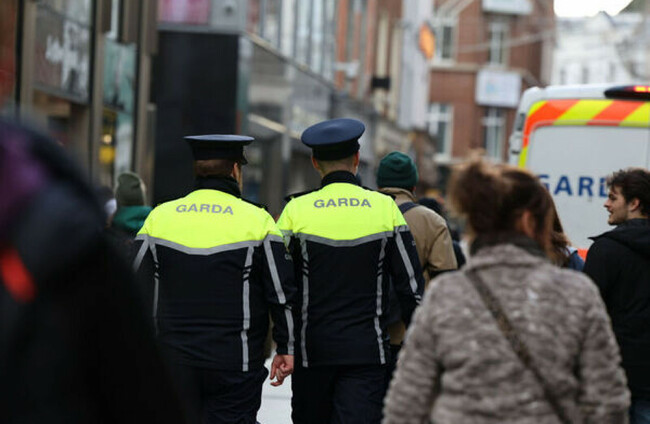
There was an increased garda presence in the capital after the Dublin riots - as discussed at the now defunct Joint Policing Committee. RollingNews.ie

Government asks councils to limit media access to new policing committees

The National Union of Journalists has said there should be a presumption in favour of meetings being held in public.

THE GOVERNMENT HAS advised councils to restrict media access to new local committees on community safety involving gardaí, state agencies and councillors.

The National Union of Journalists has said the move does not make sense, and there should be a presumption in favour of press access to the new Local Community Safety Partnerships (LCSPs) currently being formed by councils nationwide.

The government is replacing longstanding Joint Policing Committees (JPCs), at which councillors, TDs and Senators discussed local policing decisions and issues with senior and community gardaí, with these new LCSPs.

Gary Gannon, the Social Democrats spokesperson on justice, said it was “deeply worrying” that there would be less publicity and scrutiny of local democratic discussion of policing and safety issues. Gannon said this would erode trust by giving the impression of “backroom engagement” between police and politicians.

He added that it would also make LCSPs less effective than the Joint Policing Committees they were replacing because “at a very minimum, publicity is a source of pressure”.

Changed guidelines

The Policing Authority’s 2022 guidelines on the operation of the old JPCs set out that “in general”, their meetings “should be open to the public and press upon request”, unless there were legal or confidentiality reasons not to do so.

However, recently finalised guidelines from the Department of Justice on the operation of the new LCSPs remove this presumption in favour of public and press access.

The new guidelines state that LCSPs “may facilitate” media attendance “at their discretion and via request to the chair”.

The Department goes on to advise that LCSPs consider holding three of six meetings each year in private, allowing media attendance at the other three. It says this would “achieve a balance”.

The Department also advises LCSPs to consider limiting media attendance for their first year of operation to public meetings only. LCSPs are required to hold just one of six meetings each year in public.

The guidelines state that this restriction on media attendance will “allow for relationships and trust to develop” at a time when LCSPs are developing their work plans. This approach should be “reviewed as the partnership’s work evolves”, the guidelines state.

TDs, who were members of Joint Policing Committees, will not be able to be members of LCSPs, but the Department of Justice has told The Journal TDs will be able to attend “closed meetings” of the new fora. Only seven councillors can sit on any LCSP, whereas all councillors were able to participate in Joint Policing Committees.

This has already seen some consideration of whether media will be able to attend policing meetings in different areas.

In a response on behalf of an LCSP in Waterford, where the new model was trialled, a spokesperson for Waterford City and County Council said that media attendance at meetings “is at the discretion of the Partnership, and this will have to be discussed and agreed by the members, when they convene formally”.

The Waterford project met for the first time this week with some new membership, having completed its pilot phase. An induction process is being carried out before they hold formal meetings.

Seamus Dooley, Irish secretary of the National Union of Journalists, said the restrictions advised by the department “make no sense whatsoever”.

He said JPCs have always had the option to hold sections of their meetings in private when sensitive issues need to be discussed, and this is a better approach than a blanket limit on press access to entire meetings.

Dooley said these meetings are “directly relevant to the lives of the community”, adding that he hoped local media would devote resources to covering them.

Thirty-six LCSPs are currently being formed in local authorities nationwide. The membership of eight has been approved so far by the Minister for Justice Jim O’Callaghan.

As well as a maximum of seven local councillors, LCSP membership will comprise statutory agencies such as the HSE and Tusla, gardaí and local community representatives.

‘You got to ask questions openly’

Gary Gannon, who was a councillor before he became a TD, said the now defunct Joint Policing Committees were “useful but not perfect”.

“What I did find was, at a very minimum, you got to ask questions openly. It worked really well after the Dublin riots, where senior gardaí came into City Hall and answered questions from public representatives.

“People watched and were able to get some information. The media reported on it. That’s exactly what scrutiny should look like in a democracy. The idea that a forum like that would now be behind closed doors with a select group of politicians – that’s deeply worrying, but also, what is the point of it?”

Department of Justice responds

The Department of Justice said it had advised that when an LCSP meeting is held in private, an agreed report should be made available and shared directly with the media.

The Department said its guidelines to councils on LCSPs were a “living document” that may be updated to “reflect new learnings”. It said the guidelins were based on the findings of pilot LCSPs in Dublin’s north inner city, Waterford and Longford.

The Department emphasised that LCSPs, while hosted by local authorities, “are not a committee of the council”, and will bring together more people than just politicians and gardaí to identify and respond to community safety issues.

“The work of Local Community Safety Partnerships therefore is relational and based on a partnership approach,” the Department said.

“The guidance suggests that [LCSPs] give consideration to holding meetings in private to allow for relations and trust to develop among members and as the Safety Partnership develops its workplan. As noted in the guidance, this approach should be reviewed as the Partnership’s work evolves.”

LCSPs are legally required to hold at least one public meeting each year, which all members of the community, including the media, can attend, the Department added.

With reporting by Eoghan Dalton.

The Journal’s reporting of the new Local Community Safety Partnerships is supported by the Local Democracy Reporting Scheme.

Readers like you are keeping these stories free for everyone...
A mix of advertising and supporting contributions helps keep paywalls away from valuable information like this article. Over 5,000 readers like you have already stepped up and support us with a monthly payment or a once-off donation.

Close
58 Comments
This is YOUR comments community. Stay civil, stay constructive, stay on topic. Please familiarise yourself with our comments policy here before taking part.
Leave a Comment
    Submit a report
    Please help us understand how this comment violates our community guidelines.
    Thank you for the feedback
    Your feedback has been sent to our team for review.

    Leave a commentcancel

     
    JournalTv
    News in 60 seconds