We need your help now

Support from readers like you keeps The Journal open.

You are visiting us because we have something you value. Independent, unbiased news that tells the truth. Advertising revenue goes some way to support our mission, but this year it has not been enough.

If you've seen value in our reporting, please contribute what you can, so we can continue to produce accurate and meaningful journalism. For everyone who needs it.

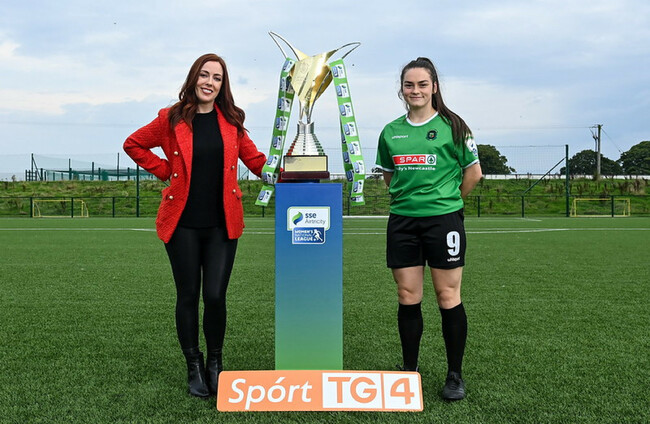
Máire Ní Cheallaigh and with Eva Mangan of Cork City Piaras Ó Mídheach/SPORTSFILE

Máire Treasa Ní Cheallaigh on sports broadcasting as Gaeilge

The broadcaster, who has many strings to her bow, tells us about her career journey.

DOCTOR, SPORTS PSYCHOLOGIST, columnist… Máire Treasa Ní Cheallaigh has many strings to her bow. But a love of sport has led her to some very interesting broadcasting roles – including leading Sacar na mBan Beo coverage on TG4.

Growing up in Connemara in the 1980s, the gaeilgóir was a big sports fan, but not a player.

“To be honest, I just grew up in the era where you had to be lucky if you were going to be a girl involved in sport,” she says, adding that the pathways to playing sport are thankfully “more obvious now” for girls.  

She went on to earn qualifications in sports psychology and medicine, and has a long background in journalism. But one major part of her career has been sports broadcasting, which began when she was working at RTÉ and TG4 as a bilingual journalist.

While there are more female sports broadcasters working now in Ireland, there can be an expectation that they have a background in playing sport to a high level. While Ní Cheallaigh understands the benefits of having former players as broadcasters, she notes:

“Nobody ever expects the political correspondent to have been a politician for years. Nobody expects the media correspondent to have been Sinéad O’Connor. So those barriers are there… today I think it’s less prevalent, but you still have to prove you know what you’re talking about.”

We all make mistakes, none of us are perfect. And I think if a woman makes a mistake, it’s much more picked apart than if a man makes a mistake. It’s changing, but change takes time.

Ní Cheallaigh presented her first ever live sports programme for TG4 around a decade ago. She was tasked with covering basketball for Cispheil Beo. 

“It is so loud, and you’re under a lot of pressure, because it’s a clock-based sport. So whenever you go live on a programme, you don’t know if you’re going to have to fill two minutes of talking, or 27 of talking, depending on how the game goes,” she recalls.

She adds with a laugh: “I do remember that first night in Tallaght being absolutely petrified, and also having to stand on a box because one of my colleagues was six foot five, and I’m five foot two.”

She survived the broadcast, and it taught her a lot about what’s needed for live games. It also showed her “the privilege” of covering a live game.

Sacar Beo

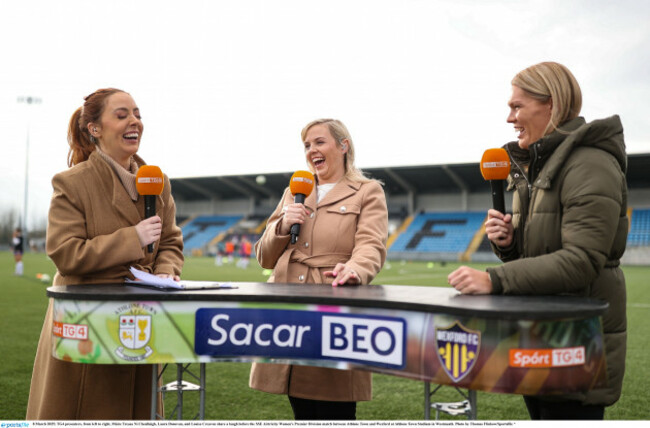
athlone-town-v-wexford-sse-airtricity-womens-premier-division Máire Treasa Ní Cheallaigh, Laura Donovan, and Louise Creaven share a laugh before the SSE Airtricity Women's Premier Division match between Athlone Town and Wexford Thomas Flinkow / SPORTSFILE Thomas Flinkow / SPORTSFILE / SPORTSFILE

When TG4 started broadcasting Sacar na mBan Beo in 2020, Ní Cheallaigh set about learning more about League of Ireland women’s soccer.

“Every time I had a free second I was reading, I was Googling, speaking to coaches. Anytime I had a minute, I was listening to podcasts.”

She says that since 2020, “there’s a huge amount more coverage of Women’s League of Ireland in the papers, in podcasts, on radio shows. So it’s much, much easier to do the research now.”

Starting off, “you’re terrified of making a mistake”, she says. “What’s been really helpful is the analysts we’ve had in Sacar Beo are women who’ve lived and breathed football all their lives. They’re so helpful, and they carry me.”

As a presenter, she tries to ask “the question that people are thinking at home”.

She adds:

“I think a big mistake any sports presenter or commentator can do is to mistakenly think that the audience wants to care what I think. You should be like the referee. You should be invisible.”

But you need to know your knowledge so that every once in a while you can pull somebody up if they’re going on a tangent that’s inaccurate.”

Sports broadcasters can sometimes be tasked with asking managers and players difficult questions.  

“I think sometimes asking a manager directly at full time ‘are you considering your position’, that’s a bit harsh,” she says. “I think there are ways of reading the person and seeing if they’re open to the question, or maybe putting it in a different way.”

What must help is that she is a trained sports psychologist. She says this part of her career has “definitely given me an insight into what it feels like to be in the manager’s shoes, what it feels like to be in the players’ shoes, what it feels like to be in the backroom’s shoes”.

Women’s sport/Spórt na mban

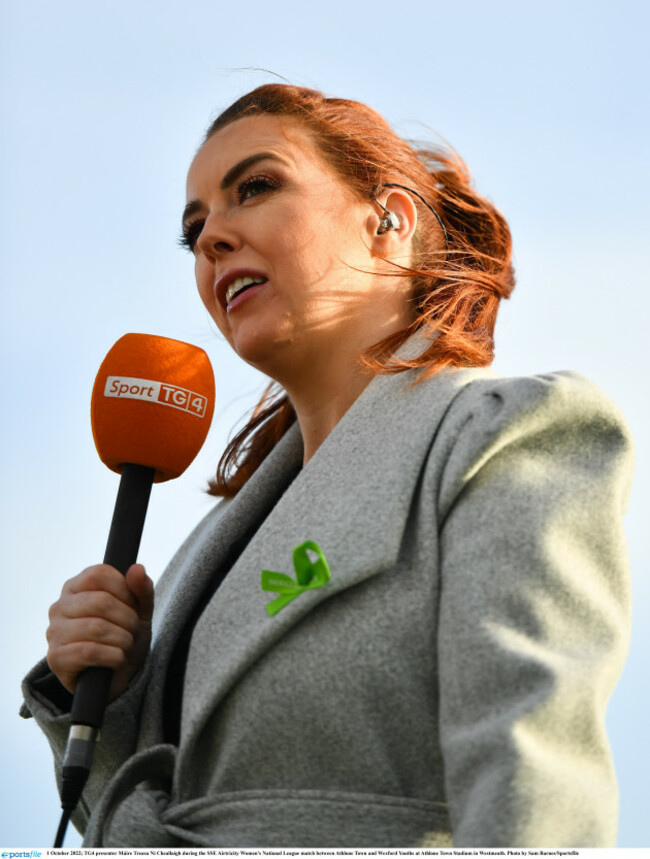
athlone-town-v-wexford-youths-sse-airtricity-womens-national-league Ní Cheallaigh during the SSE Airtricity Women's National League match between Athlone Town and Wexford Youths Sam Barnes / SPORTSFILE Sam Barnes / SPORTSFILE / SPORTSFILE

In 2018, the 20×20 campaign was set up to try and improve the attention given to women’s sports in the media, and improve audience numbers.

There have absolutely been improvements, says Ní Cheallaigh, but across sport there “is still a lot of window dressing – it’s just like they’re shamed into it now a lot more”.

She adds: “I do think print media in particular has a way to go. Now that being said, it is because they’re under so much pressure. Loads of the behemoths of sports journalism in Ireland have announced in the last week or two they’re leaving daily newspapers. So sports media in general is being contracted, which is not good news for any sport, but especially for any sport that’s looking for space.

“A bit like women in politics… I think the men, and it is usually the men, let’s be fair, or the organisations, need to realise that just because you share the spotlight with somebody else doesn’t mean that your light dims anymore.”

Increased coverage of a sport increases interest, something we’ve seen borne out in recent years.

“You need to know the players to care about them. You need to know their stories,” says Ní Cheallaigh.

“I think that’s why the women’s football team has captured the Irish imagination over the last few years, with the ups and downs, the likes of watching Katie McCabe playing, the Vera Pauw controversies. You love having a Roy Keane-Saipan moment. Women’s sport had plenty of them over the years, we just didn’t hear about them.” 

Ní Cheallaigh has worked with RTÉ, Off the Ball and Eir Sport as well as TG4, and is thankful to TG4 for giving her the chance to move into sports broadcasting. “That took a leap of faith on their department,” she says. But it’s a sign of the station’s ability to take chances overall.

“They often take chances with the sports that the other channels haven’t bothered with over the years,” she says. “[Sacar Beo] was great, because they recognised if you can’t see it, you can’t be it – we’ve got to do something here. They recognised that the League of Ireland was bloody good. It’s just nobody could see it.”

Ní Cheallaigh does sometimes have to deal with social media criticism, and says it was worse when she was more visible a few years ago.

“There’s a vocal minority – and social media has made a lot of people think that their voice is as valuable as everyone else’s,” she says.

It can feel like “swimming against a tsunami” online, and social media companies need to get better at monitoring their feeds, she says, plus: “Society needs to get better at teaching children and boys in particular what is appropriate to say. Men need to get better at calling other men out.”

Future plans

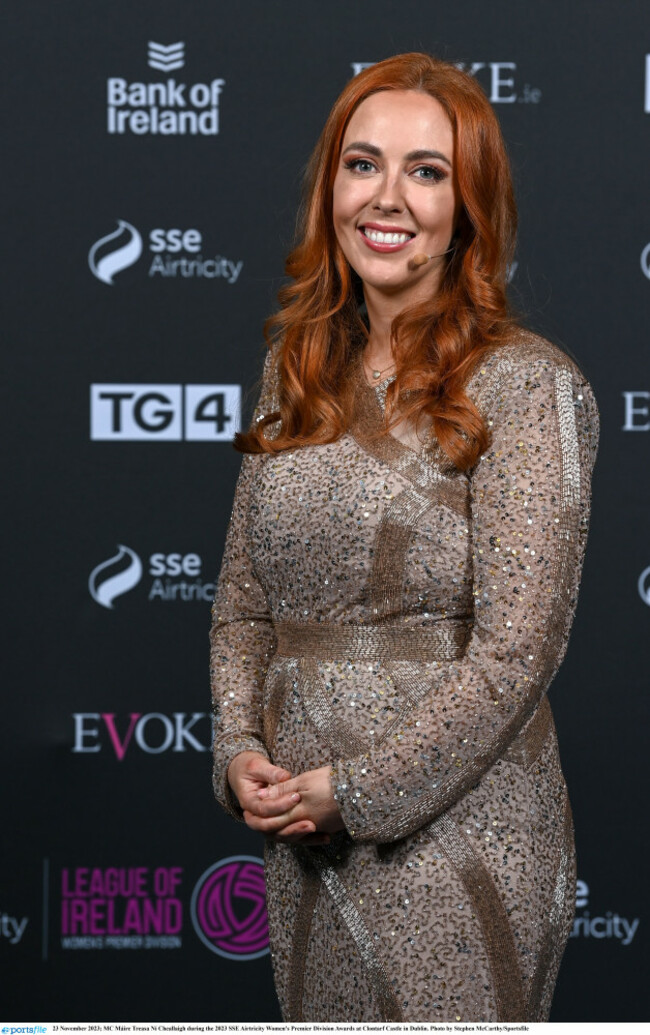
2023-sse-airtricity-womens-premier-division-awards C Máire Treasa Ní Cheallaigh during the 2023 SSE Airtricity Women's Premier Division Awards at Clontarf Castle Stephen McCarthy / SPORTSFILE Stephen McCarthy / SPORTSFILE / SPORTSFILE

Sacar na mBan Beo’s 2025 season is over for the year, and Ní Cheallaigh is taking the opportunity to step back and assess how the season went.

She’s been adjusting her workload to deal with family and career aspirations – she doesn’t work with a team as a sports psychologist any more, and isn’t working as a GP as she wasn’t able to find an opportunity to do it part-time. She’s opened a medical aesthetic clinic, Dr MT clinic, and with her broadcasting work is certainly busy. 

“The most important thing to me is that I’m able to collect my little girl from childcare, that I’m around most nights to see her – that window of life is very short,” she says. “So things might change again in a few years, but at the moment it’s working.”

She’s worked hard at all elements of her career, but says:

“I’m very, very lucky. But I also know you make your own luck. And I was very lucky to be an Irish speaker, very lucky to have grown up at a time when TG4 was opening up, and very lucky that people took chances on me.

“I worked hard, but there’s a lot of people who’ve worked hard who haven’t had the opportunities I had.”

The Sacar na mBan Beo season can be watched on TG4.ie.

Close