We need your help now

Support from readers like you keeps The Journal open.

You are visiting us because we have something you value. Independent, unbiased news that tells the truth. Advertising revenue goes some way to support our mission, but this year it has not been enough.

If you've seen value in our reporting, please contribute what you can, so we can continue to produce accurate and meaningful journalism. For everyone who needs it.

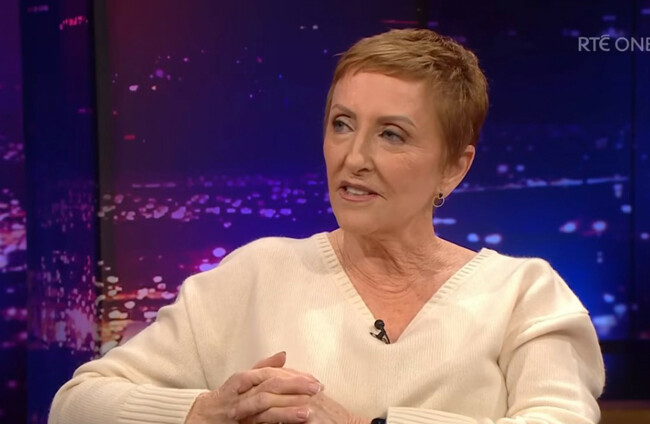
Majella O'Donnell The Late Late Show via YouTube

'I just said I can't do this anymore': Majella O'Donnell on what led her to a stay in a psychiatric hospital

The wife of country singer Daniel O’Donnell, she has been open about struggling with her mental health for “most of” her life.

MAJELLA O’DONNELL SAID she became a voluntary inpatient at a psychiatric hospital after a difficult period of depression in 2024.

The wife of country singer Daniel O’Donnell, she has been open about struggling with her mental health for “most of” her life.

Speaking on The Late Late Show last night, O’Donnell said she didn’t feel able to call her husband until the fifth week of a 10-week hospital stay.

She said she started taking medication for her mental health when she was in her mid-30s, after the breakdown of her first marriage, but had never been an inpatient.

In the past, when her depression was at its worst, O’Donnell would “sit on the settee for days on end”, but would eventually be able to “recalibrate”. However, this time she felt unable to get better by herself.

“I’ve always managed to deal with it myself. I’ve always managed to come out of my low points,” she said.

“In 2024, I got to a place I thought I could not come out of.

I just said I can’t do this anymore.

Her husband Daniel suggested going to the GP, where the doctor asked if she’d consider a residential stay in St John of God University Hospital.

“I said no, absolutely not. Not for any other reason other than I just didn’t think I was a candidate to go into a psychiatric hospital. I thought you had to be completely off your head,” she said.

The Late Late Show / YouTube

Despite this image of impatient mental health treatment, O’Donnell was “delighted” to go. She was willing to try “anything that can help”.

“I had given up and I had relinquished anything to the powers that be – doctors, psychiatrists, whatever.”

She said a friend brought her to the hospital because she thought her husband would be recognised.

“I can remember the day I went in. I was in tears at reception. … then the nurses came out and they were just wonderful.

“I settled in but I couldn’t come out of the room for three days. I didn’t want to see anybody. I had nothing to say. I didn’t want to eat. I just wanted to crawl up into a ball and die,” O’Donnell said.

A team of psychiatrists, occupational therapists, social workers and other experts help get her through it.

O’Donnell “had nothing to say to anybody” and felt “dead”. She asked her family to give her “time to come back to life again”.

She said it was during her fifth week in hospital that she felt ready to have a phone call with her husband.

O’Donnell said the treatment she received helped her get better.

“I was the one that said I’m ready to go now,” she said.

“I actually feel a little bit of excitement again, which I hadn’t felt in a long time.”

O’Donnell said she hoped one day people will speak as openly about their mental health illness as they do about other illnesses.

“There is no shame in it… never feel ashamed for having mental health problems, because we’re human,” she said.

Her advice to those struggling with their mental health: “From my experience, it was so worth doing. If you are that person who’s feeling really really low, go to your GP.”

If you have been affected by any of the issues mentioned in this article, you can reach out for support through the following helplines. These organisations also put people in touch with long-term supports:

Samaritans 116 123 or email jo@samaritans.org
Text About It – text HELLO to 50808 (mental health issues)
Aware 1800 80 48 48 (depression, anxiety)
Pieta House 1800 247 247 or text HELP to 51444 – (suicide, self-harm)
Teen-Line Ireland 1800 833 634 (for ages 13 to 19)
Childline 1800 66 66 66 (for under 18s)

Readers like you are keeping these stories free for everyone...
A mix of advertising and supporting contributions helps keep paywalls away from valuable information like this article. Over 5,000 readers like you have already stepped up and support us with a monthly payment or a once-off donation.

Close
22 Comments
This is YOUR comments community. Stay civil, stay constructive, stay on topic. Please familiarise yourself with our comments policy here before taking part.
Leave a Comment
    Submit a report
    Please help us understand how this comment violates our community guidelines.
    Thank you for the feedback
    Your feedback has been sent to our team for review.

    Leave a commentcancel

     
    JournalTv
    News in 60 seconds