We need your help now

Support from readers like you keeps The Journal open.

You are visiting us because we have something you value. Independent, unbiased news that tells the truth. Advertising revenue goes some way to support our mission, but this year it has not been enough.

If you've seen value in our reporting, please contribute what you can, so we can continue to produce accurate and meaningful journalism. For everyone who needs it.

Manchán Magan Aisling Rogerson

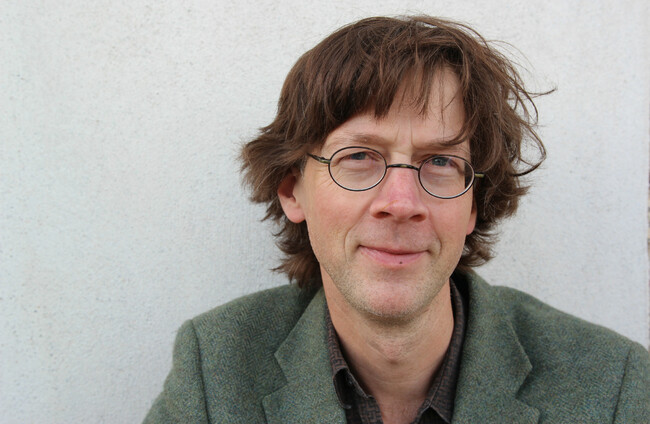
Writer, documentary-maker and Irish language advocate Manchán Magan has died aged 55

He worked extensively for RTÉ and TG4 and published several books.

LAST UPDATE | 3 Oct

IRISH LANGUAGE BROADCASTER TG4 has joined those paying tribute to the documentary film maker and writer Manchán Magan who has died at the age of 55.

The Dubliner, who was widely known for his work presenting travel documentaries and in the Irish language. was diagnosed with prostate cancer in 2023.

His family confirmed that he died in Dublin last night.

The TG4 director general Deirdre Ní Choistín described the film-maker whose first documentary series, Manchán ar Seachrán, aired in the channel’s first year, as someone who gave a “unique insight on the Irish language world, on Ireland and the other places he travelled to and around”.

“His work was entirely in the spirit of TG4′s slogan, Súil Eile/Another Eye and he had a particular talent for imparting that to the audience.”

Taoiseach Micheál Martin described Manchán as a “passionate advocate for our language and culture” and added that his “work illuminated the richness of Ireland’s landscape, history and heritage”.

President Michael D Higgins said that Manchán “lived an inspirational life and helped so many people to find a deeper meaning in their lives”.

President Higgins remarked that Machán “inspired so many people to engage more deeply with our native language and to engage with, respect and learn from our natural landscape and environment”.

The Irish language was at the centre of Manchán’s work, and he became renowned as a chronicler of An Ghaeilge, its history, and its place in the land where it developed.

Originally from Donnybrook in Dublin 4, Manchán was from a family linked to the struggle for Irish independence in the early 20th century.

He was the grandson of the republican activist and Cumann na mBan member Sighle Humphreys, whose uncle The O’Rahilly fought in the 1916 Rising and was killed by British machine gun fire as the rebels fled the GPO at the end of the rebellion.

Manchán later reflected that he and his siblings were “putty to be moulded” in The O’Rahilly’s image, and that every word of Irish they spoke was “an honorific token in memory to him, and a bullet aimed at those in Westminster who had killed him”.

After the death of his father when Manchán was 18, he moved abroad and worked in Germany before joining an expedition to Congo, where he picked up a lifelong love of travel.

He studied Irish and history at University College Dublin, but continued exploring the world and was convinced by his brother Ruán, a director, to present a travel series for Teilifís na Gaeilge (now known as TG4) called Manchán san India in 1996.

The series kickstarted a career in travel journalism, and he was subsequently involved in dozens of documentaries over the following decades.

Manchán also released the documentary series No Béarla, which followed him travelling around Ireland speaking only Irish – he told RTÉ last month that he was working on a follow-up to this series with Irish-language rap group Kneecap. 

He worked extensively for RTÉ and TG4 and published several books in English and Irish, in which he showcased his depth of knowledge on topics such as travel, ecology, Irish culture and the history of the Irish language.

He had a brief flirtation with politics in 2016, when he failed to win a seat in the Longford-Westmeath constituency for the Green Party in that year’s general election.

A different kind of success would come four years later with the publication of his book Thirty-Two Words for Field, which explored how words in the Irish language describe Ireland’s landscape and culture.

The popularity of the book catalysed a pivot in his media profile that saw Manchán become more renowned for his work on the Irish language.

He published further books and began a weekend column with The Irish Times, but continued travelling the world, though he soon gave up using air travel when working for sustainability reasons.

He told The Irish Times that it was while filming a documentary on Europe’s rail network that he received a diagnosis of prostate cancer.

“I was in San Sebastián and I did a Zoom with my oncologist,” he told the newspaper in 2024. “I knew there was a problem with my prostate and I had got an MRI, so when we were filming, there was a sense that this isn’t going to give good news.”

He continued to write and appear in the media, and discussed his diagnosis on RTÉ’s Tommy Tiernan Show in March 2024, saying it made him “feel more alive than ever”.

In an interview with Brendan O’Connor on RTÉ Radio 1 last month, Manchán confirmed he had terminal prostate cancer and that it had spread to multiple organs.

While he said he wasn’t “scared” of death, he remarked that “there’s the sadness thinking about my partner being alone”. 

At the time of the interview, he had been in hospital for several weeks. 

Manchán added that he didn’t seek pity or prayers and praised the work of those who cared for him.

Proinsias Ní Ghráinne, the Commissioning Editor of TG4, said Manchán is “gone far too early” and remarked this his interview with O’Connor was “profound and stopped us all in our tracks”.

“He helped us to wonder at the things that are on our doorsteps and all around us,” said Ní Ghráinne.

She added that Manchán was “madly funny” and remarked that he was looking forward to completing a remake of No Bearla with Móglaí Bap (Naoise Ó Cairealláin) of Kneecap.

Ní Ghráinne said Manchán was hoping to use the remake to show how far the Irish language has come.

Meanwhile, broadcaster TG4 described Manchán as a “passionate advocate for the Irish language and a gifted storyteller whose work enriched Irish culture and broadcasting”.

He worked on numerous productions for TG4 with his brother and director Ruán .

It was his brother Ruán who first pitched the idea for Manchán ar Seachrán, proposing that Manchán’s life in the Himalayas would make for compelling television. 

The broadcaster added that Manchán has left a “remarkable legacy that will continue to inspire future generations, through his deep and unique exploration of language, culture and the Irish landscape”. 

His last book, Ireland in Iceland – Gaelic Remnants in a Nordic Land, was published earlier this year, while RTÉ aired a final documentary Listen to the Land Speak in July.

The show was filmed in the aftermath of his diagnosis of stage four cancer, and he spoke frankly about the prospect of his mortality on air.

“The prognosis is not great. I thought I was invincible,” he said about his diagnosis. “It makes you think about your role and your future in the world.”

Manchán Magan was the first ambassador on the island of Ireland for the Rivers Trust, who campaign to save biodiversity in rivers.

The Rivers Trust said Manchán continued his campaign work even when he was ill and that he had a “unique gift for connecting people to both the history and the future of the natural world”.

“He helped us see rivers not just as waterways, but as threads of connection between people, place, and spirit,” said Mark Horton, All-Ireland director of the Rivers Trust.

“For Manchán, nature was never separate from us; it was spirit and continuity, a truth that transcended the human experience and all borders.

“He reminded us that in caring for the natural world, we care for our own soul. His gift was to remind us that to truly live, we must reconnect with the earth and cherish it as kin.”

Readers like you are keeping these stories free for everyone...
A mix of advertising and supporting contributions helps keep paywalls away from valuable information like this article. Over 5,000 readers like you have already stepped up and support us with a monthly payment or a once-off donation.

Close
114 Comments
This is YOUR comments community. Stay civil, stay constructive, stay on topic. Please familiarise yourself with our comments policy here before taking part.
Leave a Comment
    Submit a report
    Please help us understand how this comment violates our community guidelines.
    Thank you for the feedback
    Your feedback has been sent to our team for review.

    Leave a commentcancel

     
    JournalTv
    News in 60 seconds