We need your help now

Support from readers like you keeps The Journal open.

You are visiting us because we have something you value. Independent, unbiased news that tells the truth. Advertising revenue goes some way to support our mission, but this year it has not been enough.

If you've seen value in our reporting, please contribute what you can, so we can continue to produce accurate and meaningful journalism. For everyone who needs it.

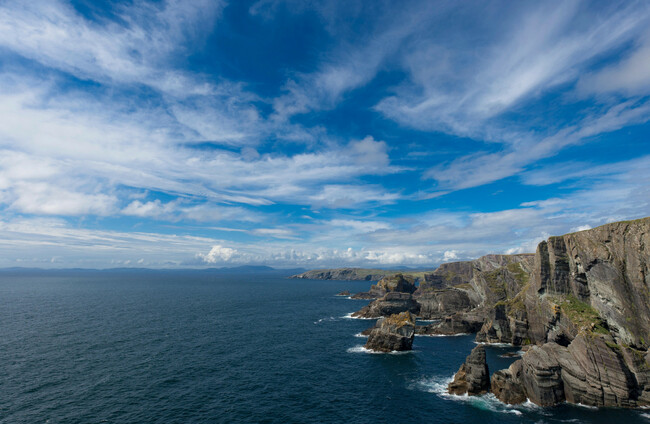
Mizen Head coast cliffs in west Cork. Alamy Stock Photo

‘Intense’ marine heatwave in Irish waters will become ‘extreme’ if above average temperatures continue

Off the Cork coast, sea surface temperatures are 2.3 degrees above average.

THERE IS CURRENTLY an “intense” marine heatwave in Irish waters but this will become “extreme” if the above-average temperatures continue into August.

That’s the warning from Paul Moore, who is a climatologist with Met Éireann.

A marine heat wave is when the sea surface temperatures are significantly above average for a long period of time.

Sea surface temperatures in Irish waters are currently up to 2.3 degrees above average, and up to 4 degrees above average in parts of the UK.

The UK Met Office has described the current marine heatwave as “super intense”.

Moore told The Journal that sea surface temperatures have been continuously above-average over the last couple of years when compared to the most recent 30-year averages.

“But over April and May, they’ve been significantly above-average, two to three degrees off the south and west coast,” said Moore.

“We’re seeing quite an intense marine heat wave currently.”

Data released on Friday of last week revealed that in the Irish Sea, sea surface temperatures were 0.6 degrees higher than the monthly average.

Off the Cork coast, sea surface temperatures were 2.2 degrees higher than average.

However, given there were much warmer temperatures at the end of May than the beginning of May, there’s been a further increase in sea surface temperatures since the most recent figures on Friday.

Off the Cork coast, it’s 2.3 degrees above average and in the Irish Sea it’s 0.9 degrees above average.

“The average has already increased, as we’d expect with one week left and the warmest part of the month,” said Moore.

“But it’s already showing that by the end of the month, the difference for the whole month will be even higher than that.”

‘Extreme’

Marine heatwaves are occurring in various regions globally and Moore said sea surface temperatures in Ireland go through a cycle which sees temperatures peak in August.

Increased sunshine over June and July warms up the sea, but there’s a lag in sea surface temperatures as compared to land.

“That’s why we generally get our higher sea surface temperatures in August and then they start going down towards winter, and our lowest is normally in February,” said Moore.

While sea surface temperatures have been rising, Moore said that the above-average temperatures seen in May – two to three degrees above normal – are unusual.

He warned that if this trend of sea surface temperatures being two to three degrees above average continues in August, “you could see our marine ecosystem being under stress”.

“For now, and it’s not extreme until we get to the point where we reach record high temperatures at the highest peak of the year in August.”

Moore said that easterly winds, which carry warmer air and are not typical for this time of year, have contributed to rapid warming of surface waters by limiting ocean mixing and carrying warmer air from land out to sea.

“Because we’re getting westerly winds now, you will see an ease in the extremes of sea surface temperatures,” said Moore.

“But it still will stay above average. There’ll be mixing of cooler waters from below, up to the warmer surface waters, but it will remain overall warmer than average.”

Meanwhile, Moore noted that sea surface temperatures globally are rising at a steady rate due to climate change.

He remarked that local events caused by atmospheric conditions through spring, such as mostly high pressure, a lot of sunshine, and easterly winds, comes “on top of what global warming has caused, and that’s why we’re seeing such extremes”.

Similar meteorological conditions were present in May and June 2023, which preceded Ireland’s warmest June on record. 

Readers like you are keeping these stories free for everyone...
A mix of advertising and supporting contributions helps keep paywalls away from valuable information like this article. Over 5,000 readers like you have already stepped up and support us with a monthly payment or a once-off donation.

Close
19 Comments
This is YOUR comments community. Stay civil, stay constructive, stay on topic. Please familiarise yourself with our comments policy here before taking part.
Leave a Comment
    Submit a report
    Please help us understand how this comment violates our community guidelines.
    Thank you for the feedback
    Your feedback has been sent to our team for review.

    Leave a commentcancel

     
    JournalTv
    News in 60 seconds