We need your help now

Support from readers like you keeps The Journal open.

You are visiting us because we have something you value. Independent, unbiased news that tells the truth. Advertising revenue goes some way to support our mission, but this year it has not been enough.

If you've seen value in our reporting, please contribute what you can, so we can continue to produce accurate and meaningful journalism. For everyone who needs it.

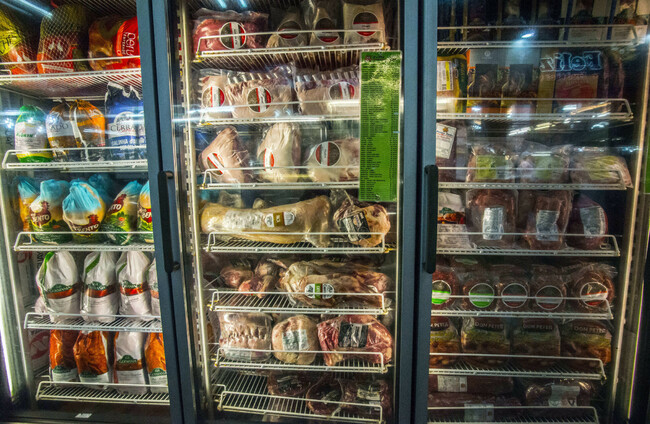
Beef on the shelves of a Brazilian supermarket. Alamy Stock Photo

Explainer: What is Mercosur, and what will happen at tomorrow's landmark vote?

EU nations are split, farmers are up in arms and there’s a major protest planned in Athlone this weekend – here’s all you need to know.

THE GOVERNMENT HAS confirmed that Ireland will vote against the EU-Mercosur trade deal, just as EU countries get set to decide on what would be the world’s biggest free-trade zone.

It’s a big, complex agreement that’s sparked protests from farmers, raised eyebrows across European capitals, and caused plenty of political headaches along the way.

After months of back-and-forth and pressure from different corners of the coalition, Ireland is now firmly in the camp of EU countries opposing the deal as it stands.

Here’s the breakdown on what the deal actually means, why so many people are worried about it, and what happens next.

What is the EU-Mercosur trade deal?

The EU-Mercosur Partnership Agreement is a wide-ranging trade deal between the European Union and the South American trade bloc Mercosur, whose founding members are Argentina, Brazil, Paraguay and Uruguay.

A political agreement on the latest version of the deal was reached in December 2024, following more than 25 years of fluctuating negotiations.

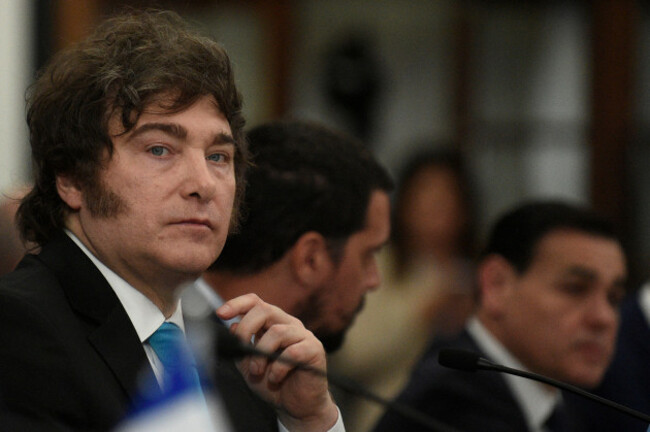
251221-foz-do-iguacu-dec-21-2025-xinhua-argentine-president-javier-milei-1st-l-attends-the-67th-summit-of-the-heads-of-state-of-the-southern-common-market-mercosur-in-foz-do-iguacu-b Argentine President Javier Milei said in 2024 that the deal must be "completed quickly". Alamy Stock Photo Alamy Stock Photo

If approved, the agreement would create a free-trade area covering nearly a quarter of global GDP, making it the largest trade deal ever concluded by the EU.

The European Commission argues it would significantly expand EU trade links at a time of global volatility, rising protectionism and new tariffs.

What does the deal include?

The core aim of the deal is to reduce tariffs and other barriers to trade and investment between the two blocs.

Under the agreement, Mercosur would remove import duties on 91% of EU goods over time, while the EU would remove tariffs on 92% of Mercosur imports.

For the EU, the main beneficiaries would be exporters of cars, machinery, chemicals, pharmaceuticals, wines and spirits, with EU exports to Mercosur projected to rise by up to 39%, worth around €49 billion to the European economy.

For Mercosur countries, the key gains are increased access to EU markets for exported agricultural products, including beef, poultry, sugar, rice, honey and ethanol.

Certain products, like food and farm goods, aren’t being fully opened up to free trade. Instead, there’s a limit on how much can be imported at lower tariffs – that’s what’s called a tariff-rate quota (TRQ).

The biggest sticking point is beef, because the quota allows some cheaper South American beef into the EU, which worries European farmers.

Why are farmers so opposed to the deal?

Opposition from farmers, particularly beef farmers, has been fierce here in Ireland, as well as in France, Poland and several other EU states.

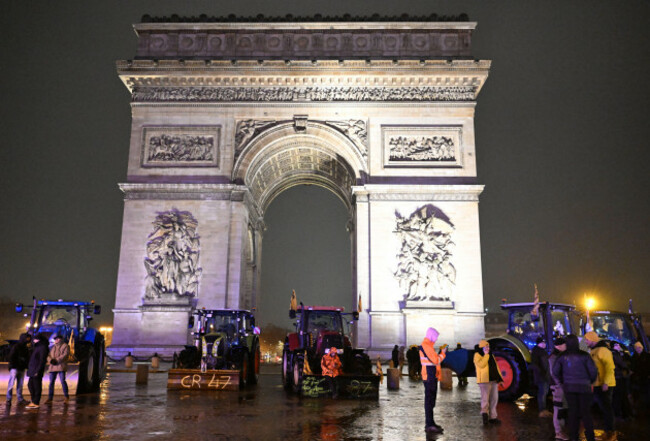
french-farmers-park-their-tractor-in-front-of-the-arc-de-triomphe-to-protest-against-the-mercosur-trade-alliance-with-south-america-countries-but-also-eu-farming-policy-or-mass-cull-of-cows-ordered-to French farmers parked their tractor in front of the Arc de Triomphe this week to protest against the Mercosur deal. Alamy Stock Photo Alamy Stock Photo

The deal would allow Mercosur countries to export 99,000 tonnes of beef to the EU at a reduced tariff of 7.5%, compared to standard tariffs of around 40 to 45%.

Farmers argue this would put downward pressure on beef prices and also create unfair competition in the market, as Mercosur producers operate under looser environmental, animal welfare and food safety rules.

The also argue that the deal would benefit large South American exporters while undermining smaller EU farms.

Here, concern is focused on the fresh beef quota, which covers high-value cuts and directly competes with Irish beef production.

Some experts argue the real increase in beef imports may be much smaller than the headline figure, as Mercosur exporters may simply shift beef already entering the EU under higher tariffs into the new quota.

However, farming organisations say even a marginal price impact could be damaging for a sector already under pressure.

President of the Irish Farmers’ Association Francie Gorman said the agreement would be “bad for Irish farmers and very damaging for public health”.

Why is Ireland voting against it?

The government confirmed this morning that Ireland will vote against the agreement.

In a statement, Tánaiste Simon Harris said the government’s position “has always been clear” and that while additional measures were negotiated at EU level, “they are not sufficient to satisfy our citizens”.

“So our position stands. We will vote against the agreement,” Harris said.

Opposition to the deal is written into the Programme for Government, which commits Ireland to opposing Mercosur “in its current form”.

Irish MEPs across multiple parties have also voiced concerns.

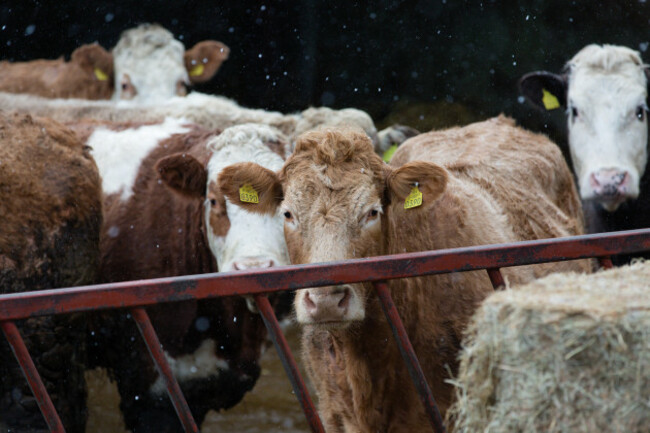
snow-falling-on-simmental-cattle-standing-outside-the-barn-in-kilmore-kilcock-co-meath-ireland Cattle pictured in Kilcock, Co Meath. Alamy Stock Photo Alamy Stock Photo

How does the rest of Europe line up?

Europe remains sharply divided.

Supporters include Germany and Spain, which see the deal as a boost for industry and exports.

The European Commission as a body has also publicly backed the deal, which views Mercosur as strategically important amid global trade tensions and competition from China.

Opponents or sceptics other than Ireland include France and Poland, which have publicly signalled opposition, as well as Belgium and the Netherlands, who have raised concerns about the deal.

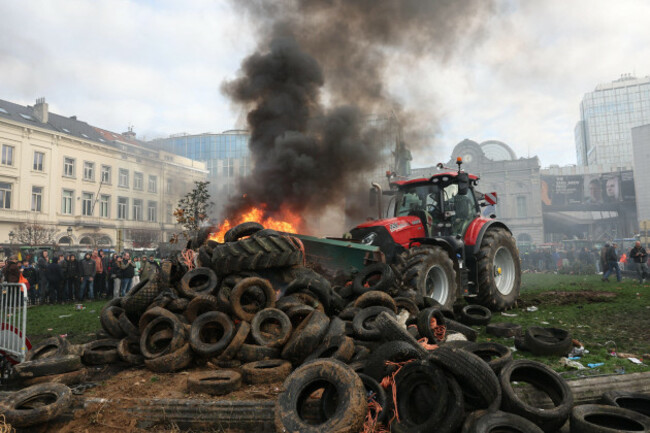
france-18th-dec-2025-photopqrvoix-du-nordflorent-moreau-18122025-bruxelles-le-18122025-manifestation-europeenne-dagriculteurs-notamment-contre-le-traite-du-mercosur-brussels Farmers pictured protesting the Mercosur deal in Brussels last month. Alamy Stock Photo Alamy Stock Photo

Italy has been viewed as a potential swing vote. While Rome has pushed for stronger safeguards and financial supports for farmers, its final position will be crucial to determining the outcome.

Farmer protests have intensified across Europe in recent weeks, with tractors blocking streets in Paris, Brussels and other cities.

Will the deal still go through?

That is now the key question.

EU member states will vote on the deal on Friday, with reporting suggesting the balance of opinion is leaning towards approval.

Even if approved at Council level, the agreement cannot enter into force without the consent of the European Parliament, which is due to vote in two weeks’ time in Strasbourg.

To block the deal at EU Council level, at least four EU countries representing 35% of the EU population must vote against it.

Ireland, France and Poland are opposed, but without Italy joining them, they are unlikely to reach the population threshold needed to form a blocking minority.

If Italy backs the deal, as some recent signals suggest (the country’s foreign minister said this week that the deal would have “enormous benefits”), the agreement could still pass despite Ireland’s opposition.

There is also uncertainty around how the deal will be ratified.

If it is structured as a “mixed agreement”, it would require approval by national parliaments across the EU, potentially opening further political hurdles.

The European Commission is expected to clarify the legal basis later this year.

What’s this about a protest this weekend? 

Opposition to the Mercosur deal is set to spill onto the streets again this weekend, with a major protest planned in Athlone on Saturday, the day after EU member states vote on the agreement in Brussels.

Up to 10,000 people are expected to attend the demonstration, which will include a tractor and vehicle cavalade through the town, crossing the River Shannon and ending in a rally at the Technological University of the Shannon.

All 14 Irish MEPs have been formally invited to attend.

The protest is being organised by farming groups and campaigners opposed to the deal, with the Irish Farmers’ Association, Sinn Féin and a number of other farming organisations expected to take part.

Readers like you are keeping these stories free for everyone...
Our Explainer articles bring context and explanations in plain language to help make sense of complex issues. We're asking readers like you to support us so we can continue to provide helpful context to everyone, regardless of their ability to pay.

Close
JournalTv
News in 60 seconds