Sign in. It’s quick, free and it’s up to you.
An account is an optional way to support the work we do. Find out more.
Sign in. It’s quick, free and it’s up to you.
An account is an optional way to support the work we do. Find out more.
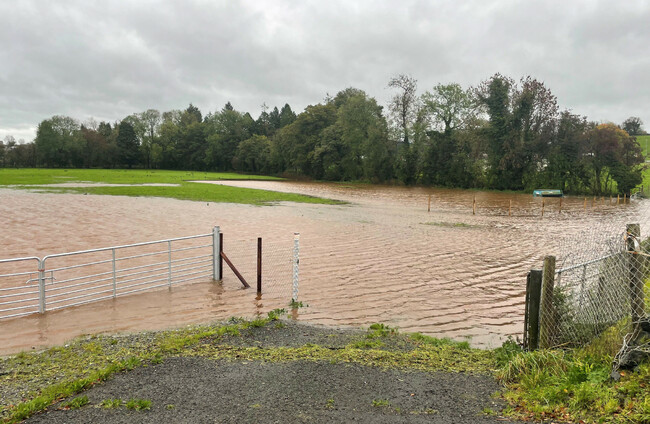
LOCAL AUTHORITIES ARE now receiving daily flood guidance statements, Cabinet has been told.
The Government was this evening updated on the new flood forecasting centre at Met Éireann.
The centre is now providing flood forecasts, food advisory services, hydrological observations and daily flood guidance statements to local authorities and the National Directorate for Fire and Emergency Management.
The Journal reported in December that the new flood forecast centre was being launched by Met Éireann early this year.
In the wake of a year of several significant floods around the country due to storms, it’s hoped that the new centre will be able to provide clear information.
In particular, flood forecasters at the centre will work with local authorities to warn them if it appears likely they will need to take defensive measures, like deploying sandbags or closing roads.
At this point, the information being provided by the centre in the daily flood guidance statements relates to potential river and coastal flooding at a national and catchment scale.
Cabinet has been told this will be refined further in the future to provide warnings for specific locations.
Speaking to The Journal, Met Éireann’s Head of Forecasting Eoin Sherlock said that the centre has been in development for a number of years and should be fully operational by around the end of January or start of February.
Met Éireann has been examining river and coastal models, developing infrastructure, and recruiting staff for the new centre.
“Similar enough to what we have in the weather office, there’ll be hydrometeorologists, or ‘flood forecasters’, issuing guidance and advisories,” Sherlock said.
Many parts of the country were hit by severely damaging floods in recent months, including Cork and Waterford during Storm Babet.
Floods are expected to become more regular and more threatening as climate change worsens.
With reporting by Lauren Boland

To embed this post, copy the code below on your site














have your say