We need your help now

Support from readers like you keeps The Journal open.

You are visiting us because we have something you value. Independent, unbiased news that tells the truth. Advertising revenue goes some way to support our mission, but this year it has not been enough.

If you've seen value in our reporting, please contribute what you can, so we can continue to produce accurate and meaningful journalism. For everyone who needs it.

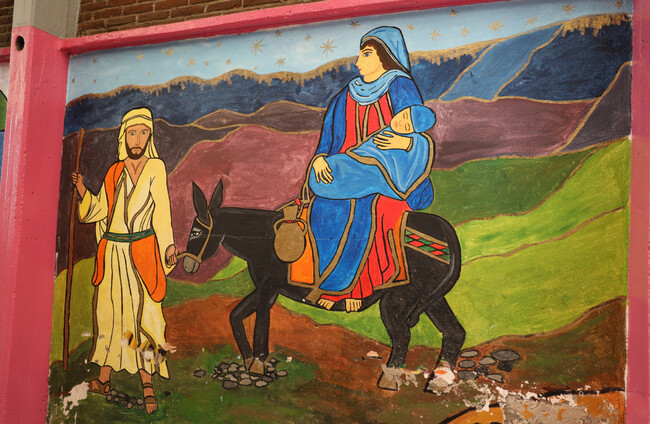
A network of migrant shelters like Cafémin are run by Catholic orders and church groups across Central America. Hannah McCarthy

'We live in limbo': Venezuelan migrants seeking safety at Irish-supported shelter in Mexico

The Cafémin migrant shelter is supported by UNHCR and the Irish embassy in Mexico City.

AN UNMARKED SECURITY gate safeguards the entrance of the Cafémin migrant shelter which has been run for nearly 15 years by the Josephine Sisters in Valley Colonia Vallejo, an industrial, working-class neighbourhood in Mexico City.

The Catholic order was spurred to start a project focused on migration in the wake of the first San Fernando massacre in 2010, when the bodies of dozens of Central American migrants were found in a mass grave near the US-Mexican border in Tamaulipas.

“It was a national news story,” says Mario Bersoza, the communications coordinator for Cafémin. “The public opinion began asking: what’s happening with these people walking through Mexico?”

The Cafémin migrant shelter is supported by UNHCR and the Irish embassy in Mexico City. Migrants from forty countries have passed through Cafemin since it began operating.

“Migration has always been a survival strategy for humanity,” says Bersoza. Many people arriving at Cafémin have come via routes that have existed for centuries from modern-day Guatemala, Honduras and El Salvador, While others hoping to cross into the US have come from as far away as Afghanistan, Bangladesh, Ukraine and Togo.

“For us, every life matters,” says Bersoza. “No matter where they come from.”

‘I took five days to get out of the jungle’

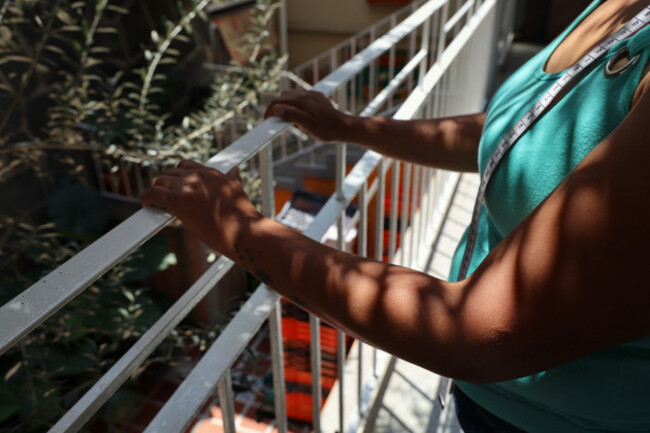
Jarianas is living at Cafemin with her elderly father, along with her 15-year-old son and 2-year-old daughter who are attending school at the shelter. For security reasons, the 40-year-old Venezuelan has asked to be referred to by her middle name.

Jarianas left Caracas in 2018 as Venezuela struggled with US sanctions and mismanagement by successive governments.

The US has taken controversial and increasingly aggressive steps towards the administration of Venezuelan President Nicolás Maduro including deadly strikes in the Caribbean sea surrounding Venezuela and a move to designate Maduro as the leader of a foreign terrorist organisation this month.

9F6A7345 Jarianas is living at Cafémin with her elderly father, her 15-year-old son and her two-year-old daughter who are attending school at the shelter. Hannah McCarthy Hannah McCarthy

After travelling to Peru, Jarianas says she quickly left the South American country due to the risk of kidnapping and extortion by gangs that Venezuelan migrants faced there. Jarianas then illegally entered Chile, where she gave birth to her daughter, who now holds Chilean citizenship but no Venezuelan passport.

Last year, Jarianas decided to leave Chile and travel around 7,000 kilometres by land to Mexico. The journey included the notorious Darien Gap, a nearly 100-kilometre stretch of rainforest that separates Colombia from Panama – “I took five days to get out of the jungle,” she says.

It was after crossing arriving in Chiapas in southern Mexico that “the anguish really began,” says Jarianas. “Because right away [gangs] kidnap you and you have to pay a ransom for them to release you.” In his office at Cafémin, Bersoza says: “Reaching Mexico requires resources. Many others never make it here. So those who do, already know how to survive—often through informal trade.”

Place of shelter

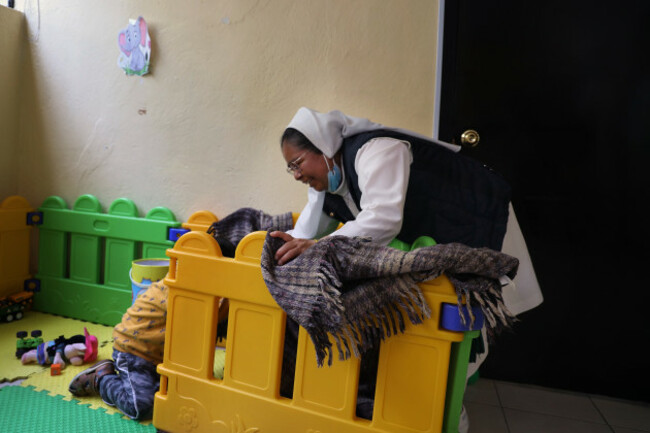
Cafemin provides temporary shelter, schooling and outreach to families and to migrants living in encampments nearby in Mexico City. The shelter is supported by the UN refugee agency, UNHCR, and is also one of the migration organisations which has received a grant from the Irish Embassy in Mexico.

The Irish government has provided €2 million to UNHCR for the Venezuela Regional Refugee and Migrant Response Plan which covers activities to support refugees and migrants across Latin America and the Caribbean.

9F6A7296 Migrant women living at Cafémin created craft pieces to sell at local markets. Hannah McCarthy Hannah McCarthy

A network of migrant shelters like Cafemin are run by Catholic orders and church groups across Central America, many of which are now grappling with international funding cuts. Despite a crackdown on migration to the US by the Trump administration, migrants from South America are continuing to travel north, many fleeing poor economic conditions, state insecurity and gang violence.

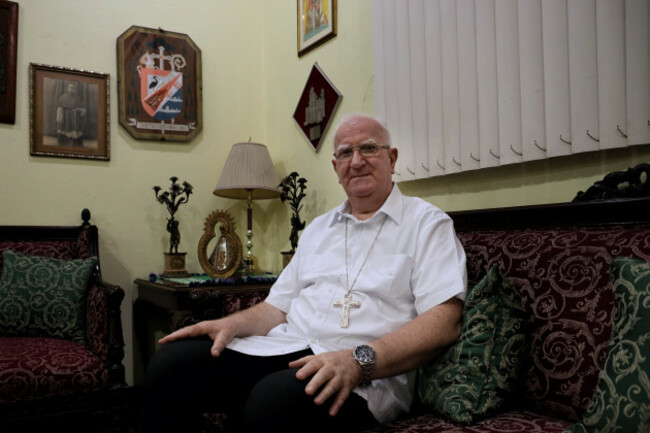
Shelters run by the diocese of San Pedro Sula in Honduras are continuing to accommodate Colombians, Nicaraguans and Venezuelans, says Michael Lenihan, the archbishop of San Pedro Sula.

The Honduran city has also been receiving deportation flights of Honduran citizens from Mexico and the US. “We don’t know what the future holds,” says Lenihan, who is originally from Limerick.

9F6A3277 Michael Lenihan, the Irish archbishop of San Pedro Sula, runs two shelters in his diocese for migrants who pass through the country on the way to Mexico and the US. Hannah McCarthy Hannah McCarthy

Jarianas’s final destination was the US but after the Trump administration suspended an online system for asylum applications for the US, known as CBP One, earlier this year, she decided to stay in Mexico City.

“If I were alone it would be very different but when you have a family the risk is much greater,” says Jarianas. “I value their safety above everything.”

While the Trump administration has stated that the vessels targeted in the recent series of airstrikes in the Caribbean were smuggling drugs, there is evidence that some boats were carrying migrants and fishermen.

According to data collected by IOM, the UN migration agency, there has been a recent shift this year in migration within Mexico. Between June and August 2025, three in four foreign migrants interviewed had been in Mexico for more than six months, up from 29% in late 2024.

9F6A7353 The Josephine Sisters were spurred to start a project focused on migration in the wake of the first San Fernando massacre in 2010 when the bodies of dozens of Central American migrants were found in a mass grave near the US-Mexican border in Tamaulipas. Hannah McCarthy Hannah McCarthy

Bersoza says that when the US CBP One system was suspended a depression – “a collective frustration and hopelessness” – hit many migrant families in Mexico. “And the worst is that now we’re receiving back families who had entered the US to fight their asylum cases but are now being detained and expelled back to Mexico,” he says.

An increasing share of migrants, mostly from Venezuela, Honduras and Cuba, now list Mexico as their final destination. According to the UNHCR, Mexico is one of the top five countries globally for receiving asylum applications, despite signs that attitudes towards migrants are hardening among Mexicans.

“We live in uncertainty, anguish, fear — that is the reality for migrants,” says Jarianas in Cafemin. “Right now we live in limbo, waiting for the documents that let us move forward.”

Readers like you are keeping these stories free for everyone...
A mix of advertising and supporting contributions helps keep paywalls away from valuable information like this article. Over 5,000 readers like you have already stepped up and support us with a monthly payment or a once-off donation.

Close
JournalTv
News in 60 seconds