We need your help now

Support from readers like you keeps The Journal open.

You are visiting us because we have something you value. Independent, unbiased news that tells the truth. Advertising revenue goes some way to support our mission, but this year it has not been enough.

If you've seen value in our reporting, please contribute what you can, so we can continue to produce accurate and meaningful journalism. For everyone who needs it.

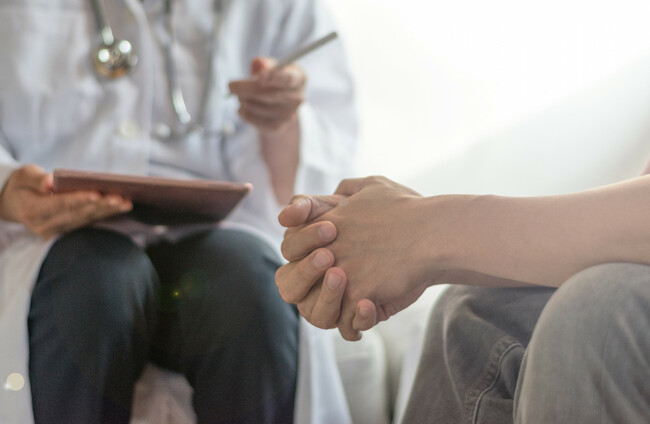
Stock image of doctor's appointment Shutterstock

Notion that refugees get 'special treatment' in healthcare is wrong, specialist says

A nurse in migrant health says the far-right “narrative” has given rise to disadvantaged groups “setting themselves up against each other”.

THE IDEA THAT migrants are getting “special treatment” in the Irish healthcare system is wrong, a specialist has said.

PJ Boyle, a Clinical Nurse Specialist in migrant health, says that vigilance is needed to ensure nurses don’t go down far-right “rabbit holes” online, which could affect their work.

He spoke to The Journal at this year’s Irish Nurses and Midwives (INMO) conference in Wexford, where members expressed solidarity with people fleeing warzones and seeking asylum in Ireland.

Boyle is concerned about the “narrative” of the far-right, which he says has given rise to disadvantaged groups “setting themselves up against each other”.

“When it comes to the provision of healthcare and the role of the nurse, it doesn’t matter what your ethnic background is … we provide healthcare to human beings,” he said.

“Those that critique it or make comments about it think they’re (migrants) getting special care. That’s not it.”

He said nurses should take a “human rights approach” to care and “uncomfortable” conversations about race and equality should be facilitated.

There is a myth that nurses can’t be racist, [that] nurses can’t be far-right politically.

An academic himself, Boyle said that while there is a lot of research being done on transcultural care, “we do need to be careful” and actively discourage discrimination, which he says has “no place” in nursing.

“We need to provide nurses with safe, informed education facilitation around how to counteract that narrative, and how to speak out,” he said, referencing far-right thinking.

Accessing healthcare

Many smaller reception centres – where migrants seeking international protection are given shelter – don’t have healthcare facilities on-site, which Boyle says can be a challenge.

However, he said the goal is to integrate asylum seekers into primary care services in the community.

He said nurses “prop up” the health service, as they have to continue to support patients while they wait to see GPs, psychologists and other specialists.

“We’re constantly asking, ‘when is the next possible appointment?’, he said, adding that sometimes migrants have to be referred to emergency departments for treatment, “which isn’t the appropriate pathway”.

Research conducted by the International Organisation for Migration found that injuries acquired from staying in refugee camps or poor working conditions in the past are common among asylum seekers.

Health problems prevent 11% of men and 19% of women from being able to work after being granted asylum.

While data is limited, organisations that work with survivors estimate that at least 30% of international protection seekers have experienced torture.

An inability to integrate into a community, through work or other means, was also found to contribute to poor mental health.

In general, Boyle says, the physical and mental health needs of asylum seekers are “significant” and there’s “room for improvement” when it comes to availability of important services in Ireland.

Readers like you are keeping these stories free for everyone...
A mix of advertising and supporting contributions helps keep paywalls away from valuable information like this article. Over 5,000 readers like you have already stepped up and support us with a monthly payment or a once-off donation.

Close
JournalTv
News in 60 seconds