We need your help now

Support from readers like you keeps The Journal open.

You are visiting us because we have something you value. Independent, unbiased news that tells the truth. Advertising revenue goes some way to support our mission, but this year it has not been enough.

If you've seen value in our reporting, please contribute what you can, so we can continue to produce accurate and meaningful journalism. For everyone who needs it.


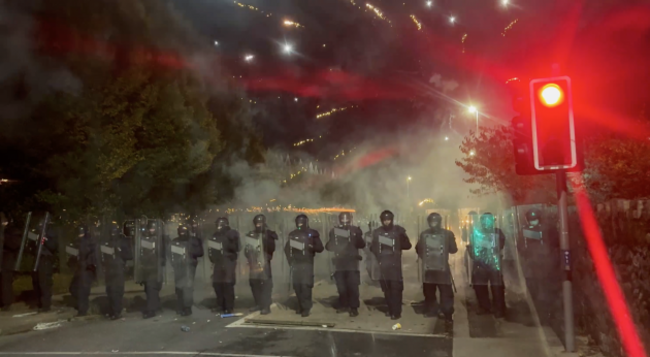
Protests in Coolock. Alamy

Government to expand community engagement on migration into areas where 'tensions are lower'

A schedule of areas will be developed, prioritising a mix of city and county areas with varied trends and patterns of new arrivals over recent years.

THE GOVERNMENT PLANS to expand community engagement on issues surrounding migration as part of the Migrant and Integration Strategy due to be launched next year. 

For many years, there have been promises from government to improve communication on migration and integration at a local and national level.

However, other then areas of the country where there have been heated debates on the issue of migration, mainly in areas where International Protection Centres have been located, no public awareness campaign has been launched on a national level.

The Journal understands that a ‘Community Engagement Programme 2026′ is to be launched, which states that “in light of ongoing focus on migration and related services, there is an opportunity to consider broader community engagement over the coming months”.

It is understood a schedule of areas will be developed, prioritising a mix of city and county areas with varied trends and patterns of new arrivals over recent years.

The existing engagement that is underway in areas such as South Dublin County Council, Tipperary County Council and Kildare County Council will continue with these engagements largely focussed on the current issues facing these communities. 

Expansion into areas ‘where tensions are lower’

However, it is believed new communications and engagement programme will commence in some areas “where current tensions are lower with a view to engaging in a less-contested manner”.

The plan, which is headed up by the Department of Justice, Home Affairs & Migration, will target a mix of rural and urban areas with “a diversity of integration experiences”. 

“Counties such as Donegal, Clare and Leitrim (rural or with larger international protection populations), Wicklow and Limerick (urban/rural populations with some points of tension over recent years) and Galway City (urban) might be considered for initial pilot engagements less focussed on immediate pressing issues,” the new plan states. 

The engagement plan aims to dial down the divisive rhetoric around migration and highlight the fact that thousands of immigrants are working in vital sectors in Irish society.  

In tandem, a report will be compiled on the engagement in each area, and a synthesised national report will be prepared. 

‘Strengthening community engagement’

“This is considered to be an opportunity to strengthen the Department’s approach to community engagement, while also providing an important mechanism for identifying community level issues for review cross-Government,” the plan states. 

This isn’t the first time the government has discussed plans to ramp up engagement and communications around the issue of migration.

Ministers previously agreed to launch campaigns to challenge disinformation and improve communications on the issue, with promises made by the previous government that a public awareness campaign would be launched.

In 2023, a senior officials group began drafting a communications plan to deal with the timing of the release of information safely to communities and local representatives. It was also intended that factual information would be presented to the public around migration issues. 

That plan was to aimed at preventing future protests about the housing of refugees by providing more clarity to local areas and local politicians. However, no large-scale plan was launched. The Journal understands that there was significant pushback against the roll out of such a campaign within the Department of An Taoiseach. 

Areas where IPAS centres are located

In the new plan, due to launch next year, the department notes that the work of the Community Engagement Teams to date have mainly focussed on areas where new accommodation centres have opened. 

It notes in the strategy that to date, the engagement with these communities has involved the provision of briefing notes, organisation of information sessions and responding to queries from both community organisations and public representatives. 

It states that it also involved strategic engagement with key departments and agencies, local government and civil society organisations.

“These has been extended engagement in the case of State-owned sites, like Citywest, where engagement is ongoing over a period of months, and includes a wide range of meetings with elected representatives, residents’ groups, NGOs, local services and community leaders and local public information,” states the planning document.

9 CITYWEST RIOT WEDNESDAY_90736664 Gardai outside the IPAS building in Citywest in October. Rollingnews.ie Rollingnews.ie

The department states that engagement has continued through the recent protest, disruption and violence in the area, and together with An Garda Síochána, it says the department is committed to ongoing progress and support for local people and their concerns.

The purpose of expanding the engagement programme to other areas is “gather feedback and insights on local service planning, and migration and integration activities at local level”.

Migration and Integration Strategy

It is also considered that this engagement will provide “valuable insights” to inform the ongoing development of the national Migration and Integration Strategy, The Journal understands.

The Taoiseach has recently expressed concerns that vital migrant workers are beginning to feel isolated and fearful given the rising tensions around asylum seekers. 

Communication by government around migration has long been criticised both by opposition and from politicians within coalition parties. 

Aside from the expansion of this programme, the department said it has funded an ESRI research programme on integration and equality since 2017 and this programme was widened in 2024 to encompass all migration-related research, “to assist with building the evidence base for the Migrant and Integration Strategy”.

While the government said the availability of high-quality peer-reviewed research is essential to evidence-informed policy making in this area, it is concerned that in-depth academic studies can result in a time lag in understanding, particularly in areas such as public attitudes and the drivers of sentiment. 

“It is therefore considered necessary to supplement the ESRI research programme with some quantitative and qualitative research to improve the evidence-basis for the community engagement and communications programme, enabling the overall goals, themes and impact to be independently evaluated,” states the department.

Series of proposals at next week’s Cabinet

Justice Minister Jim O’Callaghan is due to bring two memos to Cabinet next week aimed at tightening up regulations around migration. 

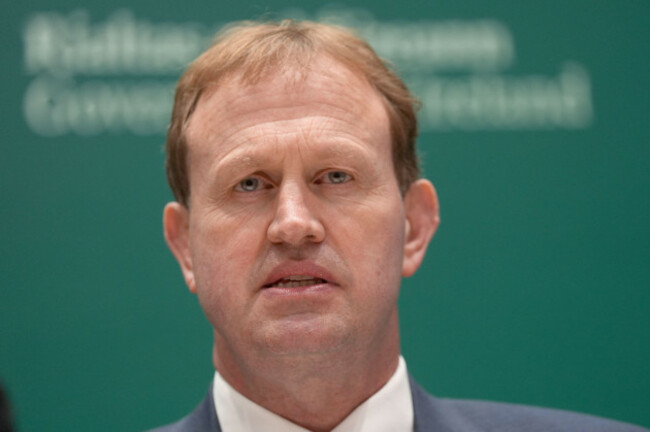
justice-minister-jim-ocallaghan-holds-a-post-budget-press-conference-at-the-government-buildings-in-dublin-picture-date-wednesday-october-8-2025 Minister Jim O'Callaghan will launch the Migration and Integration Strategy next year. Alamy Stock Photo Alamy Stock Photo

Taoiseach Micheál Martin has said changes in UK migration policy will inevitably have an impact here. It is understood government is of the view it is a “serious” situation which is causing concern. Sources said that unlike Ireland, the UK is not bound by EU migration policy rules. 

It is understood that sweeping changes to the ­family reunification system will be proposed at Cabinet next week, with income thresholds set to increase for some migrants. 

There will also be changes around family reunification relating to elderly parents, whereby people will have to show the government they have enough money to care for their relatives and that they won’t become a “burden on the state”. 

The definition of the family is also to be re-defined and narrowed to only include the ‘nuclear family’ in some cases.

The time period an international protection applicant can seek naturalisation in Ireland is to rise from three to five years, with the fees for an naturalisation application also set to rise. 

Sources state that the measures are proposals as of now, which could change following any legal advice from the Attorney General.

Readers like you are keeping these stories free for everyone...
A mix of advertising and supporting contributions helps keep paywalls away from valuable information like this article. Over 5,000 readers like you have already stepped up and support us with a monthly payment or a once-off donation.

Close
JournalTv
News in 60 seconds