We need your help now

Support from readers like you keeps The Journal open.

You are visiting us because we have something you value. Independent, unbiased news that tells the truth. Advertising revenue goes some way to support our mission, but this year it has not been enough.

If you've seen value in our reporting, please contribute what you can, so we can continue to produce accurate and meaningful journalism. For everyone who needs it.

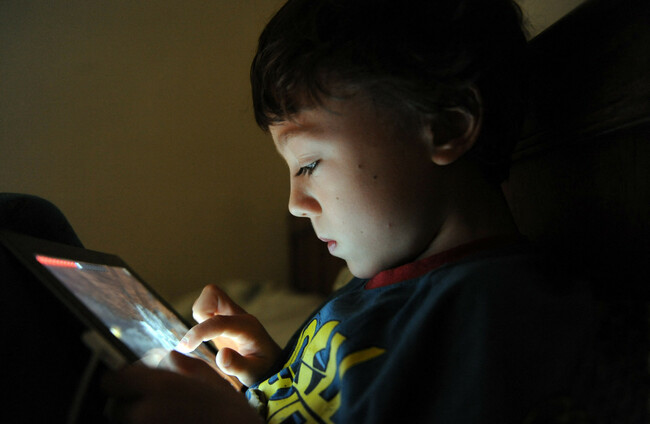
Child playing a game on their iPad Alamy Stock Photo

Warning issued on children's safety as half allowed use internet without parental controls

A psychotherapist has warned spending excessive time online compromises kids’ development of resilience.

HALF OF IRISH kids aged 8-12 are using the internet without parental restrictions on talking and gaming with people they don’t know.

Almost a third of kids post photos or videos of themselves on TikTok, Snapchat, Youtube and other platforms, a survey of 3,300 children by the NGO CyberSafeKids found.

Colman Noctor, a child and adolescent psychotherapist, said young people are “not emotionally, cognitively or socially mature enough” to manage unlimited exposure to the internet, and coming across inappropriate content is a “real and present concern”.

He added that parents need to be conscious that spending excessive time online compromises children’s development in terms of interaction skills and emotional resilience. 

“We need to help young people to learn the skills of self-regulation by role modelling healthy behaviour and protecting them from the allure of online technology,” Noctor said.

Social media presence

A fifth of kids have some accounts set as ‘public’, meaning anyone can see what they post, while 17% report having ‘friends’ or followers they do not know offline. Boys are significantly more likely than girls to have some accounts set to ‘public’, with one in 10 boys reporting having no privacy settings enabled at all.

CyberSafeKids said the findings indicate many children don’t have a clear understanding of online privacy or the risk of sharing and interacting with strangers.

WhatsApp is also popular among children for sharing images, by posting them as their status or sending them in groups. Girls are more likely to share images and videos than boys.

The survey found that nine in 10 kids in the 8-12 age group play games and use apps online, many of which are designed for older users.

Two thirds of kids surveyed had at least one social media account that has a legal age rating of 13+, rising to almost 80% of 12-year-olds.

Parents’ attitudes

Parents were surveyed too, with most reporting that they set rules and limits around screen time and online activity. However, almost half admitted that these rules were not always enforced.

Many of the 1,700 parents surveyed said they lacked the confidence to manage their children’s online activities.

Less than half use parental controls, and nearly a quarter said they “wouldn’t know where to begin”.

One in four parents are “not at all” familiar and “do not understand” the games and apps their child uses. Just 13% say they are “very” familiar or “have used the apps themselves”.

New rules needed

Alex Cooney, CEO of CyberSafeKids, said the survey findings were particularly worrying considering the recent availability of AI nudification tools.

“Parents cannot manage this alone and urgently need stronger, effective regulation to help keep children safe online,” Cooney said.

The charity is calling on the government to ban all so-called “nudify” and “pornify” apps, and any other AI-based tools capable of generating deep-fake sexual images.

“There is no legitimate purpose, no social benefit, and no positive outcome associated with this technology: its sole function is exploitation, abuse, and harm,” the charity said.

It’s also calling for the copyright protection to be extended to an individual’s body, facial features and voice, such as what’s been implemented in Denmark. It is hoped this would halt the creation, use and dissemination of deepfake content without consent. The Social Democrats are drafting legislation in this area.

As for stopping children from accessing inappropriate content and online spaces, the charity suggests the creation of strong age verification tools.

Tánaiste Simon Harris last week said the government is going to build age verification tools, as it moves to ban social media for children under a certain age.

poll by Ipsos in The Irish Times last weekend showed that three-quarters of parents surveyed were in favour of the move.

Australia enacted a social media ban for under-16s last year. However, the legislation has had mixed results, with some children saying they were still able to access platforms quite easily through cheating the technology. Other young people have embraced the change.

Readers like you are keeping these stories free for everyone...
A mix of advertising and supporting contributions helps keep paywalls away from valuable information like this article. Over 5,000 readers like you have already stepped up and support us with a monthly payment or a once-off donation.

Close
9 Comments
This is YOUR comments community. Stay civil, stay constructive, stay on topic. Please familiarise yourself with our comments policy here before taking part.
Leave a Comment
    Submit a report
    Please help us understand how this comment violates our community guidelines.
    Thank you for the feedback
    Your feedback has been sent to our team for review.

    Leave a commentcancel

     
    JournalTv
    News in 60 seconds