Take part in our latest brand partnership survey

We need your help now

Support from readers like you keeps The Journal open.

You are visiting us because we have something you value. Independent, unbiased news that tells the truth. Advertising revenue goes some way to support our mission, but this year it has not been enough.

If you've seen value in our reporting, please contribute what you can, so we can continue to produce accurate and meaningful journalism. For everyone who needs it.

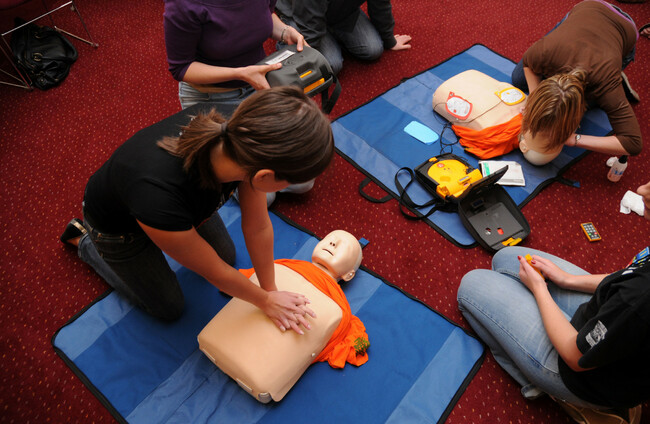
Thousands of people undertake first aid training each year, but standards vary widely across the sector. File photo. Alamy Stock Photo

'Unacceptable' standards found at several first aid training providers

Thousands of people may have received out of date first aid training from one large company.

A QUARTER of first-aid training providers audited last year had their certification revoked by the sector’s regulator due to “unacceptable” standards.

Low levels of compliance with quality standards have been identified at a number of institutions across the sector, which also provides training in resuscitation and the use of defibrillators. Of 25 organisations audited last year, seven were delisted.

Over 55,000 first aid responder certificates per year are issued in Ireland, with 68 institutions currently approved to do so.

Trained first aid responders are required by law in workplaces nationwide, but published and unpublished audits reviewed by The Journal reveal widely varying standards at the institutions providing this training. 

Out-of-date first aid training

A quality review last year found that Dublin-based Safety Solutions, one of the country’s largest providers of first aid training, ”minimally met” the requirements of the regulator, the Pre-Hospital Emergency Care Council (PHECC).

However, The Journal has learned that up to 10,000 people annually may have received out-of-date first aid training over a number of years, after Safety Solutions failed to update its training materials following clinical practice guideline updates in 2021 and 2023.

The routine review last year warned that the out-of-date course content was a matter of “serious concern” that had potential implications for patient safety and was a “clear breach” of the regulatory rules.

The review in question has not been published, meaning PHECC has not yet informed past and future clients of the company of the shortcomings identified.

Safety Solutions told The Journal that it was subject to regular quality reviews by PHECC, adding: “We prioritise any feedback we receive and communicate with PHECC accordingly”.

PHECC said that it will not comment on individual reports that have not yet been published, adding that the full quality review framework process is “systematic and thorough and takes approximately six months to complete”.

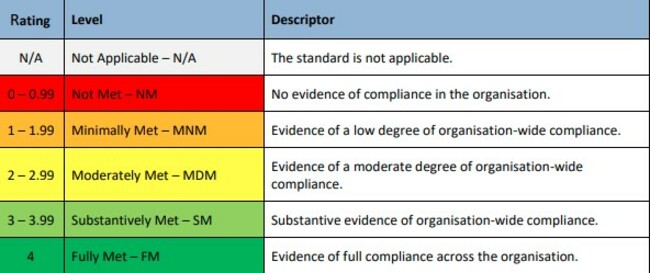
Of 12 audits published by PHECC last year, a quarter identified providers which had only “minimally met” regulatory requirements. That meant they scored between one and two on a five point scale, demonstrating only a “low degree” of organisation-wide compliance. In 2023, the equivalent figure was 21%. 

phecc ratings PHECC's compliance ratings. A quarter of companies for which audits were published last year 'minimally met' requirements. PHECC PHECC

Richard Lodge, director of PHECC, said: “‘Minimally met’ means the institution has met minimum standard to allow their accreditation, but there is scope for significant improvement which will be required to be obtained by that organisation in order for it to remain accredited.”

Safety Solutions provides first aid and cardiac first response training, and also trains instructors in these disciplines.

Sub-contracting certification

Several sources in the first aid training sector have raised concerns with The Journal over some institutions’ limited oversight of sub-contractors to provide PHECC-certified first aid training.

Sources in the sector noted that other state regulators, such as Quality and Qualifications Ireland, do not allow this type of “renting out” of quality assurance to sub-contractors.

It’s understood the practice could raise safeguarding issues, as affiliated faculty over whom there may be little oversight could be delivering training to children, such as Transition Year students.

It’s also understood that there is concern within the sector that compliant institutions have been undermined and undercut by this practice.

The unpublished review of Safety Solutions identified limited governance and oversight of the activities of “affiliated faculty” – sub-contractors certified by the company to deliver first aid training. Assessors said improvement action was required in this area.

The assessors learned that it was possible for affiliated faculty to deliver courses “indefinitely without ever having their learning resources checked”, according to the unpublished review document.

Richard Lodge, director of PHECC, said the regulator “requires all institutions to actively manage their faculty [and] trainers”, adding that its quality review process and guidelines “underline and support the assessment of this area”.

He added that PHECC introduced a new digital certification platform on 1 March to monitor and record the issuing of certificates to first aid training students by approved training institutions. 

“It is essential in the public interest that all providers of first aid response training and certification processes should be appropriately assessed, accredited and registered accordingly with PHECC,” Lodge said.

“Only approved training institutions can issue responder-level digital certificates through a secure portal operated and overseen by PHECC, which eliminates the potential for unmonitored certificates.”

Wide variation in standards

Delisting by PHECC happens when a company scores 25% or less in its assessment.

At the opposite end of the scale, two published audits in 2024 and four for 2023 identified companies where compliance was “substantively met” – the second highest standard.

One source at a training institution that has previously received a positive report from PHECC said standards across the first aid training sector varied widely. 

They added that unless and until non-compliant providers had their certification revoked through delisting, these institutions were able to undercut those with a greater focus on quality assurance.

The source said PHECC was “trying to do things right” with its quality review audits and delisting policy but added that this process could be stronger, with more oversight, audit, follow-up and sanction. They added that PHECC was probably not as well resourced as it needed to be to regulate this large sector.

A second source in the sector agreed that PHECC could and should be much more robust in taking action in instances of non-compliance. 

They added that some issues at certain first aid training companies – such as the sub-contracting of PHECC-certified training to people over whom there is limited oversight – are a particular cause of disquiet within the sector.

PHECC responds

Lodge said PHECC had put “robust systems and processes in place for the recognition and assessment of educational institutions”.

He said PHECC’s quality review framework model and assessment process ensured the quality of education and training in the sector and allowed “continuous quality improvement activities” at training institutions.

He added that institutions that successfully applied to PHECC to provide training were subject to a quality review assessment within their first year, and then assessed in three-yearly cycles. 

“Institutions that do not achieve a minimum compliance standard are subject to a range of sanctions including improvement notices, conditional approval, suspension and/or delisting as a PHECC-recognised or approved institution,” Lodge said.

“PHECC considers that the quality review framework process is successful and is a positive force in assuring standards are met. The system is driving quality improvement and ensuring high standards of education and training within the wider sector.”

PHECC took over regulation of first aid training and certification from the Health and Safety Authority in 2018. It said management of certification had previously been outsourced to a private company. 

Readers like you are keeping these stories free for everyone...
A mix of advertising and supporting contributions helps keep paywalls away from valuable information like this article. Over 5,000 readers like you have already stepped up and support us with a monthly payment or a once-off donation.

Close
JournalTv
News in 60 seconds