Sign in. It’s quick, free and it’s up to you.
An account is an optional way to support the work we do. Find out more.
Sign in. It’s quick, free and it’s up to you.
An account is an optional way to support the work we do. Find out more.
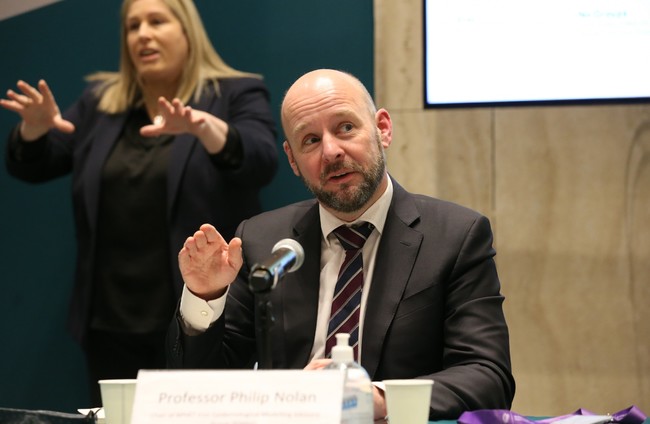
IF THE PROGRESS currently being made in driving the numbers of new Covid cases downwards continues, it will set the scene for “phased, cautious and controlled” easing of restrictions according to Professor Philip Nolan.
The Chair of NPHET Irish Epidemiological Modelling Advisory Group said today that lessons can be learnt from the first two waves of Covid-19 in Ireland over the past year as we look to easing the restrictions in future.
“If we keep this up, we can drive infections to very low numbers,” he said. “And we are making really steady progress after a very challenging surge.”
After the initial wave of Covid-19 in Ireland, case numbers dropped to very low levels in June and early July. However, cases began to rise again as society re-opened in the summer.
It's instructive, and hopeful, to compare where we are now with preceding waves. We can learn lessons from last summer. If we keep this up, we can drive infections to very low numbers, and set the scene for phased, cautious and controlled resumption of our priority activities pic.twitter.com/t3hpknfhpW
— Professor Philip Nolan (@President_MU) February 6, 2021
Nolan’s comments follow remarks this morning from Dr Tony Holohan who said Ireland is in a “strong position” after six weeks of Level 5 restrictions.
The Level 5 restrictions were implemented in late December following a surge that exceeded the scale of the first two waves of Covid-19 last spring and in the autumn.
Over 1,000 deaths were recorded last month along with over 100,000 new cases. These figures were also mirrored with record hospitalisations and numbers in ICU in January.
According to the latest figures, there were 1,196 people in hospital with Covid-19 including 177 in ICU today.
HSE CEO Paul Reid said today that these falling numbers are “providing much relief for our hospitals, patients and families”.
He added: “It is still far too high for safety but a good sign that all of our actions are working.”
Over 200,000 vaccine doses have been administered in Ireland to date, primarily to people in long-term residential settings and frontline healthcare workers.
Next in line to receive a vaccine are people aged 70 and over.
Within this cohort, those aged 85 and over will receive their vaccine first. The vast majority of people over 70 will get the jab in their GP surgery.
The first doses are set to arrive in GP surgeries from Monday week.
For GP practices with under 200 people over the age of 70 there will be a GP-run vaccination clinic at an agreed location.
These will mainly be in larger urban areas such as Dublin, Galway and Cork. The first one of these will be in DCU in Dublin. They’ll be operated by GPs, practice nurses and admin staff.
There may also be a “buddy system” for small GP practices outside these urban areas for their patients to attend a larger practice to receive their vaccine.

To embed this post, copy the code below on your site














have your say