Sign in. It’s quick, free and it’s up to you.
An account is an optional way to support the work we do. Find out more.
Sign in. It’s quick, free and it’s up to you.
An account is an optional way to support the work we do. Find out more.
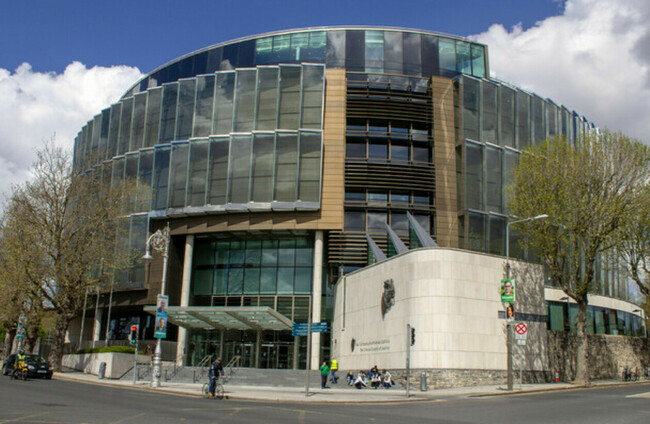
A POLISH NATIONAL who killed his friend, whose brain twisted in his skull after he received 27 injuries to his head and neck on St Stephen’s Day three years ago, has been jailed for six years.
The Central Criminal Court was previously told at a sentencing hearing for Tomasz Rozpeda that no one knows “exactly what happened” on the night Maciej Nowak (32) was killed and that both men had consumed “substances to excess”.
Rozpeda told an emergency operator that his friend had “gone crazy hitting things and hitting himself” but a pathologist later found Mr Nowak had died from blunt force trauma not in keeping with self-inflicted injuries.
Sentencing 29-year-old Rozpeda at the Central Criminal Court on Monday, Ms Justice Eileen Creedon said the fact that Mr Nowak’s brain twisted within his skull suggested that his head had been struck multiple times with an object or flat surface.
She said a pathologist found that the pattern of injury to the head was consistent with blunt force injuries suggestive of an assault.
The court was told during the sentence hearing for Rozpeda last May that there was almost a fatal level of amphetamines in the deceased’s man’s system, but it was ruled out as being the cause of death.
Defence barrister, Michael Hourigan SC, previously submitted what was hoped to have been a normal evening of socialising between two friends had turned into “something very different”.
The defence counsel also pointed out that one of the tragedies of the case was that the men were friends who had arranged to spend time together that night. He said Rozpeda and the deceased had consumed “substances to excess” that evening.
Rozpeda was originally charged with the murder of Mr Nowak on a date on or about 26 or 27 December 2023 at Ballycranna, Kilross in Co Tipperary, about 10 kilometres from Tipperary Town.
However, last March Rozpeda, of no fixed abode, pleaded guilty to manslaughter when he was arraigned before the Central Criminal Court.
Before passing sentence on Monday, Ms Justice Creedon noted that Rozpeda had initially sought to distance himself from the event but later contacted Mr Nowak’s fiancé to say he had “put” the victim in hospital.
The judge said Mr Nowak was due to be married on 27 June 2024 and that the deceased’s fiancé Joanna Biszof had spoken in her victim impact statement about the “deep trauma” suffered by her and her children. “She [Ms Biszof] confirms her life as she knew it has collapsed,” she added.
Ms Justice Creedon noted that while the defendant made no admissions in his garda interviews, a plea of guilty to manslaughter was later entered.
The judge said that, having considered the level of violence and the injuries sustained, she would set the headline sentence for Rozpeda at nine years.
The judge noted that the defendant’s most significant mitigation factor was his early plea of guilty to manslaughter, which she said was of very significant value as several witnesses were outside the jurisdiction.
She also noted Rozpeda’s apology. The defendant’s defence counsel previously said he was instructed to apologise for his client’s actions and that Rozpeda accepted responsibility and culpability for what had occurred.
Ms Justice Creedon said it was also important that the defendant had no relevant previous or subsequent convictions in this jurisdiction.
Rozpeda has three previous convictions from Poland, which include driving a motor vehicle under the influence of alcohol and drugs as well as possession of narcotic drugs.
The judge also took into account that the defendant had suffered a stroke a number of years ago and that he would be serving his prison sentence away from his home and family.
Ms Justice Creedon sentenced Rozpeda to six years in prison, backdating the sentence to when he went into custody on 28 December 2023.
At the sentence hearing last May, Detective Inspector Declan Boland from Thurles Garda Station told John Berry SC, for the Director of Public Prosecutions (DPP), that a phone call was placed by Rozpeda to emergency services on the morning of 27 December 2023.
The Det Insp said Rozpeda spoke to the 999 operator for around 15 minutes, during which he indicated that his friend Mr Nowak was in trouble and that the deceased had “gone crazy hitting things and hitting himself”.
An ambulance arrived at Kilross at 5.02am that morning, where Mr Nowak was found lifeless and cold to touch on the kitchen floor of his house.
The investigation revealed CCTV footage showing Rozpeda arriving at the area where Mr Nowak lived at 4pm the previous day. The pair were captured at an ‘Applegreen’ service station outside Tipperary town in Mr Nowak’s car before arriving back at the victim’s house after 5pm that day.
Counsel said CCTV footage also showed a car similar to Mr Nowak’s leaving the area around the time the 999 call had been placed.
Mr Berry said Rozpeda was nominated by gardai as being a suspect in the case and efforts were made to locate him. The defendant was initially arrested on suspicion of having caused harm to Mr Nowak but denied this in his interviews with gardaí.
The Det Insp agreed with counsel that Rozpeda told gardaí he had travelled by train to his friend’s house, rather than driving, and that a “number of untruths” had been told by the defendant to distance himself from events that took place.
The Det Insp said gardaí were able to identify the defendant’s movements from witness accounts, which included a voice note sent by Rozpeda to a friend at 10pm on 26 December, indicating something had happened and that the situation was “fu**ed up”.
The lawyer said there were also a number of attempted phone calls made by the defendant to other individuals around 4am the following morning as Rozpeda travelled back to Dublin. The defendant had looked for advice and assistance in calling an ambulance and was advised to call 999.
One of the people who spoke to gardaí indicated Rozpeda told him he had an argument with his friend and an accident had happened. Another said Rozpeda told him he had “f**ked up” and done something wrong, said the witness.
Counsel said a pathologist’s report recorded 70 areas of bruising on Mr Nowak’s body. “There were no stab wounds or fractures or anything of that nature,” he told the court.
Mr Berry said the 999 call made by Rozpeda claimed that Mr Nowak “had gone crazy”, was hitting himself and breaking the place up, which had been considered by pathologist Dr Heidi Okkers in her report.
A toxicology report showed a high level of amphetamine in Mr Nowak’s system and a large quantity of alcohol. The Det Insp agreed there was a concern the deceased had been misusing drugs and alcohol at the time.
The deceased’s cause of death was blunt force trauma to the head. There was an injury connected to the “twisting of the brain within the skull”, while the head and neck had 27 distinct areas of injury and bruising, said counsel.
The garda witness said blood-stained broken bottles had been found scattered on the kitchen floor. He agreed that Dr Okkers had ruled out the presence of drugs in the deceased’s system as being the cause of death.
Counsel said Dr Okkers found Mr Nowak was struck multiple times with an object and/or a flat surface. She also found the blunt force trauma was not in keeping with self-inflicted injuries.
The witness agreed that when Rozpeda was interviewed by gardaí, he didn’t admit to causing the death of Mr Nowak and instead attempted to distance himself.
The Det Insp also agreed that Mr Nowak had invited Rozpeda to Tipperary to spend St Stephen’s Day with him.
In a victim impact statement read by Mr Berry, the deceased’s sister Monika Kubiaczyk said her world “came to a standstill” when she received the news about her brother’s “sudden and tragic death”.
Ms Kubiaczyk said she can’t believe she will never see her brother again and that the world has now become an unsafe place for her. “Someone in a brutal manner decided to take his life, nothing will ever be the same again. A part of me died with him”.
In a second statement, the deceased’s fiancé Joanna Biszof said Mr Nowak was the love of her life and described him as a charming and kind-hearted man. She said he was a devoted father to three children.
Ms Biszof said they shared a “magical chemistry” and were due to marry in June 2024.
She said she had been left with an emptiness, that her world had been shattered, and she is unable to accept her fiancé is gone.
Ms Biszof said this “tragedy” had broken her physically and mentally and she has been forced to rely on antidepressants. “I do not believe I will ever be able to love anyone again”.
The detective inspector previously said it was Ms Biszof’s belief that the couple’s arguments about the deceased’s drugs and alcohol use would be resolved.
Under cross-examination, the detective inspector agreed with Michael Hourigan SC, defending, that this “awful event” had happened in the context of there being no animus and the men knowing each other for the previous 10 years.
The barrister said what was hoped to have been a normal evening of socialising had turned into “something very different”.
The Detective Insp also agreed that a very high level of intoxication in terms of amphetamines had been consumed.
The witness said 16 cans of ‘Carlsberg’ had been purchased, but only one was drunk. He also agreed that the pathologist had said there was almost a fatal level of amphetamines in the deceased’s system.
The officer further agreed the reality is that “no one knows exactly what happened that night” and that Dr Okkers had said the amphetamine use may have contributed to certain behaviours as described by Rozpeda.
In mitigation, Mr Hourigan asked the court to take into account that his client hadn’t brought a weapon to the house and there was no suggestion of prior animus.

To embed this post, copy the code below on your site









have your say