Sign in. It’s quick, free and it’s up to you.
An account is an optional way to support the work we do. Find out more.
Sign in. It’s quick, free and it’s up to you.
An account is an optional way to support the work we do. Find out more.
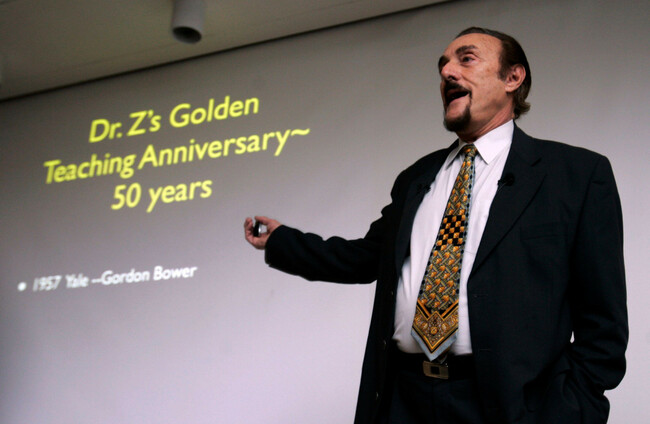
FAMED PSYCHOLOGIST PHILIP Zimbardo, known for his controversial Stanford Prison Experiment, has died at the age of 91.
Zimbardo passed away earlier this week in his home in San Francisco.
Zimbardo conducted the Stanford Prison Experiment over six days in August, 1971 in the basement of Jordan Hall, a campus space in the prestigious Stanford University in California.
The experiment set out to examine the psychological effects of authority and powerlessness in a prison environment. The psychology professor recruited Stanford students using a local newspaper ad.
Twenty-four students were carefully screened and randomly assigned into groups of prisoners and guards. The experiment, which was scheduled to last one to two weeks, ultimately had to be terminated on only the sixth day as the experiment escalated out of hand when the prisoners were forced to endure cruel and dehumanising abuse at the hands of their peers.
The experiment showed, in Zimbardo’s words, how “ordinary college students could do terrible things.”
The famed psychology experiment has been memorialised in popular culture as the subject of numerous documentaries, films, and series.
Zimbardo retired from teaching in 2003, but continued to work as the director of an organisation he founded called the Heroic Imagination Project.
The organisation promotes “research, education and media initiatives designed to inspire ordinary people to act as heroes and agents of social change”.
Zimbardo is survived by his wife of 52 years, Christina Maslach Zimbardo; his son Adam from his first marriage to the late Rose Zimbardo and daughters Zara and Tanya, as well as his four grandchildren.

To embed this post, copy the code below on your site












have your say