Sign in. It’s quick, free and it’s up to you.
An account is an optional way to support the work we do. Find out more.
Sign in. It’s quick, free and it’s up to you.
An account is an optional way to support the work we do. Find out more.
THERE WAS FRESH advice from the National Immunisation Advisory Committee (NIAC) this week, which has prompted yet another revision of the HSE’s vaccination plan – now Version 27.
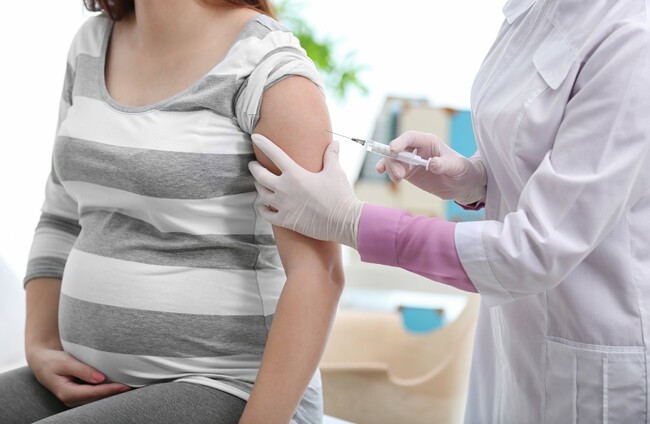
The advice, which has been accepted by the government, included a recommendation that the vaccine be offered earlier than planned to pregnant women, as well as guidance on the use of the Johnson & Johnson and AstraZeneca vaccines.
As part of our Reader Q&A series, we have been breaking down the latest developments with the rollout in Ireland, trying to answer as many of your questions as we can.
This week we have been focused on the new advice and what it will mean for the affected cohorts.
The HSE is still working on the revised plan – and will be over the entire weekend – so there are some questions we cannot answer yet. When the details are available early next week, we’ll update this piece with more information.
Here are some of the questions you sent us:
There are still a lot of unknowns in relation to vaccines for pregnant women so let’s start with what we do know.
NIAC recommended that a vaccine should be offered to pregnant women between 14-36 weeks gestation. The recommendation specifically states that a discussion with the clinician providing care to the woman during her pregnancy should take place before she is registered for a vaccine.
The committee also advised that pregnant women who are considered suitable for the vaccine should be given a mRNA vaccine. This could be either a Pfizer or Moderna vaccine.
By far the largest supplier for Ireland is Pfizer, with more than 2.67 million doses scheduled over Q2. Already in April more than 1.1 million of those doses have been delivered, with a further 1.5 million due before the end of June.
Ireland is also due to receive in total 383,000 Moderna doses over the second quarter of the year, with at least 163,200 having already arrived in April.
Now let’s move to the unknowns. It is not yet clear when vaccinations for pregnant women will begin, how they will register or be referred or where their jabs will be administered. The HSE is due to announce these details next week, after it revises the vaccination plan over the weekend based on the new advice from NIAC.
HSE Chief Clinical Officer Dr Colm Henry said the advice from NIAC is “carefully worded” to say that they should consult with their own caregiver in obstetrics, whether that is a consultant or a GP. Again the details in relation to consultation with a clinician will be worked out over the weekend and clarified early next week.
He said once the plan is revised, the HSE will communicate directly with women and with the medical community about what the vaccination programme means for them.
This condition, which is very rare, is a form of placental disease and involves inflammation caused by the virus. It can lead to complications including reduced foetal movements and stillbirth in unborn babies.
Earlier this month, Ireland’s Faculty of Pathology and Institute of Obstetricians and Gynaecologists confirmed that there had been six cases of stillbirth and one case of a second trimester miscarriage caused by Covid placentitis since January this year and 11 in total since the start of the pandemic.
“This condition appears to occur a relatively short time after contracting Covid-19 infection, ranging up to 21 days from experiencing symptoms,” they said.
Maternal Covid-19 symptoms varied from none to moderate. Gestations involved ranged from 20-36 weeks.
They stated that results to date from the baby’s deaths indicate a link with the B117 variant of concern which they said may explain why this finding was not a significant feature of the first and second waves in 2020.
The link to this variant, they said, may also partially explain why it is not a clear feature of Covid-19 infection in the literature to date, which is largely based on Covid-19 cases seen in 2020.
For example, a widely reported study from the UK and US looked at 4,004 pregnant women who had suspected or confirmed Covid. There were no deaths among babies, though an increased risk of premature birth was identified. All of these births took place between January and August 2020, before the B117 variant emerged.
Around 60,000 babies have been born in Ireland since the pandemic began. By the end of last year there had been around 450 cases of Covid-19 during pregnancy reported to the Health Protection Surveillance Centre (HPSC). Speaking to the Irish Times recently, Cork-based obstetrician Professor Keelin O’Donoghue said the risk of stillbirth caused by the Sars-CoV-2 virus ranges from one in 100 to one in 200.
Current clinical advice is for pregnant women to notify their treating hospital if they test positive for Covid-19, so as to ensure appropriate follow up, and to present early if there are concerns regarding reduced fetal movements. Pregnant women should continue all measures to avoid contracting Covid-19 infection.
When asked by The Journal this week about cases elsewhere, particularly in the UK, HSE CCO Dr Henry said the first case was reported in Ireland and he is not aware of any cases having been reported in the UK.
“Our colleagues have shared this information with the UK,” he said.
At the beginning there was some scepticism about it when the first two or three cases came, but they are more assured now that there is an association and the pathologists who detected this for the first time are.
He said there is now a greater sense of awareness that this is a risk for pregnant women and their babies and that NIAC referenced this particular risk to pregnancies in its latest advice.
Dr Henry said the pathologists in the reported cases determined that there was an infection caused by Covid-19 and this was accepted by coroners.
“That’s evidence enough for us for sure,” he said.
Henry said he wanted to reassure pregnant women that Ireland has had a good experience overall in this country in terms of Covid-19 during pregnancy.
“There have been no maternal deaths, thankfully, due to Covid-19,” he said.
“There were a number of cases of people who became ill and a small number who were seriously ill, but because of the measures taken by maternity hospitals, and because of people’s overall actions, we’ve largely kept the risk from maternity hospitals.”
We’ve already covered some of the detail of Covid placentitis above, but it’s worth noting here again for the first reader’s question in this section that NIAC specifically referenced this condition in its advice to government.
The decision to offer the vaccine to pregnant women is linked to this risk – a risk that was not perceived when the initial planning for the vaccination programme was underway.
The large clinical trials run by vaccine developers did not include pregnant women, which means there is limited information available about the effects of a Covid vaccine during pregnancy.
A small number of women in trials became pregnant after they received a vaccine and no adverse events with the pregnancies were reported, but the numbers are too small for conclusive results. Vaccine developers are currently collecting and reviewing data on the efficacy and safety of their jabs in pregnant women.
Covid-19 vaccines have already been available and have been administered to pregnant women in eligible cohorts – such as healthcare workers – in Ireland since the launch of the vaccination programme.
Around 90,000 pregnant women in the US have been vaccinated, mainly with mRNA vaccines, and the data from these vaccinations have not raised any safety concerns.
Preliminary findings of a study published this month in the New England Journal of Medicine did not show obvious safety signals among pregnant women who received mRNA Covid vaccines.
Among a total of more tan 35,000 participants aged 16-54 who identified as pregnancy, the most frequent after-effect reported was pain at the injection site. Headache, muscle pain, chills and fever were reported less frequently.
In January this year the Royal College of Physicians of Ireland RCIP, published guidance for pregnant women who were eligible and considering whether to accept a Covid-19 vaccine.
The guidance noted that the Covid-19 vaccines do not contain the live Sars-CoV-2 virus – vaccines based on ‘live’ viruses are avoided in pregnancy in case they infect the developing baby. Non-live vaccines have previously been shown to be safe in pregnancy, for example the flu vaccine.
The RCPI guidance also pointed out that available data from studies in animals do not indicate harmful effects or any safety concerns from the Covid-19 vaccines during pregnancy. Animal trials also found no evidence of harm to fertility.
Clinicians have said none of the approved vaccines in Ireland contain ingredients that are known to be harmful to pregnant women.
The US Center for Disease Control advises pregnant women to consider a number of factors when making their decision, in consultation with their healthcare provider:
In short, no – people can’t choose what vaccine they get or pay for the vaccine (it’s free).
The HSE has stressed that all vaccines must meet safety and effectiveness standards before they are approved for use.
The National Immunisation Advisory Committee (NIAC) earlier this week issued a series of revised recommendations which have been accepted by the Department of Health.
NIAC – having considered the Covid-19 situation in Ireland and the fact alternative vaccines are available – has advised that both the AstraZeneca (Vaxzevria) and Johnson & Johnson (Janssen) vaccines can be administered to people aged 50 and over.
The recommendation is also for the Johnson & Johnson jab to be given to people under 50 if there is no other option available or if they are part of a hard-to-reach community.
Concerns have been raised in recent weeks about blood clots linked to these two vaccines. However, health officials have stressed that this side effect is very rare and Covid-19 itself poses a greater risk to people.
For example, someone aged 60-64 is 85 times more likely to die of Covid-19 than to have any clotting event following the vaccine – this includes all clotting events; regular clotting such as those identified in the leg as well as the rare thrombosis.
People aged 55-59 are 48 times more likely to die of Covid-19 than get a blood clot.
Let’s take a look at the guidance for both the AstraZeneca and Johnson & Johnson vaccines.
Guidance for AstraZeneca vaccine
Around 34 million people were vaccinated with AstraZeneca across Europe and the UK, as of 4 April. The HSE has said “a very small number” of these people have had very rare blood clots. Most of these people were women under the age of 60.
It’s estimated that this very rare side effect may affect between four and 10 people for every one million people who get the AstraZeneca vaccine. It may cause death in one person in one million, the HSE says.
The AstraZeneca vaccine is recommended for people aged 50 and older. The risk of blood clotting is very low for this age group.
“You are 85 times more at risk of dying from Covid-19 than getting very rare serious blood clots after the vaccine, if you are aged 60 or older,” the HSE notes.
“Covid-19 may also cause clotting problems, hospitalisation and may be fatal. The benefits of getting the AstraZeneca vaccine far outweigh the risks.”
Who should not get the AstraZeneca vaccine
NIAC has recommend that certain groups of people should not get the AstraZeneca Covid-19 vaccine.
You should not get this particular vaccine if you:
If you have had an immediate allergic reaction to any other vaccine or injectable therapy, the HSE advises that you talk to your GP before getting your Covid-19 vaccine.
The HSE has said those who have a history of blood clots in the family, as well as those who have recently had a clot or who are on blood thinning treatments, should still take the AstraZeneca vaccine.
This advice also applies to those who have a condition or who are on treatment that makes them more likely to get a blood clot – they should still get the vaccine.
HSE Chief Clinical Officer Dr Colm Henry recently said the balance of benefit is “heavily in favour” of these people getting the vaccine as it prevents the most serious consequences of Covid-19.
“The clots that have been described here with the EMA are unusual venous clots, they’re different from the common clots people have,” he explained.
Dr Henry said the advice is for “anybody in this age group, particularly people with underlying conditions” as they have “everything to gain by getting vaccinated”.
He said only those who have had a very severe reaction to the first dose of the vaccine or a known allergy to a constituent part of the vaccine would be advised against taking it.
Guidance for Johnson & Johnson vaccine
Both NIAC and the European Medicines Agency (EMA) have said that the Johnson & Johnson vaccine’s benefits far outweigh the risks.
The most common side effects in the trials carried out on this vaccine were usually mild or moderate and got better within one or two days after vaccination.
The most common side effects are pain at the injection site, headache, tiredness, muscle pain and nausea. They affected more than 1 in ten people.
Rare side effects (that occurred in less than one in 1,000 people) are hypersensitivity (allergy) and itchy rash.
Very rare side effects such as thrombosis (formation of blood clots in the blood vessels) in combination with thrombocytopenia (low levels of blood platelets) occurred in less than one in 10,000 people.
Allergic reactions, including one case of anaphylaxis (severe allergic reaction), have occurred in a small number of people receiving the vaccine.
The EMA recommends that, as for all vaccines, the J&J vaccine “should be given under close supervision with appropriate medical treatment available”.
NIAC has issued the following guidance on AztraZeneca doses:
Johnson & Johnson is a single-dose vaccine.
Do you have a question on Covid-19 vaccines or the rollout in Ireland? Send it to answers@thejournal.ie and we’ll do our best to get the information you need.
To embed this post, copy the code below on your site














have your say