We need your help now

Support from readers like you keeps The Journal open.

You are visiting us because we have something you value. Independent, unbiased news that tells the truth. Advertising revenue goes some way to support our mission, but this year it has not been enough.

If you've seen value in our reporting, please contribute what you can, so we can continue to produce accurate and meaningful journalism. For everyone who needs it.

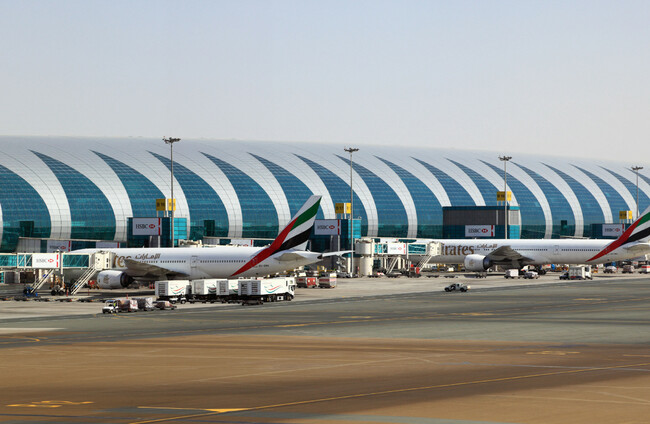
Dubai Airport Alamy Stock Photo

Turbulence ahead Airline fuel costs are surging - so how will passengers be affected?

From hidden surcharges to cancelled routes, carriers are quietly reshaping travel to manage losses, writes Eoghan Corry.

AIRLINES HAVE BEEN responding to the disruption to world fuel supplies in creative ways. Facing losses on flights that now cost twice as much to fuel as they did five weeks ago, they are cancelling services, raising prices and imposing fuel surcharges.

The last time we saw fuel prices of over $100 a barrel, back in 2008, airlines put surcharges of €20 each way on flights. This is less likely to happen in 2026, for a few reasons.

Firstly, the problem is being viewed as a short-term one, more akin to the Gulf wars than the speculator-driven hikes of 2008. Secondly, the business of selling airline tickets has become more sophisticated, and the introduction of new charges has become more complex. Thirdly, the lead in time to travel for booked passengers has gotten much shorter.

That does not mean fuel surcharges have gone away for airlines that have to recalculate the cost of fulfilling their contract to the passenger. Fuel surcharges on Gulf carriers are buried in the “carrier-imposed charges” section of the terms and conditions of the ticket. With airline seats priced dynamically, today’s airline algorithms are easily updated to accommodate the unexpected.

Australia and Asia

In the background is a quiet campaign to stop people flying. Australian and Asian journeys, in both directions, are being discouraged. Customers are being contacted and told they can take a refund, or they may face a possible price hike between now and their travel date.

Many opt for refunds, making cancellations easier. Thousands of flights are being taken off the schedule to avoid short-term losses. You can lose a lot of money very quickly if long-haul aviation gets disrupted, as it has already been with longer journey times thanks to closed airspace.

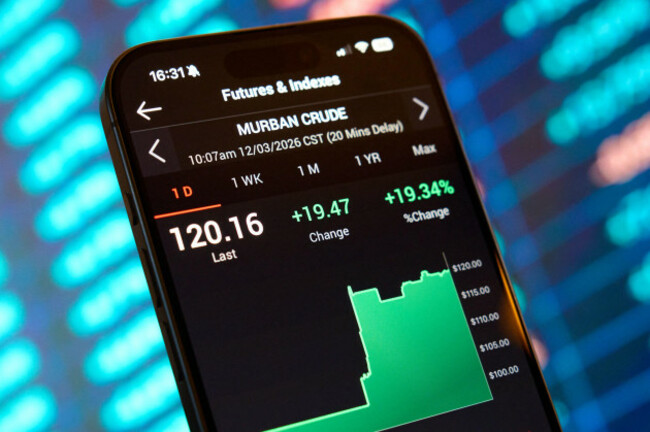
warsaw-poland-12th-mar-2026-oil-prices-are-seen-displayed-on-a-mobile-device-in-this-illustration-photo-taken-in-warsaw-poland-on-12-march-2026-oil-prices-climbed-back-above-100-a-barrel-and-s Alamy Stock Photo Alamy Stock Photo

This week, SunExpress became the first airline to introduce a fuel surcharge on a Dublin service. It is a small addition to the cost, €10 each way, but it shows the pressure that is spilling over from Asia, where carriers are feeling the full brunt of the price hikes. This is no surprise. The impact of the crisis is being felt most acutely east of the Gulf. Europe is four to five weeks behind in their exposure to the fuel crisis, which is what Michael O’Leary said when he made his comments about price hikes in May.

Long-haul flights are vulnerable, but low-cost short-haul flights are also on the front line. Fuel makes up 20pc of the costs of a legacy airline. For low-cost carriers, it can be 50pc.

The fuel sourcing issue

There is another complication that pre-dates the war. Refining capacity issues meant that jet fuel and crude oil rates diverged during the pandemic. The gap has gotten bigger since.

Jet fuel now costs $200 per barrel, $50 higher than crude prices. Even those airlines which are well hedged (Ryanair 80pc, IAG, which owns Aer Lingus 75pc, Lufthansa 80pc and Air France/KLM 70pc) are paying more for the remaining gallons of fuel. The proportion of fuel that is hedged drops with each month or quarter, bringing more pressure on costs. Airlines whose worldwide margin is 4pc cannot afford to bear the extra burden.

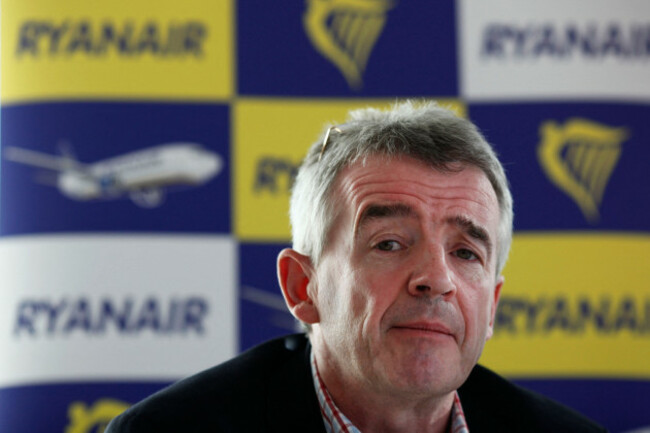
ryanairs-ceo-michael-oleary Michael O'Leary and Ryanair are well hedged. Alamy Stock Photo Alamy Stock Photo

Then there are the airlines which are not hedged at all. US carriers do not hedge their fuel. United is trimming 5pc of its schedule, and all US carriers are raising prices.

In Europe, SAS Scandinavian Airlines, also unhedged, has cancelled 1,000 flights.
Ireland is immune to much of this pressure, as long as the problem is short-term. The airlines that handle 80pc of the passengers to and from Ireland are well hedged, at least for the first quarter. Competitive pressure from Aer Lingus and Ryanair will be taken into account by other airlines seeking to raise prices too sharply in the Irish markets, such as the unhedged American carriers.

On the other hand, the algorithms will be adjusted and displaced passengers, both from rivals and east-bound long haul, will inevitably cause prices to drift upwards.

As long as there is an end in sight to the war and the crisis, we will get through to August or September without being told our flight to Faro is being surcharged or cancelled.

The stock market and oil futures markets are less spooked than the consumer. Ryanair shares fell by 7.5pc over the past month. But they have rallied very slightly since their low on 19 March.

Crude oil futures prices for January 2027 are also pointing to a quick solution, running at around $75 and December 2027 back to $67, which is where Michael O’Leary bought his famously hedged 80pc supply for 2026.

Airlines are optimistic that the war cannot continue in its current chaotic state. They will be hoping that the light at the end of the tunnel, when it does appear, is not another false dawn.

Eoghan Corry is a Travel Commentator, Historian, Author and Broadcaster.

Readers like you are keeping these stories free for everyone...
A mix of advertising and supporting contributions helps keep paywalls away from valuable information like this article. Over 5,000 readers like you have already stepped up and support us with a monthly payment or a once-off donation.

View 11 comments
Close
11 Comments
This is YOUR comments community. Stay civil, stay constructive, stay on topic. Please familiarise yourself with our comments policy here before taking part.
Leave a Comment
    Submit a report
    Please help us understand how this comment violates our community guidelines.
    Thank you for the feedback
    Your feedback has been sent to our team for review.

    Leave a commentcancel

     
    JournalTv
    News in 60 seconds